**FG rejects claims of shadow budgets, says no ₦8tn spent outside fiscal framework**
The Federal Government has dismissed claims that it operates shadow budgets or spent more than ₦8 trillion outside the approved fiscal framework, describing the allegation as inaccurate and misleading.
The response follows observations contained in the International Monetary Fund’s (IMF) 2026 Article IV Consultation, which suggested that about two per cent of Nigeria’s Gross Domestic Product (GDP) was expended through unreported off-budget capital spending, creating discrepancies between reported fiscal deficits and actual financing requirements.
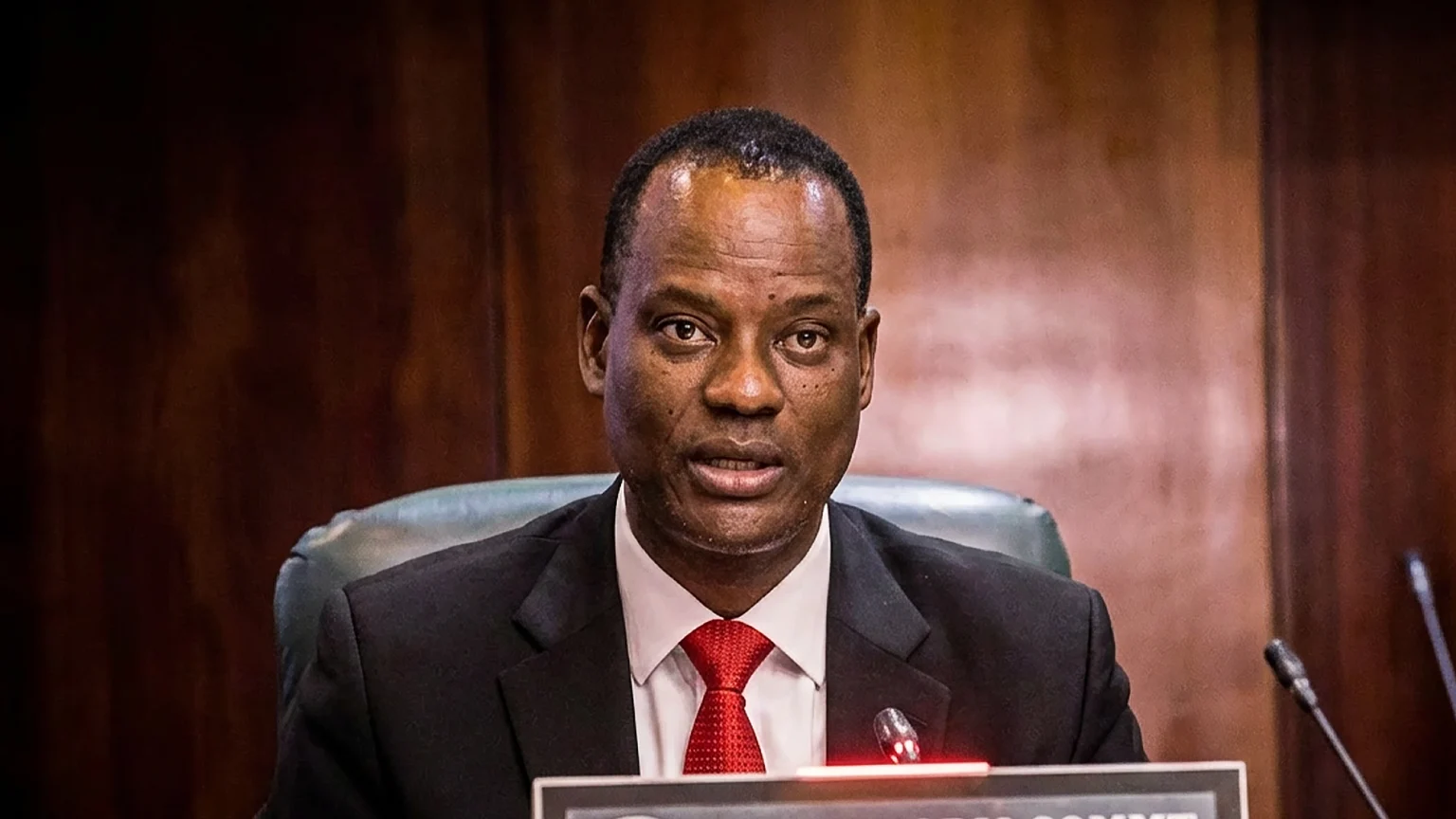
In a statement issued on Sunday, the Minister of Finance and Coordinating Minister of the Economy, Taiwo Oyedele, insisted that all government spending is carried out within the provisions of the Nigerian Constitution and relevant laws through Appropriation Acts, statutory transfers, debt service obligations and other legally recognised financing mechanisms.
According to him, the Federal Government does not operate any form of shadow budget or spend public funds outside the constitutional framework governing public finance.
“These claims are incorrect and risk misleading the public regarding the government’s financial management,” the minister said.
“For the avoidance of doubt, the Federal Government does not operate a “shadow budget” or expend public funds outside the constitutional and statutory framework established for public finance.”
Oyedele explained that Sections 80–83 and 162 of the 1999 Constitution (as amended) clearly stipulate that public funds can only be withdrawn and spent in accordance with constitutional provisions and laws enacted by the National Assembly.
He noted that federal expenditures are backed by duly enacted Appropriation Acts, Supplementary Appropriation Acts and other statutory authorisations approved by lawmakers.
The minister added that multi-year capital projects, which extend beyond a single fiscal year, are implemented under existing laws that permit capital rollovers where necessary, stressing that such arrangements are standard public finance practices and should not be mistaken for off-budget spending.
Oyedele argued that allegations suggesting trillions of naira were secretly spent without legislative approval lacked credible evidence, saying anyone making such claims should identify the specific projects allegedly executed without appropriation or legal backing.
He maintained that assertions of such magnitude must be supported by verifiable facts rather than speculation.
The minister also clarified that it is important to distinguish between budget appropriation, expenditure authorisation, financing arrangements and fiscal reporting.
He explained that Nigeria’s public finance system includes statutory transfers, first-line charges and intervention programmes created by Acts of the National Assembly.
“These include, among others: Statutory allocations and contributions to development commissions and other agencies created by law,” the minister said.
“Cost of collection and cost of administration retained by designated revenue-collecting agencies as expressly provided under relevant legislation.
“Capital expenditure approved in separate budgets for some agencies and the Federal Capital Territory by the National Assembly.
“Special interventions approved by law to address national priorities such as security, infrastructure, disaster response, and other strategic national programmes or emergencies.
“Debt service obligations and other statutory transfers that are authorised under applicable legislation.”
According to Oyedele, these expenditures are lawful, publicly disclosed in fiscal reports and subject to oversight, audit and accountability processes.
He explained that while their presentation may differ from the annual Appropriation Act under international reporting standards, such classification differences should not be interpreted as evidence of illegal spending.
The minister also rejected suggestions that the reported amount translated into a higher budget deficit, noting that fiscal deficits are determined by the gap between government revenue and expenditure rather than the financing method used for approved projects.
He further explained that the IMF’s observations focused on the presentation and comprehensiveness of fiscal reporting under international standards rather than questioning the legality of government spending.
“Indeed, the IMF’s observation relates primarily to the comprehensiveness, timing and presentation of fiscal reporting rather than the legality of expenditure. Like many countries, Nigeria continues to strengthen the alignment between budget presentation and international fiscal reporting standards as part of ongoing public financial management reforms,” the minister said.
“As a matter of fact, His Excellency, President Bola Ahmed Tinubu, had himself formally requested the National Assembly to end the practice of running multiple and overlapping budgets, and rather harmonise into a single, cohesive framework during his presentation of the 2026 Appropriation Bill to a joint session of the National Assembly on December 19, 2025.”
Oyedele reaffirmed the Federal Government’s commitment to fiscal discipline, transparency and accountability, adding that ongoing reforms have improved budget credibility, revenue administration, treasury management and the digitalisation of public financial processes.
He said these reforms have been recognised by the IMF, other multilateral institutions, international credit rating agencies, investors and global media organisations.
While acknowledging the importance of public scrutiny in a democracy, the minister urged that debates on public finance be based on facts and a proper understanding of Nigeria’s constitutional and fiscal framework.
He warned that misrepresenting technical observations as evidence of unlawful expenditure does little to strengthen accountability or informed public discourse.
“The Federal Government will continue to uphold the rule of law, maintain transparency in the management of public resources, and work with the National Assembly, oversight institutions, development partners and the Nigerian people to further strengthen fiscal governance in line with international best practices,” Oyedele said.
About The Author