President Bola Ahmed Tinubu has praised Nigeria’s progress in modernising its customs system after an affiliate of Nigerian-owned Bergmans Security Consultant and Supplies Limited was selected to undertake a 20-year, multi-billion-dollar customs modernisation initiative under the African Continental Free Trade Area (AfCFTA).
The President described the development as a significant endorsement of Nigeria’s ability to develop indigenous technology and systems capable of meeting the needs of other African countries.
In a statement issued on Monday by his Special Adviser on Information and Strategy, Bayo Onanuga, Tinubu commended the Nigerian company, the Nigeria Customs Service and other professionals involved in developing the country’s customs modernisation framework.
The continental project will be executed through Bergmans’ subsidiary, AfriTrade CMP Limited. It is expected to introduce digital and physical infrastructure aimed at improving customs administration, cargo monitoring, border management and the exchange of trade information among participating African countries.
Another subsidiary of Bergmans, Trade Modernisation Project Limited, is responsible for Nigeria’s indigenous customs modernisation programme.
Tinubu said the adoption of a solution developed and tested in Nigeria demonstrated that the country could produce systems capable of supporting broader African economic integration.
According to him, African integration should involve African institutions and businesses developing solutions that address the continent’s own needs while creating opportunities for local enterprises.
He stressed that his administration would continue to support Nigerian businesses with the capacity to compete within the country, across Africa and internationally under its Nigeria First policy.
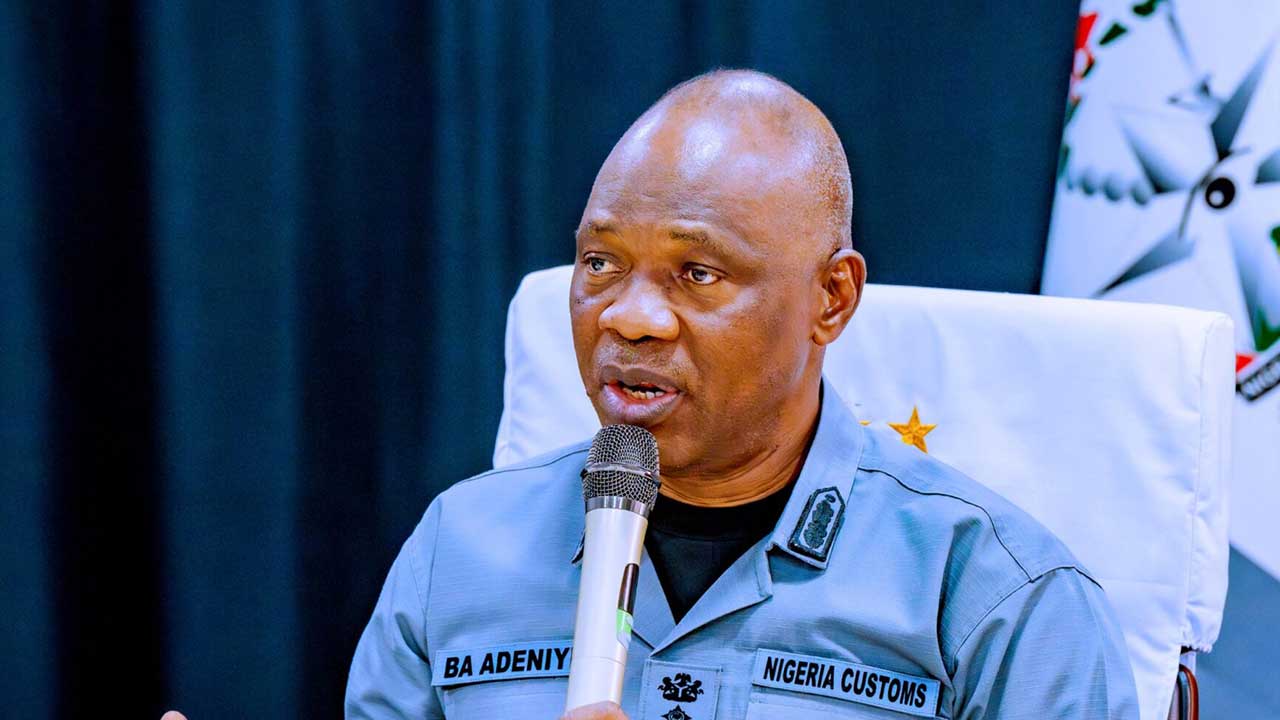
The President specifically recognised Bergmans, AfriTrade CMP Limited, Trade Modernisation Project Limited, the Nigeria Customs Service, Comptroller-General of Customs Bashir Adewale Adeniyi and Nigerian professionals who contributed to the project.
AfCFTA Secretary-General, Wamkele Mene, also visited the headquarters of the Nigeria Customs Service in Abuja during his visit to the country to witness the operation of Nigeria’s customs modernisation system.
Mene was accompanied by members of the Senate Committee on Customs, led by its chairman, Senator Jibrin Isah, following the committee’s two-day retreat on customs reforms and modernisation.
During the inspection, the AfCFTA chief described B’Odogwu, Nigeria’s Unified Customs Management System, as a potential model for other African nations.
Mene noted that companies from outside Africa had also expressed interest in providing customs modernisation solutions but said AfCFTA chose an African-developed option, highlighting the continent’s growing technological expertise and capacity for innovation.
Senator Isah, after inspecting the system, said members of the Senate committee had gained a better understanding of the programme and were now better positioned to promote its objectives.
B’Odogwu, which entered its pilot phase in October 2024, forms a major part of Nigeria’s ongoing customs reform programme. It works alongside systems covering cargo tracking, data management, surveillance, risk assessment and non-intrusive inspection.
The customs modernisation initiative is also being linked with the National Single Window, which was launched in March 2026 to provide a central digital platform for cross-border trade procedures.
The integration is expected to streamline the movement of goods, improve the sharing of trade information and reduce administrative and logistical obstacles facing businesses involved in cross-border commerce.
Tinubu said Nigeria’s experience in modernising its customs administration could help advance AfCFTA’s broader objective of creating a more efficient continental trading environment.
He maintained that the success of AfCFTA would ultimately depend on the ability to move goods between African countries more quickly, cheaply and with fewer regulatory obstacles.
The President added that Nigeria was prepared to contribute its technology, expertise and private-sector capacity towards achieving that vision.
About The Author