

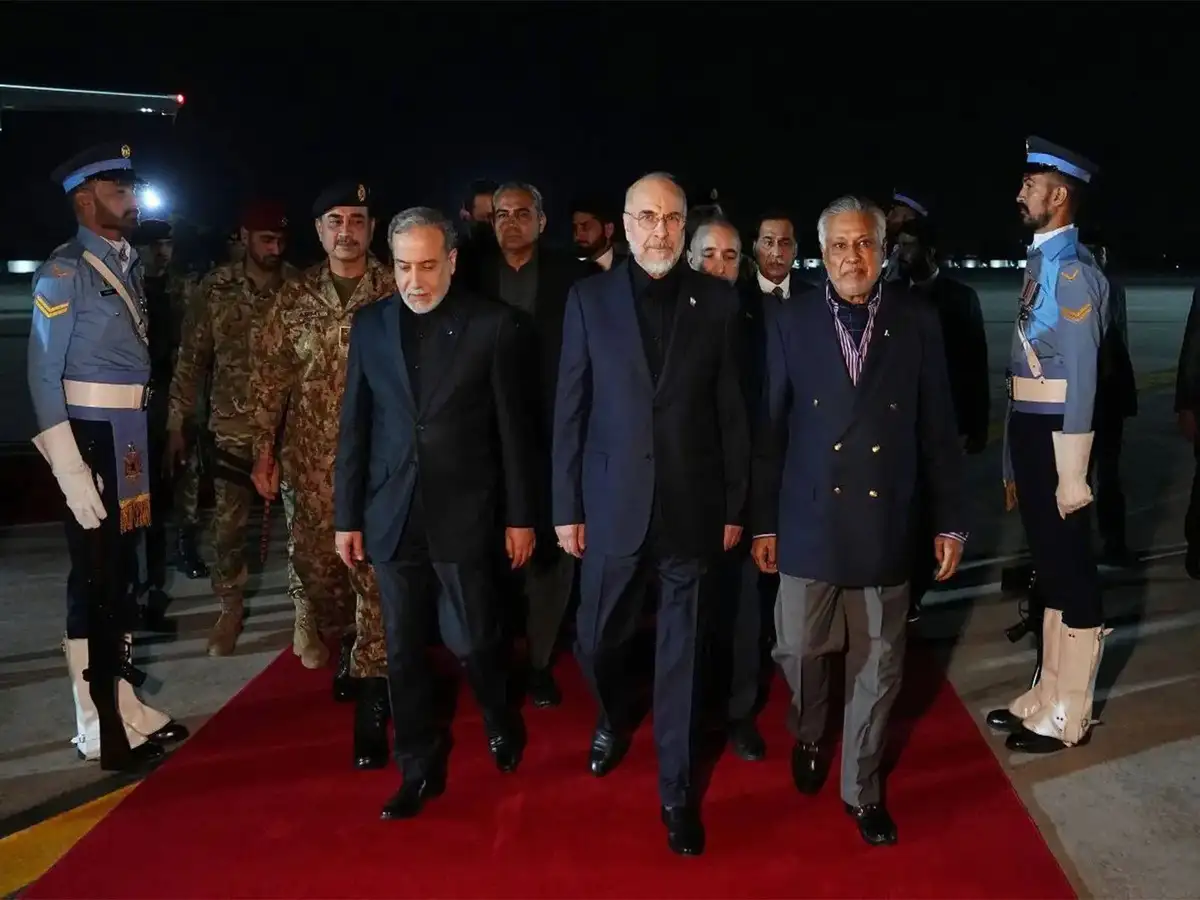
An Iranian delegation has arrived in Islamabad for high-stakes negotiations with the United States, but uncertainty looms as Tehran insists on preconditions that could delay the discussions scheduled in Pakistan.
The development comes as U.S. President Donald Trump warned that Washington is prepared to launch fresh military action if diplomacy fails. He disclosed that American warships are being equipped with advanced weaponry in readiness for a possible strike on Iran.
Earlier in the week, Trump announced a two-week ceasefire in the ongoing six-week conflict, just hours before a deadline during which he had threatened severe consequences for Iran. The truce, according to Reuters, halted U.S. and Israeli airstrikes but did not resolve key tensions, including Iran’s blockade of the Strait of Hormuz—a disruption that has significantly affected global energy supplies. Fighting involving Israel and Iran-backed Hezbollah in Lebanon also continues.
Iran’s parliamentary Speaker, Mohammad Baqer Qalibaf, stated that negotiations would not begin until the United States fulfills earlier commitments, including unfreezing Iranian assets and securing a ceasefire in Lebanon.
State media confirmed that Qalibaf led a high-level delegation to Islamabad, comprising senior political, military, and economic officials such as the foreign minister, defence council secretary, central bank governor, and lawmakers.
Although the White House has yet to respond formally to Iran’s demands, Trump maintained a hardline stance, asserting that Tehran’s leverage is limited. He accused Iran of exploiting international waterways for short-term advantage and stressed that negotiations remain its only viable option.
U.S. Vice President JD Vance, who is heading the American delegation, expressed cautious optimism about the talks but warned that any attempt by Iran to manipulate the process would be firmly resisted.
Iran, meanwhile, continues to face restrictions on accessing tens of billions of dollars in overseas assets—largely proceeds from oil and gas exports—due to longstanding U.S. sanctions targeting its financial and energy sectors.
Reinforcing his position, Trump said the United States is strengthening its naval capabilities and deploying top-tier weapons. He reiterated that failure to reach an agreement could trigger decisive military action.
In a separate message on his Truth Social platform, Trump hinted at a significant strategic shift, referring to what he described as a “world’s most powerful reset,” further fuelling speculation about Washington’s next move in the region.

