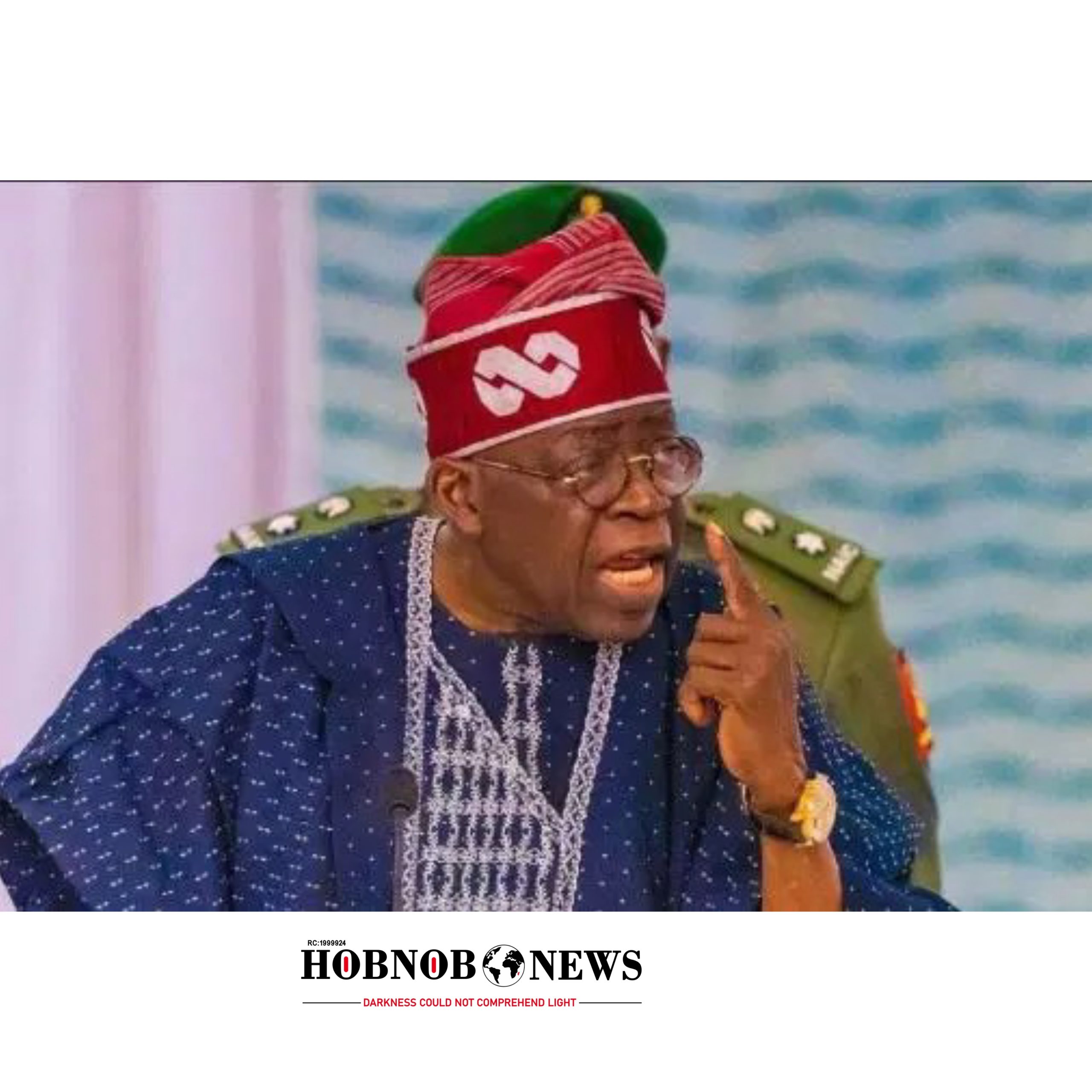
President Bola Tinubu has firmly dismissed allegations of religious genocide in Nigeria, insisting that there is neither a “Christian genocide” nor a “Muslim genocide” occurring within the country.
The President made these remarks while declaring open the 8th Biennial Conference and Annual General Meeting of the Nasrul-Lahi-l-Fatih Society (NASFAT) in Abuja on Friday. The conference, themed “Building Resilience in a Changing World: The Role of Faith and Community,” served as a platform for the President to address international and domestic concerns regarding Nigeria’s security landscape.
Terrorism, Not Persecution
Represented by the Attorney General of the Federation and Minister of Justice, Lateef Fagbemi, the President clarified that the violence currently affecting the nation is rooted in terrorism, criminality, and extremism rather than state-sponsored or sectarian-driven genocide.
The President’s comments come as a direct response to recent international scrutiny. According to reports monitored by Hobnob News, the President of the United States, Donald Trump, recently designated Nigeria as a “country of particular concern” following allegations of Christian genocide.
“In recent times, the Federal Government and other persons of goodwill have had to address unfounded allegations,” Tinubu stated. “The allegations are not only false but harmful, and capable of inflaming passions and disrupting the sustenance of the peaceful coexistence which we continue to build as a nation. Nigeria’s response was clear, firm, and measured. We reaffirmed that our nation does not foster or tolerate policies or actions aimed at persecuting any religious group.”
The President emphasized that Muslims and Christians alike have fallen victim to terrorism and that both groups stand “shoulder to shoulder” in condemning the violence. He reiterated that security challenges are tied to historical, economic, and criminal factors.
A Call for National Unity
President Tinubu urged Nigerians to reject divisive narratives originating from both internal and external sources. He maintained that Nigeria’s strength lies in its diversity and the ability of its citizens to worship differently while remaining compatriots.
“As President, I reiterate with all sense of responsibility and fidelity to the constitution that there is no Christian genocide in Nigeria, and there is no Muslim genocide in Nigeria. What we have is terrorism driven by criminality and extremism—challenges we are working tirelessly to overcome,” he added.
The President also took the opportunity to highlight his administration’s economic agenda:
* Bold Reforms: Aimed at stabilizing the economy and attracting investment.
* Social Support: Efforts to alleviate the temporary difficulties caused by these necessary reforms.
* Security Architecture: A commitment to reinvigorating the nation’s defense to protect all citizens regardless of faith or geography.
The Role of Faith and Community
The President lauded NASFAT for its role in promoting moderation and tolerance. Keynote speaker Dr. Nurudeen Lemu echoed these sentiments, urging the Muslim faithful to remain optimistic and hold onto their faith despite national challenges. He called for synergy between faith-based organizations to enhance good governance.
Additionally, Prof. Ishiaq Oloyede, Secretary General of the Nigerian Supreme Council for Islamic Affairs, described NASFAT as a “five-star” organization. He noted that the application of Islam in public spaces must evolve with the changing world to ensure its positive impact on society.
The President concluded by calling for a continued partnership with religious institutions to counter misinformation and nurture the values of patriotism and integrity.
About The Author