

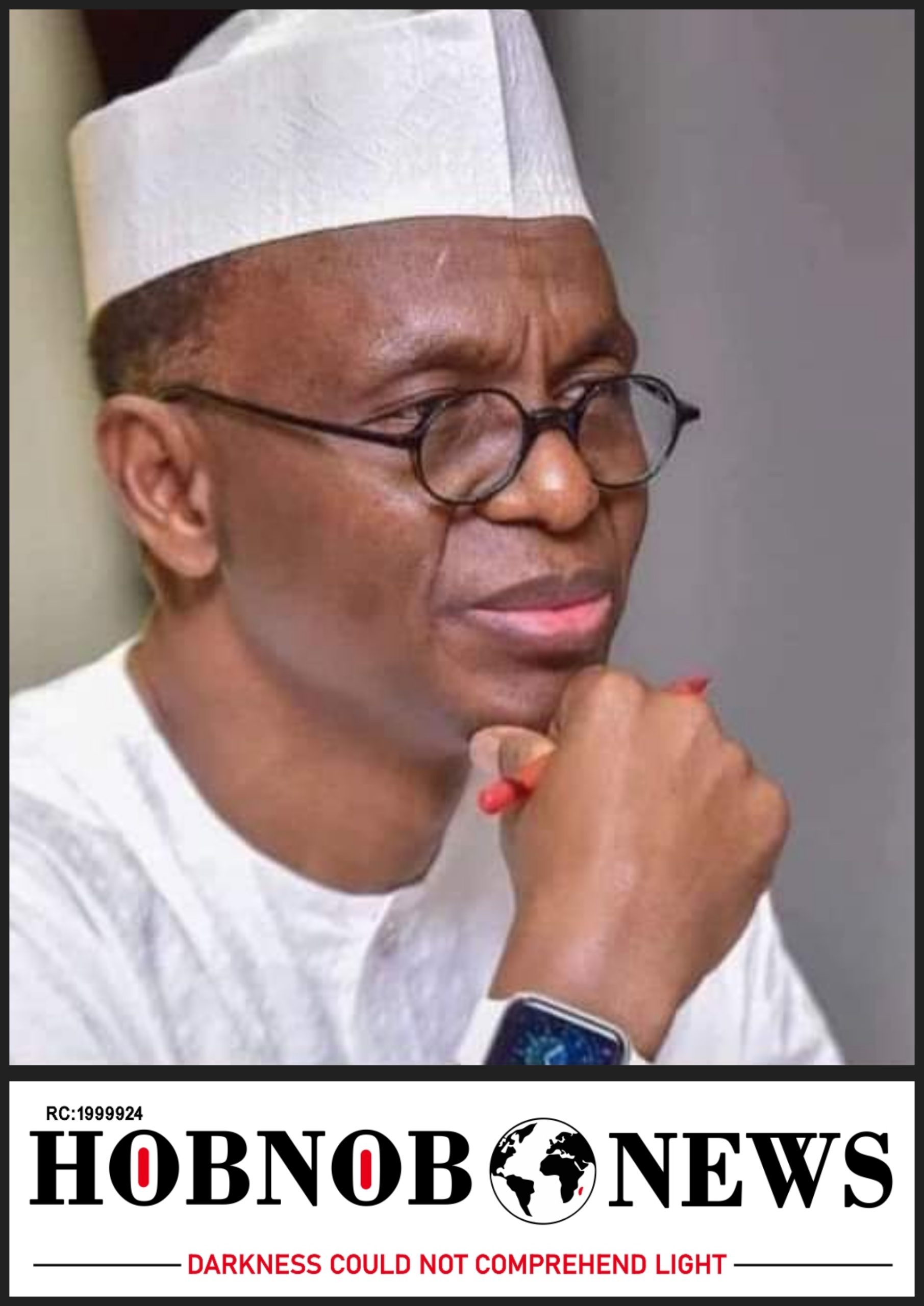
The political landscape in Nigeria witnessed a dramatic shift as former Kaduna State Governor, Nasir El-Rufai, formally defected from the ruling All Progressives Congress (APC) to the Social Democratic Party (SDP). In a bold move, El-Rufai vowed to rally opposition forces to challenge President Bola Ahmed Tinubu’s administration in the 2027 general elections. However, the Presidency and the APC have downplayed his defection, dismissing his ambitions as a futile exercise driven by personal motives rather than a genuine ideological shift.
El-Rufai’s Defection and His Rationale
El-Rufai, in an official statement released on Monday, expressed his disappointment with the APC’s leadership, accusing the party of deviating from its founding progressive ideals. According to him, efforts to address the party’s internal inconsistencies had been met with resistance, leaving him no choice but to seek an alternative political platform.
“As a founding member of the All Progressives Congress, I have cherished the journey we embarked on in 2013 to build a political party centered on progressive governance. However, recent developments confirm that those currently at the helm of APC affairs are unwilling to acknowledge, let alone rectify, the party’s declining trajectory,” El-Rufai stated.
Citing his grievances, he further lamented that his repeated attempts to address internal party disputes, both privately and publicly, were ignored. His defection to the SDP, he said, was a strategic decision to align himself with a platform that upholds the principles he holds dear. He formally submitted his resignation letter to his ward in Kaduna State and shared the update on his verified X (formerly Twitter) account.
El-Rufai made it clear that his primary focus moving forward would be on uniting opposition parties and galvanizing a formidable coalition to challenge the APC in future elections. “My objective is to engage and persuade other opposition figures to come together under a unified front to ensure a viable alternative to the APC’s governance,” he added.
Presidency and APC React: Dismissing El-Rufai’s Influence
Reacting to the development, the Presidency and the APC dismissed El-Rufai’s move, characterizing it as politically inconsequential. The Special Adviser to the President on Policy Communications, Daniel Bwala, took to his X handle to critique El-Rufai’s decision, stating that his political relevance was not as significant as he perceived.
“El-Rufai has exercised his constitutional right, and no one can fault him for that. However, his motives will be scrutinized in the coming days. The idea that he can single-handedly rally opposition forces to unseat a sitting government is nothing short of an inordinate ambition destined to fail,” Bwala remarked.
The APC in Kaduna State echoed similar sentiments, with its Secretary, Yahaya Baba-Pate, emphasizing that the party remained steadfast in its resolve to secure victory for Tinubu and Governor Uba Sani in 2027. According to him, El-Rufai’s defection posed no real threat to the APC’s dominance.
“We are unbothered by El-Rufai’s departure. The APC in Kaduna is stronger than ever, and the influx of new members further solidifies our position. His defection is nothing more than political theatrics, and we remain committed to delivering the state for our candidates in the next election,” Baba-Pate stated.
El-Rufai’s Growing Ties with Opposition Figures
El-Rufai’s defection comes amid increasing speculations about his affiliations with key opposition figures. Over the past few months, he has been seen engaging with prominent politicians, including former Vice President and 2023 presidential candidate Atiku Abubakar, former Ekiti State Governor Kayode Fayemi, and Labour Party representatives.
In January, El-Rufai attended a national conference on strengthening democracy in Nigeria, where he openly called for opposition unity to challenge the APC’s rule. Following the conference, he granted an interview on Arise TV, where he criticized the APC’s leadership, particularly its National Executive Council and Board of Trustees, for failing to hold crucial meetings throughout the past year.
El-Rufai’s recent political maneuvers also saw him visiting key political figures such as former President Muhammadu Buhari, former Osun State Governor Rauf Aregbesola, and respected cleric-politician Pastor Tunde Bakare. While the exact nature of these discussions remains undisclosed, analysts believe they are part of a broader strategy ahead of the 2027 elections.
Mixed Reactions from Political Stakeholders
The news of El-Rufai’s defection has sparked mixed reactions within political circles. While some see it as a calculated move to restructure Nigeria’s opposition landscape, others regard it as an overestimated venture that lacks the needed momentum to challenge the APC’s stronghold.
Former Kaduna Central Senator Shehu Sani mocked El-Rufai’s move, arguing that it carried little weight in shaping the future of Kaduna politics. “Leaving APC for SDP is not a game-changer for someone whose political relevance has diminished,” Sani asserted.
Similarly, Salihu Lukman, a former APC National Vice Chairman (North-West) and a strategist involved in discussions around an opposition coalition, expressed disappointment in El-Rufai’s decision, calling it premature. According to Lukman, a more strategic and collective approach was needed rather than isolated defections.
“I expected him to wait for a more structured movement rather than rushing into another party alone. However, he knows best, and we hope this doesn’t weaken our broader plans for opposition unification,” Lukman stated.
What’s Next for El-Rufai and the SDP?
With his defection official, El-Rufai now faces the challenge of repositioning the SDP as a formidable political force capable of challenging the APC in 2027. His next steps will involve convincing other opposition leaders to abandon their parties and rally behind a singular movement.
Political analysts argue that while El-Rufai’s defection creates a stir, the actual impact remains uncertain. Whether he can successfully reshape Nigeria’s opposition landscape or if his political move will fade into irrelevance remains to be seen.
As the 2027 elections draw closer, all eyes will be on El-Rufai and his new political journey. Will he emerge as a force to be reckoned with, or will this be another case of political miscalculation? Time will tell.

