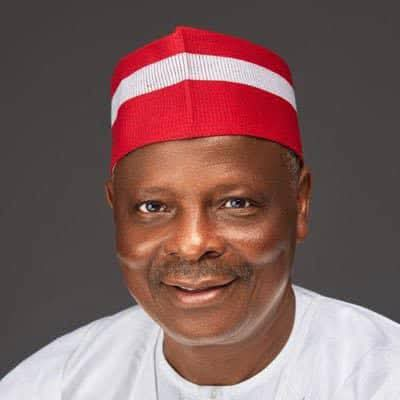
Former Kano State Governor and Vice-Presidential Candidate of the Nigeria Democratic Congress (NDC), Senator Rabiu Musa Kwankwaso, has accused Kano State Governor, Abba Kabir Yusuf, of allegedly using anti-corruption institutions to pursue political interests and damage his reputation.
Kwankwaso made the allegations in a strongly worded statement addressing recent developments surrounding his relationship with the governor, whom he said had served under him in various capacities, including Personal Assistant, Principal Private Secretary and Commissioner.
The former governor recalled that Yusuf was the movement’s preferred candidate in the 2019 and 2023 general elections, eventually emerging victorious in 2023 through their collective political efforts.
He described his relationship with Yusuf as a longstanding 43-year association built on trust, alleging that the confidence he reposed in the governor had regrettably been abused.
Kwankwaso alleged that Yusuf was determined to drag him and members of his family into public controversy by using reputable government agencies, particularly the Economic and Financial Crimes Commission (EFCC), to undermine the public image he had built over nearly five decades.
According to him, the governor had personally submitted a formal request to the EFCC several months ago, seeking an investigation against him. He claimed that after the alleged effort failed to compel the commission, an organisation identified as the Society for Anti-Corruption and Good Governance Initiative (SACGGI) was subsequently deployed to stage protests at the EFCC premises.
Kwankwaso further alleged that the organisation was neither registered with the Corporate Affairs Commission (CAC) nor had any verifiable digital presence or formal relationship with the EFCC or the Independent Corrupt Practices and Other Related Offences Commission (ICPC).
He maintained that the protests were intended to exert pressure on the anti-graft agency, while accusing the governor and some members of his cabinet of using media platforms to amplify allegations against him through selective information leaks.
The NDC vice-presidential candidate argued that the developments appeared politically motivated, particularly as the country approaches the 2027 general elections.
He expressed concern that the alleged campaign was intended to undermine the credibility of his political camp, weaken its electoral chances and create tension capable of threatening peace and security in Kano State.
Kwankwaso also alleged that the situation extended beyond his personal political ambition to other NDC candidates, particularly the party’s Kano State governorship candidate, Comrade Aminu Abdussalam, who is currently defending his candidature before the Independent National Electoral Commission (INEC) and the courts.
He accused the governor of allegedly attempting to influence institutions to prevent the publication of Abdussalam’s name and ultimately frustrate his participation in the 2027 general elections, thereby paving the way for an uncontested governorship race.
Meanwhile, Kwankwaso commended the EFCC for what he described as its professional handling of two previous invitations extended to him during his years in public service.
The former governor also highlighted his public service record, noting that he had served two full terms as Kano State Governor spanning eight years, in addition to 17 years in the civil service.
He further listed his previous positions as Deputy Speaker of the House of Representatives during the aborted Third Republic, elected delegate to the 1994–1995 Constitutional Conference, Minister of Defence, Special Adviser to the President on Darfur, member representing the Northwest on the Niger Delta Development Commission and Senator of the Federal Republic of Nigeria during the 8th National Assembly.
He maintained that he had preserved a clean record more than 11 years after leaving the Kano State Government.
Advising younger and serving public office holders, Kwankwaso urged them to exercise caution, stressing that public office was temporary and warning that those who live in glass houses should be careful about throwing stones.
He also appreciated members of the public who, according to him, had refused to be misled by what he described as attempts to damage his reputation, adding that his public record and achievements remained intact.
The former governor called on political actors to respect the independence of government institutions and refrain from actions capable of undermining their credibility or eroding public confidence.
He concluded by reaffirming his commitment to the peace and stability of Kano State and Nigeria.
Long live Kano State. Long live the Federal Republic of Nigeria.
About The Author