Researchers have discovered fragments of ancient wood believed to be approximately 4,300 years old at a site associated with the biblical account of Noah’s Ark in eastern Turkey.
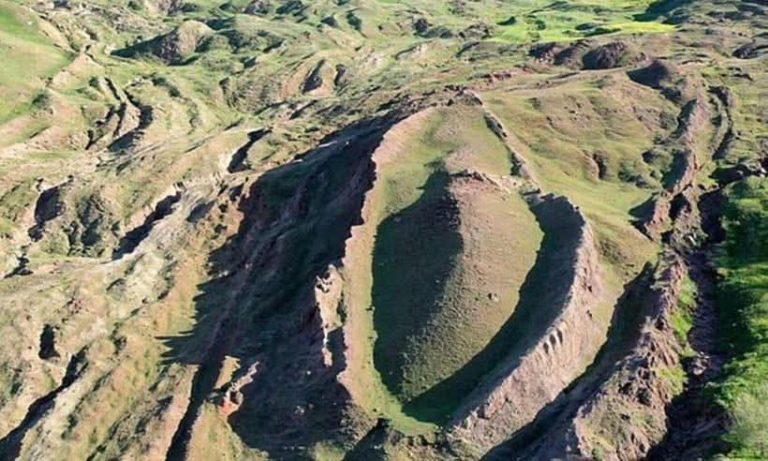
The wood fragments were recovered from the Durupinar Formation, a boat-shaped geological structure located near Mount Ararat, which has attracted the attention of researchers, historians and religious scholars for decades.
According to a report by the British newspaper Express, the fragments were discovered more than 30 feet beneath the ground during investigations at the site.
Preliminary scientific testing suggested that some of the recovered wood could date between 2410 and 2269 BC, with the analysis indicating a 60.6 per cent probability of the proposed age range.
The period falls within a timeframe associated with the biblical flood in some religious interpretations.
Andrew Jones, founder of the Noah’s Ark Scans project, said the preliminary findings were consistent with certain traditional interpretations of when the flood described in the Bible may have occurred.
Professor Cenker Atila, who is leading the investigation, expressed excitement after personally handling the recovered wood fragments.
“I was extremely excited when I first pulled the wood out of the ground and held it in my hands. Since we found it at such a considerable depth, I immediately realised that it was unlikely to be something modern,” he said.
Atila described the possibility that the fragments could have formed part of Noah’s Ark as particularly significant.
However, researchers have emphasised that there is currently no conclusive evidence establishing that the recovered wood originated from Noah’s Ark.
Several geologists have argued that the Durupinar Formation is a natural geological structure formed through erosion rather than the remains of an ancient vessel.
The research team said further investigations and scientific tests would be required to determine how the wood became buried beneath the ground and establish its precise age and origin.
Jones said the team was continuing to examine the findings before drawing any conclusions.
“What we still don’t know is how the wood got there,” he said.
He added that additional test results were expected in December 2026.
The Durupinar Formation measures approximately 157 metres in length and was first identified in 1959 through aerial photographs.
Its distinctive boat-like shape and proximity to Mount Ararat have fuelled decades of speculation about whether the location could be connected to the resting place of Noah’s Ark, as described in the Bible.
While the discovery has generated renewed interest in the long-standing mystery, researchers say more scientific evidence will be needed before any connection between the ancient wood and the biblical vessel can be established.
About The Author