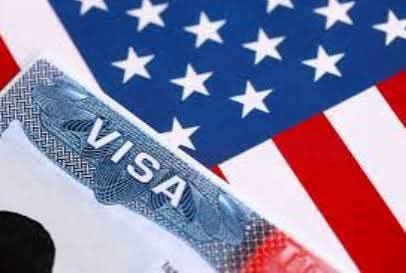
The United States Department of State has announced that routine visa services will no longer be available at the U.S. Embassy in Abuja from August 1, 2026, as part of a broader restructuring of visa operations across Africa aimed at strengthening national security and improving operational efficiency.
The announcement was contained in a statement published on the official website of the U.S. Department of State, while the U.S. Mission Nigeria reaffirmed the development through an infographic shared on its official X account on Friday.
According to the notice, effective August 1, 2026, routine visa services will cease at the U.S. Embassy in Abuja. Nigerians and other residents seeking U.S. visas will be required to schedule appointments and pay the applicable visa fees at the U.S. Consulate General in Lagos, which has been designated as the regional visa processing hub for Nigeria.
The State Department explained that the decision forms part of its ongoing realignment of visa operations across Africa, describing the regional hub model as a long-standing practice aimed at promoting more consistent screening, vetting and adjudication standards while enhancing efficiency.
“The Department of State is realigning visa operations in Africa to regional hubs, part of a long-standing Department practice that strengthens national security by promoting more uniform screening, vetting, and adjudication standards, as well as improves efficiency,” the department said.
According to the department, the restructuring also aligns with the U.S. administration’s broader policy of reviewing overseas operations to ensure government resources are deployed efficiently and in line with American national interests.
The department noted that the regional hub model has already been implemented successfully in several African countries as well as parts of Europe.
It further disclosed that beginning August 1, routine visa services in Abuja and 24 other U.S. diplomatic missions across Africa would be transferred to designated regional visa hubs.
The affected diplomatic missions include those in Antananarivo, Asmara, Bamako, Banjul, Brazzaville, Bujumbura, Conakry, Cotonou, Durban, Freetown, Gaborone, Harare, Juba, Libreville, Lilongwe, Lusaka, Maputo, Maseru, Mbabane, N’Djamena, Niamey, Nouakchott, Ouagadougou and Windhoek.
The State Department stated that citizens and residents of the affected countries wishing to apply for U.S. visas on or after August 1, 2026, must book appointments and pay the required visa application fees at the designated Nonimmigrant Visa Locations or Immigrant Visa Locations assigned to their respective countries.
“Citizens and residents of these countries who wish to apply for a visa on or after August 1, 2026, must schedule an appointment and pay the required visa fee at the appropriate designated Nonimmigrant Visa Locations or designated Immigrant Visa Locations,” the department stated.
The U.S. government said the operational changes are part of efforts by the Trump administration to strengthen national security, reduce government waste and improve the efficiency of U.S. overseas operations.
Despite the changes, the department emphasized that the safety and security of Americans remain its highest priority, assuring that U.S. diplomatic missions would continue to provide appropriate consular services and assistance to American citizens around the world.
The department also noted that visa suspensions designated under Presidential Proclamation 10998, visa bond requirements and immigrant visa pauses for certain nationalities remain in effect.
About The Author