
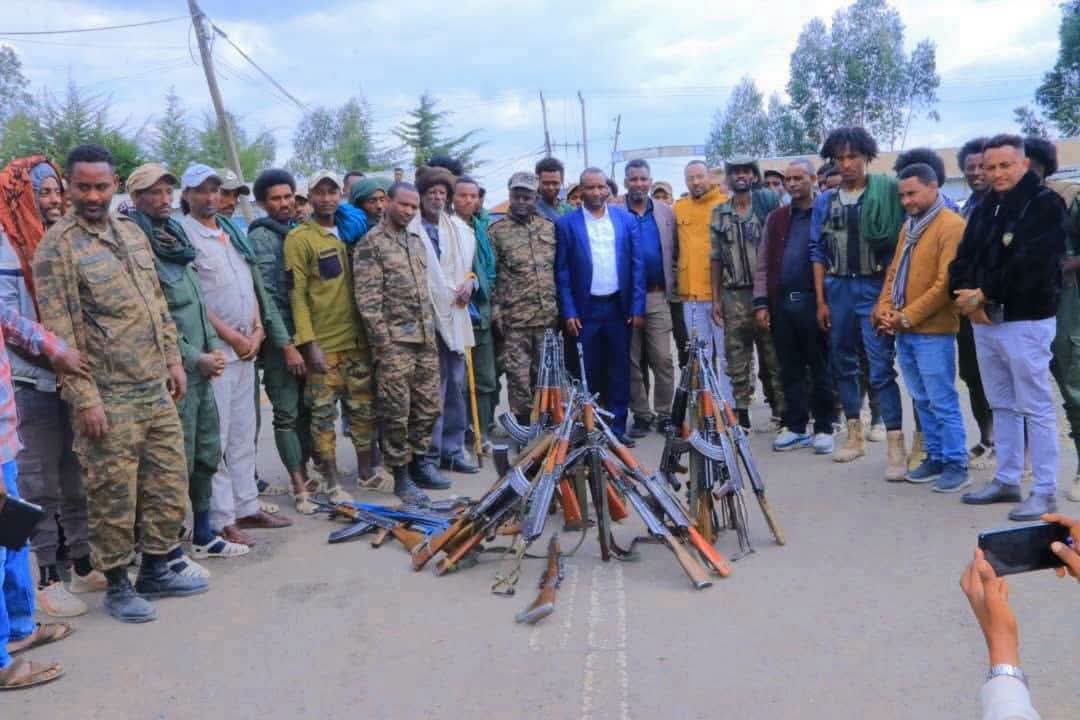
Thousands of armed fighters in Ethiopia’s Central Gondar Zone have accepted the government’s peace initiative and laid down their weapons, marking a significant step toward restoring stability in the region.
The Head of Peace and Security Affairs for the Central Gondar Zone, Anteneh Tadesse, disclosed that substantial progress has been achieved through coordinated efforts aimed at promoting peace and security across the area.
According to Tadesse, comprehensive peace-building initiatives implemented during the current budget year have encouraged thousands of fighters to abandon armed struggle and join the government’s peace program. He noted that the majority of those who embraced the initiative have successfully completed rehabilitation and reintegration training and have since returned to their respective communities.

Authorities are now focusing on supporting former combatants as they transition back into civilian life. Efforts are underway to help them resume their previous occupations, access new employment opportunities, and receive livelihood assistance to ensure their successful reintegration into society.
Tadesse said the security situation in the zone continues to improve steadily, attributing the progress to the public’s commitment to lasting peace, the willingness of fighters to respond positively to peace appeals, and the contribution of rehabilitated former combatants who have joined local security structures.
Some of the ex-fighters, after completing rehabilitation training, have reportedly become part of the security framework and are now helping to maintain peace and stability in the region.
The official also appealed to the remaining armed groups operating in the area to recognize the devastating consequences of conflict and choose peaceful means by joining the ongoing peace process.
Speaking further, Tadesse emphasized the need to sustain the relative peace achieved so far. He urged local communities to continue supporting efforts aimed at persuading fighters still hiding in forested areas to abandon violence and return to peaceful civilian life.
The development is being viewed as a positive milestone in Ethiopia’s broader efforts to foster reconciliation, strengthen security, and promote long-term stability in conflict-affected regions.
About The Author