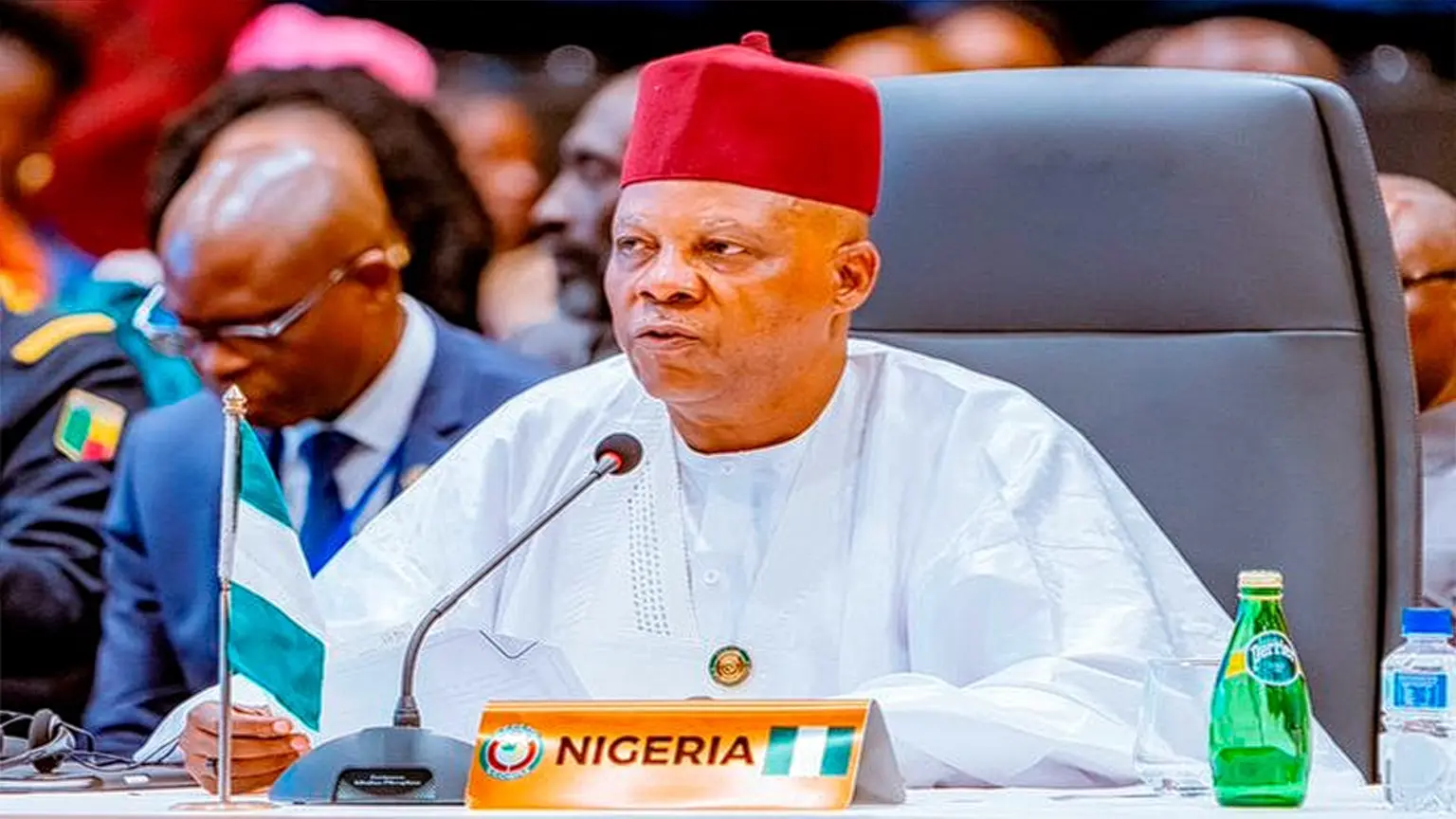
Vice-President Kashim Shettima has condemned the wave of xenophobic attacks in South Africa, reminding the country that Nigeria made significant sacrifices to support the anti-apartheid struggle, including deductions from students’ scholarship allowances to finance liberation movements.
Shettima made the remarks on Sunday while addressing the 69th Ordinary Session of the Economic Community of West African States (ECOWAS) Heads of State and Government in Sierra Leone.
He urged West African leaders to jointly raise the issue at the next African Union (AU) summit, stressing that a unified position would send a strong message that xenophobia has no place on the continent.
According to the vice-president, South Africa should remember the role played by countries such as Nigeria and Ghana in securing its freedom from apartheid.
“While we continue to pursue diplomacy and moderation, South Africa must not forget that the freedom it enjoys today was made possible through the sacrifices of African nations, including Nigeria and Ghana,” Shettima said.
He recalled that Nigerian students contributed indirectly to the liberation effort through deductions from their scholarship allowances, adding that foreign Africans living in South Africa are not responsible for the country’s socio-economic challenges.
“Our scholarship allowances were reduced to support liberation movements in Southern Africa. South Africa should understand where its real problems lie. Those challenges are not caused by fellow Africans who are only there to contribute their skills and livelihoods,” he added.
His comments come amid renewed concerns over attacks targeting foreign nationals in South Africa.
Last Wednesday, the Federal Government completed the fifth phase of its voluntary evacuation programme for Nigerians affected by the violence, bringing the total number of citizens repatriated to 1,490.
The latest batch involved 305 Nigerians who returned aboard an Air Peace flight from O.R. Tambo International Airport in Johannesburg. The aircraft arrived at the Murtala Muhammed International Airport in Lagos at about 11:30 a.m. and also conveyed three Nigerian government officials who coordinated the operation.
In a statement, Ministry of Foreign Affairs spokesperson Kimiebi Ebienfa said the successful completion of the exercise reflects the Tinubu administration’s commitment to safeguarding Nigerians abroad under the Renewed Hope Agenda.
The ministry explained that the evacuation programme, conducted in collaboration with Air Peace and South African Airways, has returned 1,490 Nigerians through several humanitarian flights since June.
According to the breakdown, Air Peace evacuated 258 Nigerians on June 10, followed by 272 on June 30, 268 on July 2, 282 on July 9 and 305 during the latest operation. South African Airways also transported 66 Nigerians on June 24 and another 39 on July 11.
Officials said the evacuations followed sustained diplomatic engagement between Nigeria and South Africa after renewed xenophobic attacks against foreign nationals, including Nigerians.
Since the latest outbreak of violence began in April, Nigeria has continued to protest the treatment of its citizens. Reports indicate that at least four Nigerians lost their lives during the attacks.
Minister of Foreign Affairs Bianca Odumegwu-Ojukwu had earlier criticised the attacks, recalling Nigeria’s longstanding support for South Africa during the anti-apartheid era.
She noted that Nigeria committed financial resources and educational opportunities to the liberation struggle, with schools reserving admission slots for South African students.
“Our generation marched in solidarity with South Africa. We protested outside South African institutions and many of us were even arrested. Nigeria stood firmly as a frontline state in the fight against apartheid, so Nigerians are deeply disappointed by the way they are now being treated,” she said.
She also argued that the hostility was largely directed at black African migrants rather than all foreigners.
About The Author