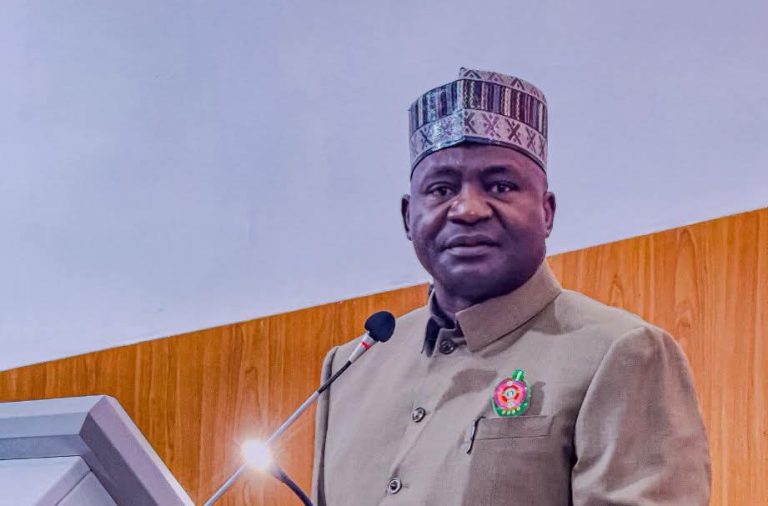

Anambra State Governor, Chukwuma Soludo, has said discussions on state police in Nigeria should now concentrate on implementation rather than whether the initiative should exist, while urging broader constitutional reforms to strengthen the country’s federal system.
Speaking virtually on Thursday during the ARISE News Town Hall on State Police, Soludo said the proposed policing reform should be part of wider constitutional changes, including adjustments to revenue sharing and the judicial structure.
“The issue is no longer whether or not to have state police. I think we have gone beyond that. The issue now is how,” he said.
The governor praised the National Assembly for progressing constitutional amendments on state policing and commended President Bola Tinubu for backing reforms aimed at deepening Nigeria’s federal system.
“I see the issue of state police within the broader context of marching towards a more functional and effective federal structure,” he said.
Drawing from Anambra’s experience, Soludo said coordinated efforts involving federal security agencies, the state government and local stakeholders had improved security by reclaiming communities previously affected by criminal activities, dismantling criminal camps and restoring peace.
He revealed that committees made up of the National Security Adviser, the Attorney General of the Federation, the President’s Chief of Staff and state governors were already developing the framework for implementing state police.
According to him, discussions are focusing on operational standards, command structures and the type of weapons officers should be authorised to carry.
“You cannot send officers carrying inferior weapons to confront criminals armed with AK-47 rifles and General Purpose Machine Guns,” he said.
Soludo, however, maintained that establishing state police without broader constitutional reforms would leave Nigeria’s federal structure incomplete.
He called for a review of the current revenue-sharing formula, arguing that states now shoulder greater constitutional responsibilities without corresponding financial resources.
“The federal government still retains about 53 per cent of federation revenue, while states share only about 26 per cent. If we truly want sustainable federalism, then we must revisit the revenue allocation formula,” he said, proposing that the federal government’s share should be reduced to no more than 40 per cent.
The governor also advocated judicial reforms, including the creation of state supreme courts, arguing that disputes involving only state matters should not have to pass through the federal appellate system before reaching a final decision.
Using land disputes as an example, he noted that many cases in Anambra take decades to conclude because they eventually end up at the Supreme Court despite involving issues confined to a single state.
According to Soludo, state-based apex courts would speed up the administration of justice and complement efforts to decentralise policing.
He urged policymakers to see the proposed state police system as part of a broader opportunity to complete Nigeria’s transition to a more effective federal structure.
Momentum for state police has continued to build amid worsening insecurity across the country, including banditry, insurgency, kidnappings and other violent crimes. While supporters believe decentralised policing would improve intelligence gathering and response times, critics have expressed concerns that state governments could abuse such security outfits for political purposes.
President Tinubu recently inaugurated a committee chaired by his Chief of Staff, Femi Gbajabiamila, to prepare the legal framework for state police, as the National Assembly continues work on constitutional amendments to provide the legal foundation for the initiative.
About The Author