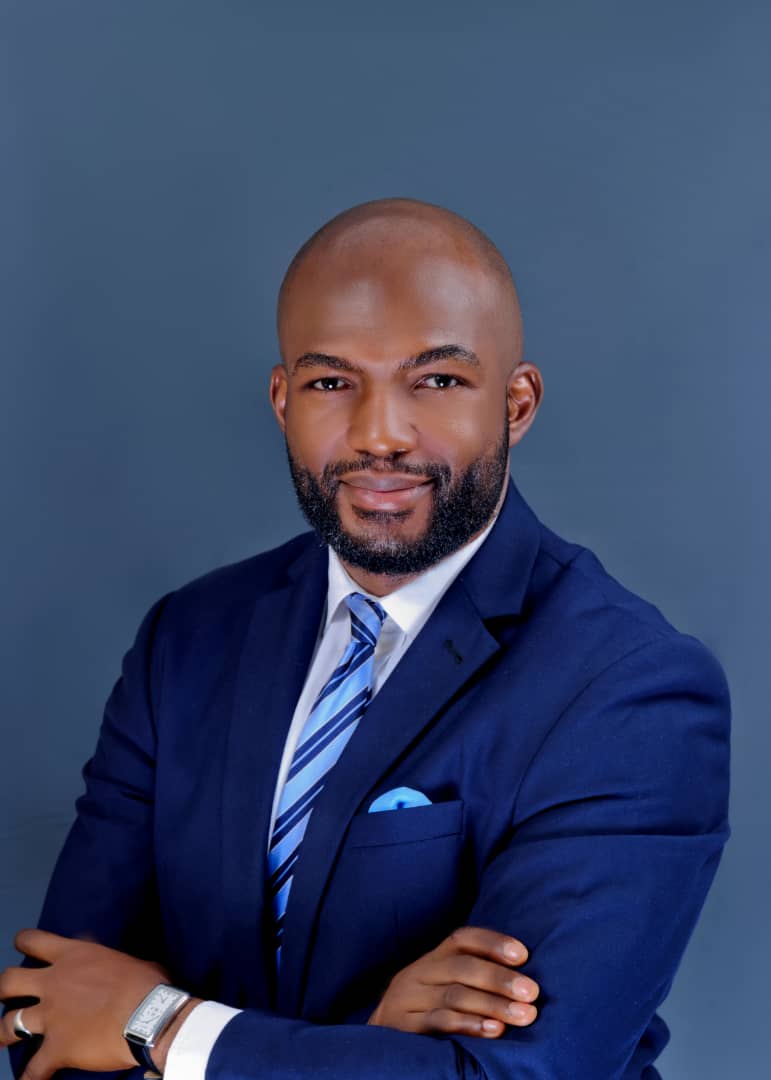
Written By Engr. Osarenren Derek Izedonmwen
Engr. Osarenren Derek Izedonmwen is an engineer and development-minded professional. He was the African Democratic Congress (ADC) governorship candidate in the 2024 Edo State governorship election and remains deeply interested in Edo State’s economic transformation, particularly in the areas of industrialisation, job creation, investment promotion, agricultural development, and practical governance reforms. He writes as a concerned citizen committed to contributing ideas that can help shape a more productive, prosperous, and globally competitive Edo State._
_This article is the first in a series examining industrialisation, wealth creation, fiscal federalism, investment-led development, and economic transformation in Edo State and Nigeria._
The remarkable success story of a group of foreign investors in Nigeria who began their entrepreneurial journey in the table water business over a decade ago and have since grown into the country’s largest manufacturers and suppliers of refillable water dispenser bottles offers important lessons for policymakers and development practitioners. Their recent expansion into dairy farming and milk production demonstrates the power of strategic diversification, long-term planning, and disciplined capital allocation.
Their story should serve as an inspiration to governments and policymakers across Nigeria. It demonstrates what is possible when vision is matched with patience, execution, and an unwavering commitment to growth.
A state like our dear Edo could have pioneered such an initiative. Indeed, my hero, the late General Samuel Ogbemudia, established the Agbede and Igarra cattle ranches in Edo North decades ago. Likewise, Professor Ambrose Alli established a ranch between Ubiaja and Ilushi in Esan South East over forty years ago. These examples remind us that Edo State has both the historical precedent and the resources necessary to drive large-scale economic transformation.
In line with the RAIISE development philosophy—Rural Revitalisation, Agriculture, Industrialisation, Infrastructure, Security and Excellence; I have consistently argued that a visionary Edo State Government must deliberately use public capital to guide and attract private capital. Government should not merely regulate economic activity; it should act as a catalyst for economic transformation.
Such a government would support investment at scale in carefully selected industries where Edo State possesses clear comparative advantages. These include agriculture and agro-processing for export, apparel manufacturing, building and construction materials, farm implements and machinery such as ploughs and tractor assembly, drip irrigation systems, furniture manufacturing and export, cashew processing, rubber tyre manufacturing, and other emerging sectors capable of generating substantial employment, foreign exchange and broad-based wealth.
The reality is that many transformative industrial projects have long development cycles and require long-term financing to succeed. However, commercial banks in Nigeria today largely rely on highly liquid short-term investments and funding sources. This often creates a maturity mismatch that discourages the financing of industrial projects and limits investment in sectors critical to long-term economic development.
It is precisely in this area that I see an important role for government. Government can deploy its capital strategically to seed industrialisation, prove commercial concepts, reduce investor uncertainty, and demonstrate confidence in the state’s economic future. When government is prepared to invest in its own state, private investors are far more likely to follow.
I have always maintained that government can establish commercially viable enterprises, nurture them through their formative years, and subsequently divest majority ownership through the capital market once they attain maturity and commercial viability. This approach allows government to recover its investment, deepen private sector participation, strengthen local ownership, and redeploy capital into new sectors where the state enjoys comparative advantage.
Indeed, this philosophy should extend beyond Edo State. As a nation, Nigeria must gradually move from a politics centred on the monthly sharing of Federation Account Allocation Committee (FAAC) revenues to a politics of investing public revenues in productive, wealth-creating activities. Federal allocations should increasingly serve as seed capital for economic expansion, helping states and local governments grow their productive capacity, create jobs, and sustainably increase their Internally Generated Revenue (IGR). This is a conversation that deserves greater national attention.
The challenge becomes even clearer when we examine the realities facing our local governments. According to the Edo State Local Government Councils Audited Financial Statements for Year 2024, published by the Office of the Auditor-General on 30th June 2025, Orhionmwon Local Government Area recorded an average monthly Internally Generated Revenue (IGR) of just ₦2,137,789.60 in 2024, while Etsako Central Local Government Area generated an average of only ₦1,539,394.78 per month. Yet Orhionmwon LGA is one of the largest local government areas in Edo State, with an estimated population of between 295,000 and 320,000 people, its landmass covers approximately 2,382 square kilometres, about one-third the size of the Federal Capital Territory and over two-thirds the size of Lagos State. How can such a vast local government realistically develop on an IGR of about ₦2.1 million per month? The answer is obvious. If we are serious about sustainable development, we must fundamentally rethink how we build the wealth-creation capacities of our subnational entities. States and local governments must become centres of production, investment and enterprise, rather than mere recipients and distributors of monthly allocations.
This is not a novel idea. Similar approaches have been used successfully around the world and even within Nigeria. Through strategic partnerships and eventual listing on the Nigerian capital market, government can become a catalyst rather than a permanent operator of businesses.
In many ways, government must become the bridge that carries investment across the river of uncertainty. Once the crossing has been proven safe and profitable, private capital will naturally flow in greater volumes and with greater confidence.
The ultimate objective is simple: jobs, jobs, and more jobs.
When productive employment opportunities are available, economic hardship declines. Families become more secure. Communities become more stable. Crime and social tensions reduce over time. Prosperity becomes widely shared rather than concentrated in the hands of a few at the top.
Unfortunately, too much political energy is often consumed by calculations about the next election cycle, the next political alignment, the next inter-party defections or how many votes can be secured for political patrons in Abuja. Our focus should instead be on how to create sustainable wealth, expand the productive capacity of our economy, and improve the living standards of ordinary Edo people.
If a government succeeds in creating massive employment opportunities and widespread prosperity, the people will naturally recognise and support such leadership. Genuine development creates its own political legitimacy.
Ultimately, our challenge is not a lack of resources, opportunities, or human talent. It begins and ends with leadership; leadership with vision, conviction, competence, determination, and patriotism; leadership that is prepared to think beyond the next election and act consistently in the common good.
I therefore urge policymakers and political leaders to embrace long-term economic planning, innovative governance models, and strategic investment frameworks capable of transforming Edo State into a leading centre of agricultural production, industrial development, and export-led growth in Nigeria.
The future we seek will not be built through slogans or short-term politics. It will be built through vision, strategic planning, disciplined execution, and the courage to invest today in the prosperity of tomorrow.
About The Author