
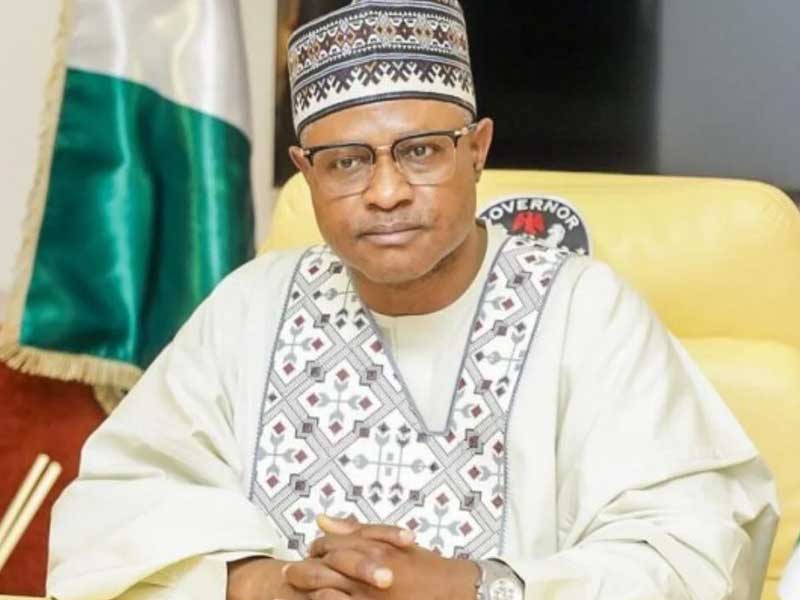
Kaduna State Governor, Senator Uba Sani, has said he inherited a state with immense potential but bedevilled by security challenges, infrastructure gaps and weak social indicators requiring urgent attention.
He stated this at a workshop for senior government officials organised by the Nigerian Institute of Public Relations (NIPR) during its Public Relations Week, ‘Croc City 2026,’ in Kaduna.
The event, themed ‘From Policy To Public Trust: Strategic Communication For Vision Alignment And Governance Delivery For Renewed Hope,’ provided a platform for reflections on governance and public communication.
‘’Kaduna is not where it was. Kaduna is by far a better place today and even more exciting is the fact that Kaduna is on the move and set to do even greater things and attain higher heights,” Sani said.
He explained that his administration moved beyond incremental reforms, opting instead for a governance model driven by measurable outcomes and accountability.
‘’We institutionalised a performance framework built around key performance indicators, ensuring that every ministry, department and agency operates with clarity of purpose and accountability of outcome,’’ he added.
He said his administration’s agenda is structured around seven pillars, including security, infrastructure development, institutional strengthening, trade and investment, agriculture, human capital development and citizen engagement.
The governor described the pillars as interconnected, designed to deliver broad-based development and reposition the state for sustainable growth.
On security, Sani emphasised its importance as the foundation for development, noting collaboration with federal authorities to establish military bases in troubled areas such as Giwa, Birnin Gwari and southern Kaduna.
He added that logistics support has been enhanced, while a Joint Task Force has reduced incidents of crime in urban centres.
Sani disclosed that over 20,000 hectares of farmland have been reclaimed, enabling farmers to return to productive activities in previously inaccessible areas.
He said the government has also resettled more than 1,000 displaced persons and continues to support over 117,000 internally displaced persons, particularly women and children.
‘’The Kaduna Incident Report Centre— KAD-IR, now provides a 24-hour platform for real-time emergency response. Early warning systems are in place to detect and defuse tensions before they escalate,’’ he disclosed.
The governor further highlighted the establishment of a forensic laboratory, peace dialogue mechanisms and rehabilitation programmes as part of efforts captured under the Kaduna Peace Model.
He added that the administration has also recorded progress in the education sector through the construction of 736 classrooms, renovation of over 1,200 schools, recruitment of 10,000 teachers and training of more than 33,000 personnel.
About The Author