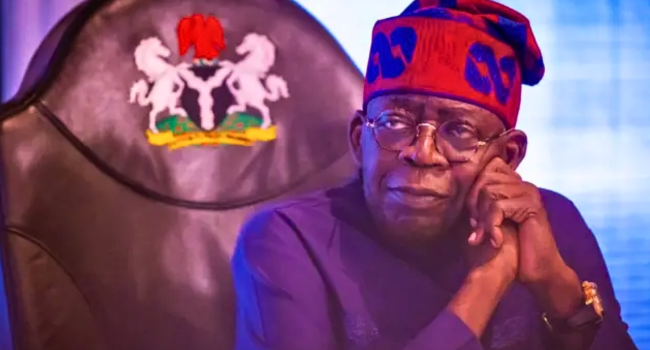
President Bola Tinubu on Wednesday night formally asked the Senate to commence the process of amending the 1999 Constitution to provide for the establishment of state police, declaring that Nigeria must urgently restructure its security architecture to effectively tackle terrorism, banditry and insurgency.
Speaking during an interfaith Iftar with the leadership and members of the Senate at the State House, Abuja, the President urged lawmakers to begin embedding state policing in the Constitution to enable subnational governments assume greater responsibility for securing their territories.
“Nigeria is extremely challenged. We are facing terrorism, banditry and insurgency, but you have never failed to respond appropriately. What I will ask tonight is that you start thinking about how best to amend the Constitution to incorporate state police, so we can secure our country, reclaim our forests from marauders and free our children from fear,” Tinubu said.
The appeal reinforces a campaign the President has sustained since assuming office. In February 2024, at an emergency meeting with the 36 state governors, he approved the formation of a joint federal-state committee to examine modalities for state policing, insisting the country must “move aggressively” to safeguard lives and property.
He reiterated the call in November 2025, urging the National Assembly to review relevant laws to allow willing states establish their own policing structures.
At the APC National Caucus meeting in December 2025, he again pressed governors and lawmakers to support constitutional reforms to advance state police and local government autonomy.
Only days earlier, at a similar interfaith engagement with governors at the Presidential Villa, Tinubu declared that state police “can’t wait” and “will not be postponed,” underscoring what he described as a necessary shift in Nigeria’s security framework.
At Wednesday’s meeting with senators, the President framed the proposed reform as a constitutional duty rooted in unity and shared responsibility.
“What we have faced during this challenging period, terrorism and banditry, is causing havoc. We must pull together in the spirit our forefathers envisioned when they established a constitutional democracy. They did not say we should fight,” he said.
Beyond security, Tinubu thanked lawmakers for backing what he described as difficult but essential economic reforms, including the removal of petrol subsidy and foreign exchange unification.
“I have a lot of credit for bold reforms. Without your collaboration and inspiration, those reforms would not have been possible. We are reformists together,” he said.
Defending the scrapping of fuel subsidy, he described it as ending “monumental corruption.”
“We gave it up. We don’t want to participate in monumental corruption and arbitrage in foreign exchange,” the President said, adding that the reforms have laid the groundwork for economic stability.
“You don’t have to chase dollars anymore. You should be proud of what Nigeria is becoming. What we are enjoying is a stable economy, and prosperity is beckoning. We just need to work hard for it,” he added.
Responding to criticism from opposition figures, Tinubu dismissed allegations of stifling dissent.
“When they accused me of killing opposition, I didn’t have a gun. I can’t blame anyone for jumping out of a sinking ship,” he said, in an apparent reference to recent defections.
He noted that the coincidence of Ramadan and Lent symbolised national unity and stressed the need for sustained harmony between the executive and legislature.
“We are committed to Nigeria’s success. We are committed to making laws for the welfare and prosperity of our people. We are committed to governing together,” he said.
In his remarks, President of the Senate, Godswill Akpabio pledged the upper chamber’s loyalty and continued cooperation.
“We have nothing to give you but to assure you of our loyalty. Nothing you have sent to us has died at first reading, and it will not happen,” Akpabio said.
He explained that the Senate carefully scrutinises executive proposals to ensure they align with national interest, even when public opinion is initially sceptical.
“We painstakingly review everything that comes before us and, at the end, we see that it serves Nigerians, even when social media does not see it that way,” he said.
Akpabio commended the administration’s tax reforms, foreign exchange unification, subsidy removal and electoral amendments, noting that the President promptly assented to the revised Electoral Act when persuaded it served the national good.
He expressed optimism that Nigeria would witness greater prosperity by 2031 under Tinubu’s leadership and offered prayers for peace amid what he described as “troubles and sponsored insecurity” in parts of the country.
The Senate President also thanked the President for appointing former Senator Jimoh Ibrahim as ambassador, describing it as recognition of legislative capacity.
The interfaith gathering concluded with prayers for unity, wisdom and strength for the nation’s leaders as they navigate pressing security and economic challenges.
ChatGPT said:
Here’s a humanised, concise version of your story with a headline:
Tinubu Calls on Senate to Fast-Track State Police Amendment to Tackle Insecurity
President Bola Tinubu has urged the Senate to begin the process of amending the 1999 Constitution to allow for state police, describing it as crucial to tackling terrorism, banditry, and insurgency across Nigeria.
Speaking at an interfaith Iftar with senators at the State House, Abuja, Tinubu said the reform would enable states to take greater responsibility for securing their territories. “Nigeria is extremely challenged… I ask that you start thinking about how best to amend the Constitution to incorporate state police, so we can secure our country, reclaim our forests from marauders and free our children from fear,” he said.
The President has long championed the establishment of state police. In February 2024, he approved a federal-state committee to examine the plan, and he has continued to press lawmakers and governors to support the initiative, describing it as urgent and non-negotiable.
Beyond security, Tinubu praised the legislature for backing economic reforms, including the removal of petrol subsidies and the unification of the foreign exchange rate, describing these as steps toward curbing corruption and building a stable economy.
Responding to critics, the President dismissed claims of stifling dissent, noting that national unity and collaboration between the executive and legislature remain central to his administration.
Senate President Godswill Akpabio reaffirmed the upper chamber’s commitment to working with the executive, assuring that proposals from the President receive thorough scrutiny to serve Nigeria’s national interest. He also highlighted ongoing reforms in taxation, electoral laws, and economic policy as evidence of cooperative governance.
The interfaith event concluded with prayers for national unity, wisdom, and strength for Nigeria’s leaders amid ongoing security and economic challenges.
About The Author