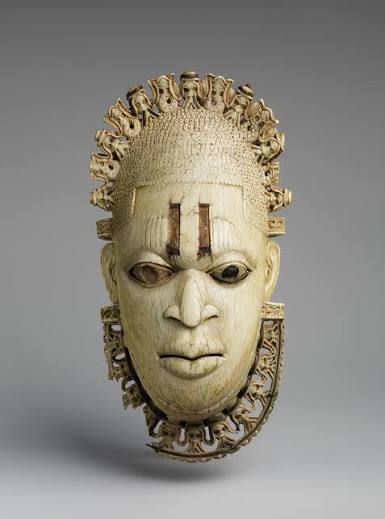
Royal Institutions in Modern Democracies: Why Respecting Traditional Rulers Remains Essential in Nigeria and Across the World
In a world that has steadily embraced constitutional rule, multiparty elections, human rights frameworks, and digital governance, one might expect traditional rulers to fade into irrelevance. Yet the opposite is true. From Africa to Europe, the Middle East to Asia, and the Pacific, traditional royal institutions remain deeply respected and continue to shape national stability, cultural identity, and social cohesion. Their authority may no longer wield executive power, but the moral, cultural, and communal influence they command is indispensable to the health of modern democracy.
Nigeria provides a striking example of how tradition and democratic governance coexist. But Nigeria is not alone. Countries such as the United Kingdom, Spain, Japan, Sweden, Denmark, Norway, Belgium, Thailand, Morocco, Malaysia, Lesotho, Netherlands, Saudi Arabia, Jordan, Cambodia, Tonga and many others confirm that monarchy and traditional rulership have a modern purpose that goes far beyond ceremonial display.
This article examines the critical role of respecting traditional rulers, vividly explains how they contribute to democratic stability, and explores why modern nations both in the West and the global South—continue to preserve these institutions as national pillars.
Traditional Rulers in Contemporary Society: A Living Bridge Between the Past and the Future
Traditional rulers represent the soul of a people. Their authority predates the modern nation-state, existing long before constitutions, parliaments, or political parties. While democracy assigns power through elections, traditional institutions embody ancestral legitimacy passed down through generations. Respecting them means recognizing the continuity of history, identity, and communal belonging.
Their role in today’s democratic systems is not to compete for political power but to complement elected governments by preserving cultural values, promoting unity, resolving conflicts, strengthening community ties, and offering moral guidance when political institutions face turbulence.
The Nigerian Example: A Federation Strengthened by its Traditional Pillars
Nigeria’s traditional rulers—Obas, Emirs, Obis, Amayanabos, Attahs, Ezes, Sarkis, Shehus, Tor Tiv, Olus, Aku Uka and many others—hold deep cultural authority. Even without constitutional executive powers, their relevance is seen daily in governance, stability, and social organization.
They are trusted mediators who intervene in disputes ranging from land issues to ethnic or religious conflicts. Because their legitimacy rests on communal acceptance rather than electoral contests, their words carry a moral weight that dissolves tension where political forces sometimes fail. This ability to foster peace is critical in a diverse nation like Nigeria where multi-ethnic coexistence requires constant negotiation and cultural sensitivity.
Their contributions to governance are visible in grassroots mobilization for health campaigns, voter education, census participation, economic cooperation, interfaith dialogue, and youth mentorship. They provide intelligence information that supports security agencies, helping detect threats before they escalate. In rural regions where state authority may be thin, traditional rulers serve as the first line of governance, offering local knowledge vital to national strategies.
They also preserve heritage. In a globalized world where languages, customs, rituals, and festivals risk extinction, traditional leaders ensure cultural continuity. Without them, Nigeria’s rich diversity—its dress, music, titles, rituals, and historical identity—would fade into uniformity.
A Global Phenomenon: How Modern Democracies Integrate Traditional Authority
Nigeria’s model aligns with practices across the world, proving that respecting traditional institutions is not anti-modern but a sign of political maturity. Nations with thriving democracies have retained their traditional rulers because they provide cultural continuity, social order, and non-partisan unity.
In the United Kingdom, the monarchy remains the moral and symbolic heart of the nation. The King represents national continuity, diplomacy, charity, unity, and cultural heritage. Even though political power rests fully with elected officials, the monarchy stabilizes national identity.
Japan preserves the world’s oldest hereditary monarchy. The Emperor is a cultural and spiritual symbol whose presence binds the nation’s historical consciousness. In times of national crisis, such as natural disasters, the Emperor’s message provides emotional reassurance and unity.
Countries like Sweden, Denmark, Norway, Belgium, and the Netherlands maintain constitutional monarchies recognized for high levels of trust and stability. These monarchies serve no partisan interest, offering impartial moral guidance, national representation, and cultural leadership.
Spain’s monarchy played a key role in transitioning the country from dictatorship to democracy, acting as a stabilizing force that prevented political polarization from destabilizing national unity. Thailand views its monarchy as a cultural and spiritual institution that commands deep public reverence, functioning as a mediator during periods of political tension.
Across Africa, the Kingdom of Morocco blends monarchy with democratic institutions, where the King acts as both spiritual leader and modern reformer. Lesotho operates a democratic constitutional monarchy, using its traditional ruler as a unifying figure that helps maintain social balance.
In Malaysia, the rotational monarchy demonstrates cultural dynamism as different royal families take turns leading the federation while maintaining democratic governance. Saudi Arabia, Jordan, and Brunei maintain strong royal institutions that embody religious, cultural, and historical legitimacy, which guide national direction even as they modernize.
In Cambodia and Thailand, monarchies are sources of national identity. In Tonga and Samoa, traditional rulers coexist harmoniously with parliamentary systems, ensuring that culture remains at the heart of governance.
This global pattern proves a fundamental truth: modernity does not erase tradition—rather, it flourishes best when rooted in it.
Why Respecting Traditional Rulers Matters: The Deep Importance Behind Their Role
Respecting traditional rulers strengthens national identity and preserves cultural dignity. It reinforces moral values in societies struggling with social disintegration. It anchors communities in shared heritage, promoting unity in diversity. It fosters peace by enabling mediation and conflict resolution through non-political, culturally respected channels.
It enhances security because traditional rulers understand their communities intimately and can provide intelligence that modern institutions often overlook. It supports social development by mobilizing people for health campaigns, civic duties, and community projects. It ensures that history is not erased, that languages survive, that customs are preserved, and that younger generations understand the roots from which they come.
It balances democracy by offering moral authority when politics becomes divisive. It ensures that national identity is not dictated solely by political cycles but built on centuries of accumulated wisdom and cultural consciousness. It connects modern institutions to grassroots realities, giving governance a human face that communities can relate to.
It provides stability in times of crisis, offering continuity when governments change, and voices of wisdom when partisan interests overshadow national unity. It enriches tourism, economic development, diplomacy, and cultural education.
It strengthens national pride, reminding citizens that progress does not require abandoning tradition but harmonizing ancestral heritage with modern advancements.
Democracies Become Stronger When They Honor Their Traditional Custodians
Traditional rulers are not relics they are pillars. Modern democracy does not invalidate their significance; it relies on their cultural authority to function more effectively. Whether in Nigeria, the United Kingdom, Japan, Morocco, Spain, Norway, Malaysia, or across the Pacific, nations that respect their traditional leaders enjoy deeper stability, stronger identity, greater social cohesion, and a more rooted sense of belonging.
To ignore traditional institutions is to abandon the foundation upon which societies stand. To respect them is to strengthen democracy, preserve heritage, and build a future grounded in unity and continuity.
Signed:
*Dr.Dennis Osahon Aikoriogie Edoimioya*
True Edo Patriot
2024 Edo Governorship Candidate