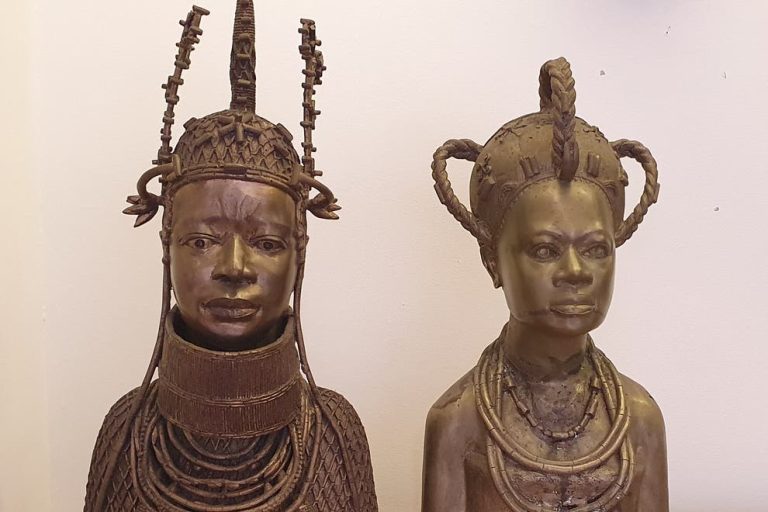
The Museum of Fine Arts in Boston has returned two Benin Bronzes to Nigeria, authorities announced on Monday, marking what officials described as a significant step in the country’s cultural restitution efforts.
Olugbile Holloway, director-general of the National Commission for Museums and Monuments (NCMM), said the handover represents “the return of a huge part of Nigeria’s history,” adding that it reflects Nigeria’s longstanding struggle to reclaim looted heritage.
The bronzes—part of hundreds of plaques and sculptures seized by British forces during the 1897 invasion of the Kingdom of Benin—were crafted from the 1500s and are widely considered priceless. While Western museums in countries including Britain, Germany and the Netherlands have returned several hundred items in recent years, many others remain unaccounted for.
Nigeria’s Culture Minister Hannatu Musa Musawa called the Boston restitution a “historic moment,” saying ongoing negotiations aim to secure the return of all remaining artefacts to their rightful owners.
Debate continues within Nigeria over who should hold custodianship of returned objects. The Oba of Benin insists ownership lies with the Benin Royal Court, while some fear the newly built Museum of West African Arts (MOWAA) may assume control—an intention its managers deny.
The development comes days after Britain and South Africa returned more than 130 gold and bronze artefacts to Ghana’s Asante kingdom. Asantehene Otumfuo Osei Tutu II received the items—ranging from royal regalia to ceremonial drums—at the Manhyia Palace Museum in Kumasi. Many were taken during British military expeditions in the late 19th and early 20th centuries.
The latest Ghanaian restitutions include 110 pieces from the Barbier-Muller Museum in Geneva and 25 others donated by British art historian Hermione Waterfield. In 2024 alone, the Manhyia Palace Museum received 67 restituted or loaned artefacts from institutions such as the British Museum, Victoria and Albert Museum, and the Fowler Museum in Los Angeles.