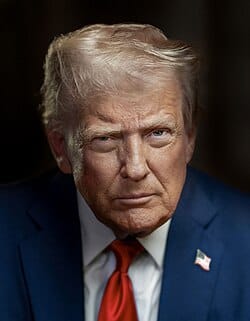
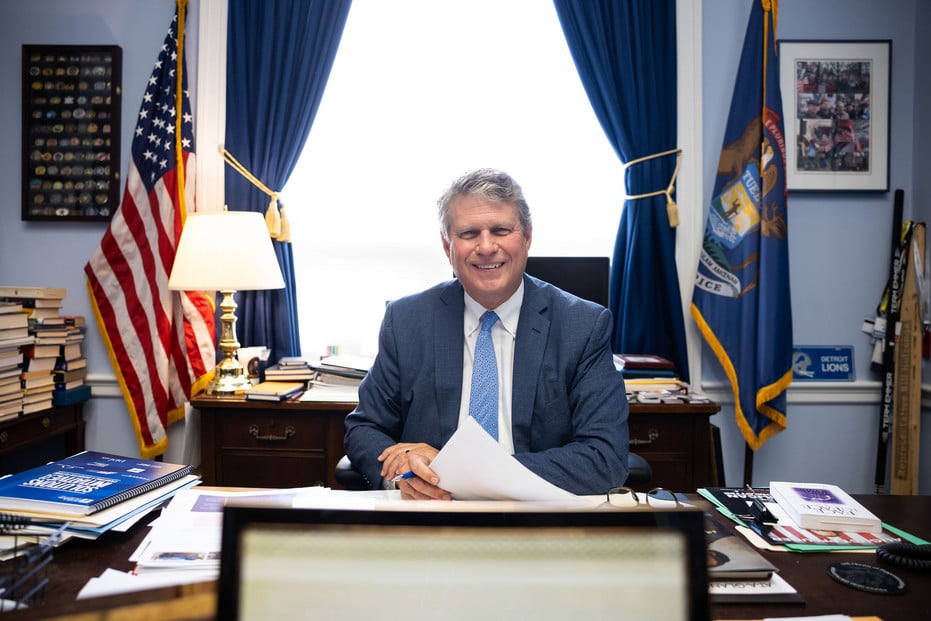
Amid global concerns over U.S. President Donald Trump’s threat to take “military action” in Nigeria, American Congressman Bill Huizenga has reassured that such an invasion is unlikely, noting that Trump’s remarks were more of a warning than a declaration of war.
Huizenga made this known in an interview with Arise TV, monitored by Hobnob News on Tuesday, where he stated that the U.S. President’s outburst was likely aimed at drawing attention to the ongoing killings in Nigeria rather than signaling a real military operation.
“I was surprised by the comments. I suspect that military intervention in Nigeria is not a priority,” Huizenga said. “The President’s intent, I believe, is to stop what he considers genocide against Christians and other Nigerians, not to start another war.”
The lawmaker added that economic sanctions and diplomatic pressure would be more effective in curbing insecurity and cutting off funding for terror networks such as Boko Haram and other extremist groups.
“Sanctions can choke terrorist financing and limit movement,” he noted. “That’s a far more practical approach than deploying troops.”
FG Opens Diplomatic Channels with U.S.
Meanwhile, Nigeria’s Minister of Information and National Orientation, Mohammed Idris, confirmed that diplomatic talks between both countries were ongoing to defuse the growing tension sparked by Trump’s comments.
Speaking during an interview on Sky News’ The World with Yalda Hakim, Idris said communication lines between Abuja and Washington have been reopened.
“Channels of communication have been opened, and both sides are now engaging constructively,” the minister said, adding that the U.S. was beginning to “better understand Nigeria’s diversity and complexity.”
Idris also alleged that certain lobby groups in the U.S. were working with proscribed separatist elements in Nigeria to misinform Washington about the country’s internal security situation.
“We have seen a direct link between some U.S.-based lobbyists and a proscribed terrorist organisation in Nigeria,” he stated. “They have been pushing false narratives to influence U.S. policy.”
He reaffirmed Nigeria’s commitment to religious freedom and insisted that the conflict within the country was not based on religion but driven by broader socio-political and economic factors.
“Some of the data being used to justify claims of Christian persecution cannot stand scientific scrutiny,” he said.
Kalu Supports Trump’s Concern but Calls for Firm Action
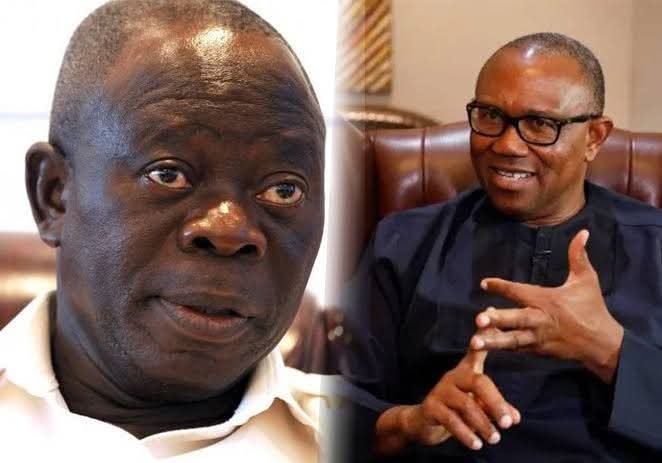
Reacting to the controversy, former Abia State Governor and Senator, Orji Uzor Kalu, said Trump’s concern about killings in Nigeria should not be dismissed.
“It’s not a lie; Nigerians are being killed — Christians and Muslims alike,” Kalu said. “There are jihadists who want to destroy Nigeria, and we must deal with them decisively.”
Kalu noted that he had previously discussed Nigeria’s insecurity with two former U.S. Presidents and several senators, suggesting that Washington’s intelligence may already be aiding Nigeria’s counterterrorism operations.
On domestic politics, he expressed confidence in President Bola Tinubu’s 2027 re-election bid, saying, “The election will be Tinubu vs. Tinubu. The President has no opposition.”
OPC Urges Tinubu to Leverage Global Support Against Terrorism
The Oodua People’s Congress (OPC) also weighed in, urging President Tinubu to utilise Trump’s concerns as an opportunity to strengthen Nigeria’s security collaborations and target terror financiers.
In a statement signed by its Secretary-General, Olubunmi Fasehun, the OPC advised the Federal Government to engage international partners to freeze the assets of individuals and groups funding terrorism.
“The government must take bold steps against powerful networks enabling terrorism, banditry, and ethnic killings,” Fasehun said. “National security must come before politics.”
The OPC pledged to complement government efforts by providing intelligence from communities across the South-West, Kogi, Kwara, Edo, and Delta states, stressing that “security is a shared responsibility.”
“When civilians work hand-in-hand with lawful authorities, crime prevention becomes easier and more effective,” the group said.
— Hobnob News 📰
About the Author