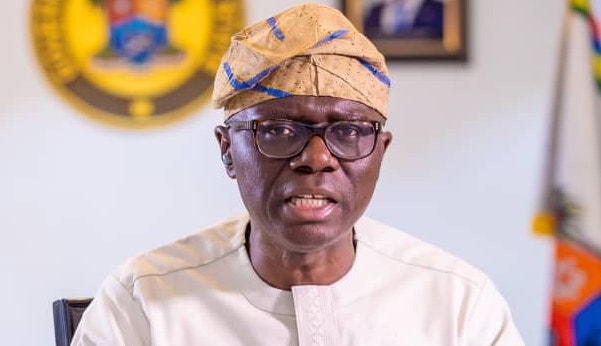
Governor Babajide Olusola Sanwo-Olu says Lagos State is fully prepared to seize emerging business opportunities through stronger partnerships with the Chinese government and private sector investors.
Speaking on Wednesday at the opening of the China Commodities Expo – Nigeria 2025 in Abuja, organised by China’s Trade Development Bureau under the Ministry of Commerce, the governor said Lagos has established itself as a strategic hub for global trade, supported by major projects such as the Lekki Deep Seaport and the Lagos Free Zone.
Represented by the Commissioner for Trade and Investment, Mrs Folashade Ambrose, Sanwo-Olu described the expo as an important platform for enhancing economic cooperation between Nigeria and China, noting that bilateral trade between both countries currently stands at nearly $24 billion.
“With more than 250 Chinese manufacturers and over 5,000 delegates present, this event underscores opportunities across key sectors like automobiles, renewable energy, manufacturing, textiles, electronics, and agriculture,” he said.
The governor reaffirmed Lagos’ commitment to its THEMES+ development agenda, aimed at promoting innovation, industrial growth, and inclusivity, while creating a resilient and globally competitive economy.
He noted that China’s investments of over $1.5 billion in Lagos and across Nigeria have facilitated not only infrastructure development but also technology transfer and skills acquisition, advancing shared prosperity.
Sanwo-Olu encouraged Nigerian businesses to leverage the Expo by pursuing strategic partnerships, prioritising technology transfer, and adopting international best practices to strengthen local manufacturing and economic diversification.
“Through this Expo, we are not only building trade links but fostering long-term collaboration that empowers entrepreneurs, strengthens our workforce, and drives sustainable growth,” he added.
Also speaking, the Consul General of China in Nigeria, Yan Yuqing, said trade between both nations has reached $21.9 billion, accounting for about 8 per cent of total China–Africa trade. She added that overall trade between China and Africa rose to $280 billion in 2024, a 6.1 per cent increase, cementing China’s position as Africa’s largest trading partner for the 16th consecutive year.
Yuqing highlighted Chinese-backed projects such as the Lagos–Ibadan Railway, Lagos Light Rail, Lekki Deep Sea Port, and agricultural modernisation programmes as examples of productive, people-focused cooperation. She said the exhibition demonstrates China’s readiness to deepen practical collaboration and support Nigeria’s industrialisation, digital transformation, and green energy drive.
She also noted that the Fourth Plenary Session of the 20th Central Committee of the Communist Party of China recently adopted the 15th Five-Year Plan, which seeks to expand market access, enhance the business climate, and further advance the Belt and Road Initiative.
“This year marks 25 years of the Forum on China–Africa Cooperation (FOCAC) and 54 years of diplomatic relations between China and Nigeria. Our economic and trade partnership continues to deliver tangible results,” she said.
In his remarks, Wang Deyang, Deputy Director of China’s Trade Development Bureau, said the exhibition covers diverse sectors, including intelligent machinery, agricultural equipment, green building materials, vehicle accessories, and new energy technologies.
He disclosed that more than 30 top Chinese enterprises from provinces such as Shandong, Fujian, Hunan, and Jiangxi are participating in the 3,000-square-metre exhibition area.
“We believe this platform will generate greater business opportunities for enterprises from both countries,” Deyang said, reaffirming his bureau’s commitment to deepening China–Nigeria trade relations.