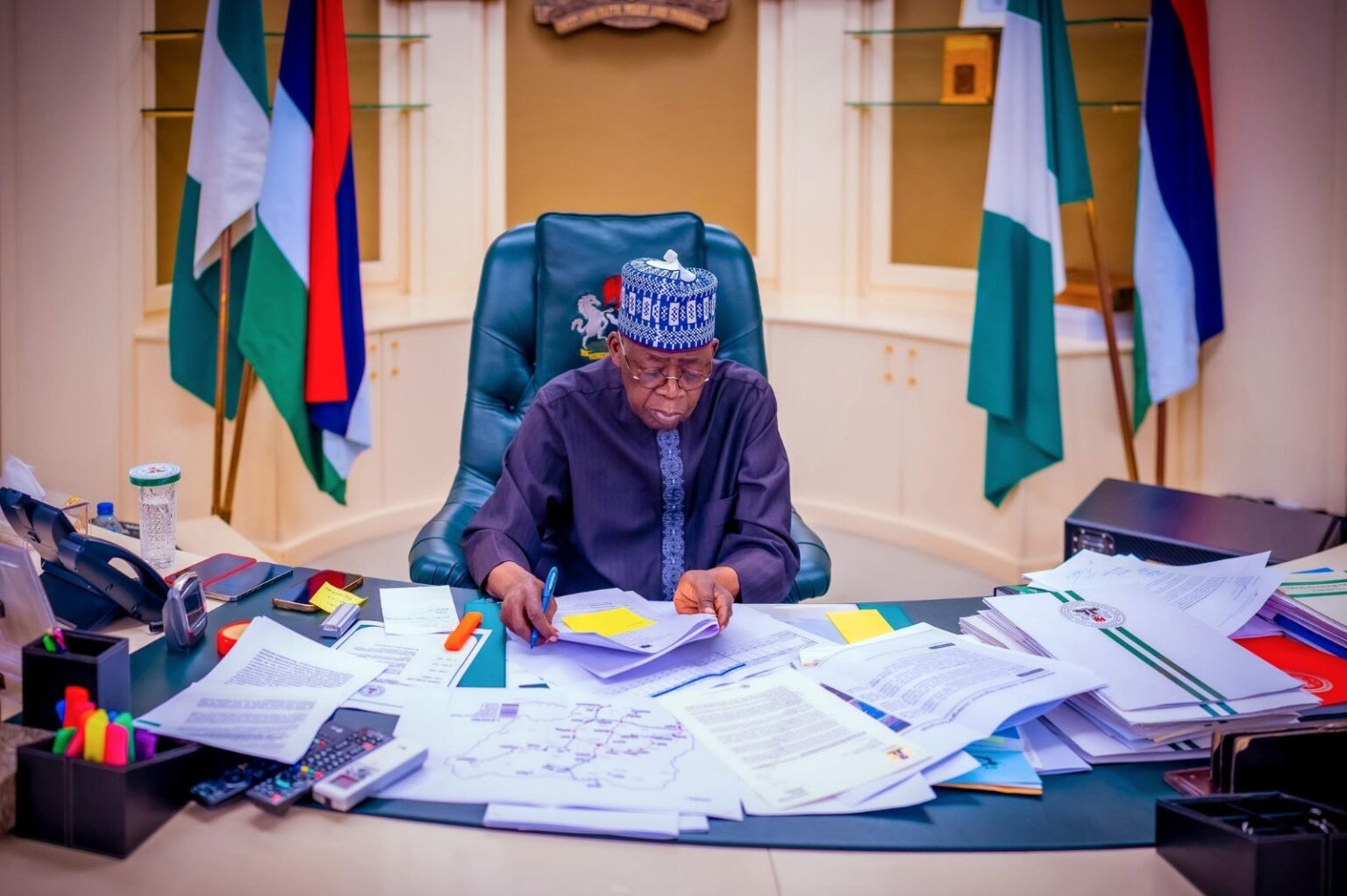
Nigeria’s energy sector has received a fresh boost as global oil and gas giant Shell announced a $2 billion investment in the development of the HI Field, a shallow offshore Non-Associated Gas project located in OML 144.
The announcement was made by the Special Adviser to President Bola Tinubu on Information and Strategy, Bayo Onanuga, in a statement released on Tuesday in Abuja.
According to the Presidency, the project is expected to deliver approximately 350 million standard cubic feet of gas per day (mmscf/d) by 2028. It marks Nigeria’s second major gas investment in just 18 months, reinforcing growing international confidence in the country’s energy reforms under President Tinubu’s administration.
The statement also noted that with this new development, total upstream investment commitments in Nigeria have now exceeded $8 billion since President Tinubu assumed office in 2023.
President Tinubu welcomed the announcement, describing it as a strong validation of his administration’s reform agenda and a clear signal that Nigeria remains a top destination for global energy investment.
“This major FID announcement by Shell, their second in one year, is a clear validation of our wide-ranging reform efforts and a signal to the world that Nigeria is fully open for business and investment,” the President stated.
The HI gas field, first discovered in 1985, will provide nearly one-third of the feedgas required for Nigeria LNG Train 7, which aims to expand the nation’s LNG production capacity by eight million metric tonnes per annum—a 35% increase over current output.
This latest project follows other significant developments, including the Ubeta Non-Associated Gas Project and the Bonga North Deepwater Project, making it the third major oil and gas Final Investment Decision (FID) in less than two years.
Combined, the HI and Ubeta projects are projected to supply up to 15% of Nigeria LNG’s total feedgas requirements across Trains 1 to 7.
The Special Adviser to the President on Energy, Olu Arowolo Verheijen, attributed the success to the administration’s targeted policy interventions, notably Presidential Directive 40, which introduced a competitive fiscal framework for onshore and shallow offshore gas projects.
“With the Ubeta and HI FIDs, we have secured the gas supply needed to make NLNG Train 7 not just possible, but transformative,” Verheijen explained.
“These projects will strengthen Nigeria’s LNG exports, expand domestic LPG availability, reduce import dependence, and advance clean cooking access for millions of homes.”
Also speaking, Shell’s Upstream President, Peter Costello, reaffirmed the company’s long-term commitment to Nigeria, noting that the new investment builds on its ongoing expansion efforts.
“Following recent investment decisions related to the Bonga Deepwater development, today’s announcement demonstrates our continued commitment to Nigeria’s energy sector, with a focus on Deepwater and Integrated Gas,” Costello said.
The Presidency reiterated that President Tinubu’s administration remains committed to creating a business-friendly environment that attracts both local and international investment, positioning Nigeria as a competitive and reliable player in the global gas market.
About The Author