Thousands of Brazilians poured onto the streets on Sunday to denounce moves by Congress to expand lawmakers’ immunity and push for an amnesty bill that could benefit far-right former president Jair Bolsonaro, who was recently sentenced to 27 years in prison for attempting to stage a coup.
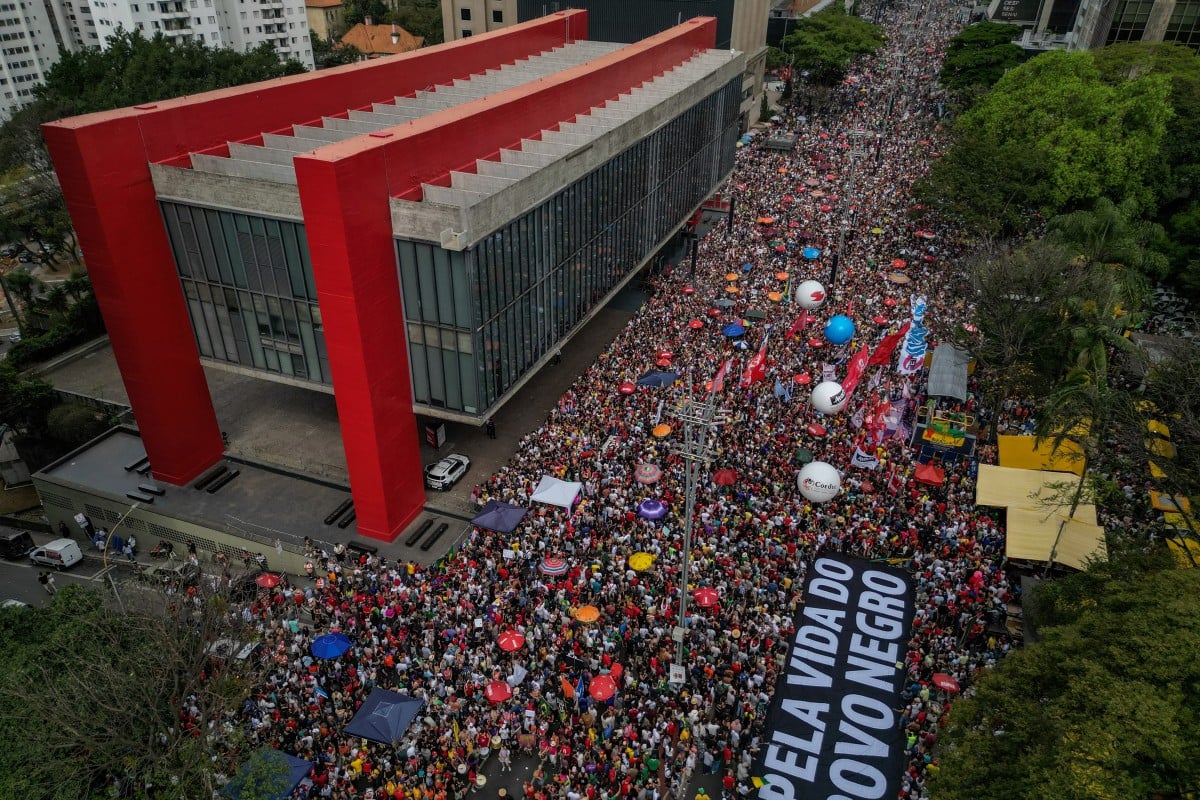
The protests, spanning more than a dozen cities, reflect growing public anger at what many see as a Congress prioritizing self-preservation over urgent social and economic challenges. Demonstrators chanted “No amnesty!” as they marched in Rio de Janeiro, São Paulo, and Brasilia.
In Rio, legendary musicians Caetano Veloso, Gilberto Gil, and Chico Buarque joined the movement, staging a protest concert on Copacabana Beach. In São Paulo, throngs of people filled Paulista Avenue, while Brasilia also saw massive gatherings.
“We are here to protest this Congress, which is made up of criminals and corrupt people dressed as politicians, who are pushing for a law that protects them,” said Aline Borges, a 34-year-old environmentalist, during the protest in Brasilia.
The wave of demonstrations follows the lower house’s approval of the controversial “Shielding Bill,” which requires lawmakers’ consent through a secret ballot before one of their own can be charged or arrested.
Adding to the outrage, legislators fast-tracked another proposal seeking amnesty for those convicted over the January 2023 attack on government institutions after Bolsonaro’s electoral defeat — a move that could potentially absolve the ex-president.
Political Fallout and Reactions
House Speaker Hugo Motta, of the Republicanos party, defended the immunity measures as protection against judicial overreach. However, political experts, such as Professor Mayra Goulart of the Federal University of Rio de Janeiro, described the Shielding Bill as a pushback against judicial scrutiny of lawmakers’ use of budgetary amendments — a tool often leveraged to secure re-election.
Several deputies have since apologized for voting in favor of what critics have branded the “Banditry Law,” citing political pressure. Pedro Campos, a state deputy, claimed his support was intended to prevent the “boycott of important agendas” under President Luiz Inácio Lula da Silva’s government.
Prominent voices in Brazil’s cultural scene also condemned the bills. Veloso insisted such legislative maneuvers “cannot go unanswered by the Brazilian people,” while funk star Anitta urged her fans to imagine crimes going unpunished simply because perpetrators enjoyed political protection.
Next Steps
Both bills now head to the Senate, where they face a tougher battle. President Lula has already vowed to veto the amnesty proposal, criticizing lawmakers for focusing on what he described as “non-serious matters” instead of addressing the nation’s pressing needs.
The protests mark one of the largest displays of civic resistance since Bolsonaro’s trial, underscoring deep divisions within Brazil’s political landscape.
About the Author