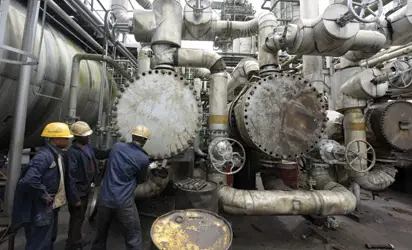
The Petroleum Products Retail Outlet Owners Association of Nigeria (PETROAN) has voiced strong opposition to the Nigerian National Petroleum Company Limited’s (NNPCL) decision to retain ownership and control of the Port Harcourt Refining Company (PHRC), calling instead for its full privatisation.
In a statement issued by its spokesperson, Joseph Obele, PETROAN described NNPCL’s move as “disappointing and counterproductive”, arguing that privatisation is essential for efficiency, investment attraction, and sustainable economic growth.
“This isn’t good news. Plans to sell the Warri and Kaduna refineries while keeping Port Harcourt under NNPCL’s control raise serious concerns, given the company’s long-standing issues with corruption and favoritism,” Obele stated.
He stressed that NNPCL’s historical mismanagement has contributed to fuel scarcity, inflated prices, and widespread economic hardship, insisting that the retention of PHRC contradicts reform objectives.
Obele highlighted the benefits of privatising the refinery, including increased operational productivity, foreign and local investment, transfer of technical expertise, job creation, and improved product availability across the country.
The criticism follows recent remarks by NNPCL’s Group Chief Executive Officer, Bayo Ojulari, during a company-wide town hall meeting in Abuja. Ojulari announced that NNPCL would no longer sell the Port Harcourt refinery, affirming its commitment to complete ongoing rehabilitation works and retain full ownership of the plant.
This announcement marks a reversal from Ojulari’s earlier stance in June, when he hinted at the possible sale of all three major refineries—Port Harcourt, Warri, and Kaduna— due to complex repair challenges.
Ojulari clarified that the latest decision was based on technical and financial evaluations, not a shift in policy.
Nonetheless, PETROAN insists that the federal government should reconsider the strategy, urging President Bola Tinubu to approve the privatisation of PHRC in the interest of national development and energy sector efficiency.