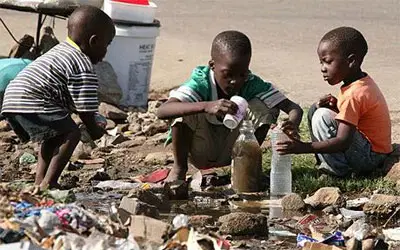

The United Nations Children’s Fund (UNICEF) has raised fresh concerns over the recurring cholera outbreak in Nigeria, describing the disease as now endemic in the country.
According to Gilles Fagninou, UNICEF Regional Director for West and Central Africa, Nigeria recorded 3,109 suspected cholera cases and 86 deaths across 34 states as of June 2025, making it the second most affected country in the West and Central Africa region.
“Cholera remains endemic in Nigeria, with the country experiencing recurrent major outbreaks in recent years,” Fagninou said during a press briefing on Wednesday.
He warned that the region faces a growing public health emergency, particularly for children, as the rainy season accelerates the spread of the disease.
“Some 80,000 children are estimated to be at high risk of cholera across the region,” he stated. “Heavy rains, widespread flooding, and high levels of displacement are all fuelling transmission and endangering lives.”
Fagninou explained that cholera, caused by ingesting contaminated food or water, can lead to fatal dehydration within hours if left untreated. While treatable with oral rehydration solutions and antibiotics, its rapid onset and spread continue to overwhelm under-resourced communities.
In the Democratic Republic of Congo (DRC) currently the hardest-hit country in the region, over 38,000 cases and 951 deaths were recorded in July alone. Children under five now make up 26% of cases in the DRC, prompting fears of the worst cholera crisis since 2017.
Other countries facing active epidemics include Chad, the Republic of Congo, Ghana, Côte d’Ivoire, and Togo, while Niger, Liberia, Benin, the Central African Republic, and Cameroon remain under close surveillance due to high vulnerability.
UNICEF says it has responded by delivering critical health, hygiene, and sanitation supplies to affected communities, as well as supporting vaccination campaigns and expanding community outreach.
“We are in a race against time, working with authorities to ensure access to essential healthcare, safe water, and nutrition,” Fagninou said.
He stressed the need for urgent funding, revealing that UNICEF West and Central Africa requires $20 million over the next three months to scale up life-saving interventions.
“Together with partners, we are strengthening community engagement and reaching remote areas to ensure that no child is left behind,” he concluded.