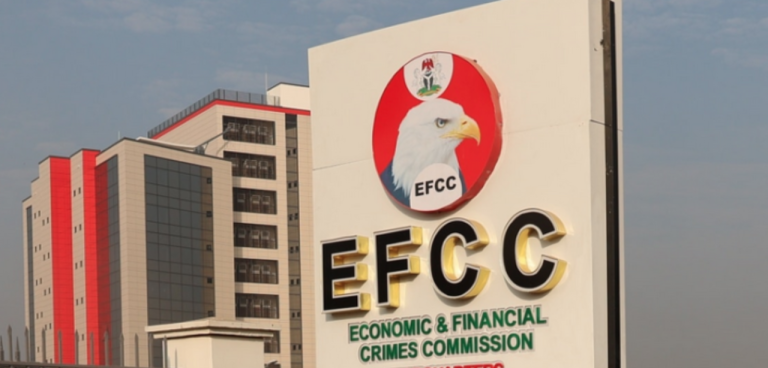
The Executive Chairman of the Economic and Financial Crimes Commission (EFCC), Mr. Ola Olukoyede, has urged Nigerians to desist from abusing the naira, warning that acts such as spraying, stamping, or mutilating the currency are criminal offences—not expressions of culture.
Speaking during a stakeholder sensitisation event in Lagos on Friday, Olukoyede emphasized that the naira remains a core symbol of Nigeria’s sovereignty and must be treated with dignity.
“There is nothing cultural about destroying our national currency,” the EFCC boss stated. “Nobody who works hard to earn money throws it into the air. Spraying or stamping on naira is a punishable offence under Nigerian law.”
He added that the Commission is actively clamping down on currency abuse and unlicensed foreign exchange operators. A task force focused on the dollarisation of the economy and naira abuse has been launched in collaboration with the Central Bank of Nigeria.
Olukoyede addressed criticisms that the EFCC should focus solely on high-profile crimes, stressing that no offence under the law is too small to be prosecuted. “Ignorance of the law is not an excuse. Some celebrities already facing prosecution can attest to this,” he said.
Under his leadership, the EFCC has reportedly shifted to a more strategic enforcement approach—one that balances justice with economic recovery. “Unlike the past, businesses under investigation are no longer arbitrarily shut down. We now have operational guidelines to protect jobs and investors,” Olukoyede explained.
He further revealed that over N100 billion in recovered illicit funds has been redirected into social intervention initiatives under the Tinubu administration. These include the Nigerian Education Loan Fund and the CrediCorp consumer credit scheme.
Among notable recoveries:
A recovered asset from the Niger Delta Development Commission was converted into a skill acquisition centre in Bayelsa.
Another property, formerly owned by a civil servant in Kaduna, is now home to the Federal University of Applied Sciences, Kachia.
In international collaborations, the EFCC has facilitated the restitution of stolen funds to victims in the U.S., Spain, and Canada.
Olukoyede also disclosed the arrest of 792 suspects during sting operations in Lagos and Abuja—many reportedly linked to a cross-border cybercrime syndicate. Over 150 of those arrested, mostly Chinese nationals, have already been prosecuted.
In addition, four former governors and three ex-ministers are currently standing trial for corruption-related offences, he confirmed.
To prevent future financial crimes, the EFCC has created a Fraud Risk Assessment and Control Department and launched a dedicated radio station—EFCC Radio 97.3 FM—to deepen public education. Weekly outreach programs now air on television, radio, and X Spaces (formerly Twitter).
Olukoyede concluded by calling for collective action:
“This fight to restore the dignity of our currency and tackle corruption is not for the EFCC alone. It’s a duty we must all take seriously as Nigerians.”