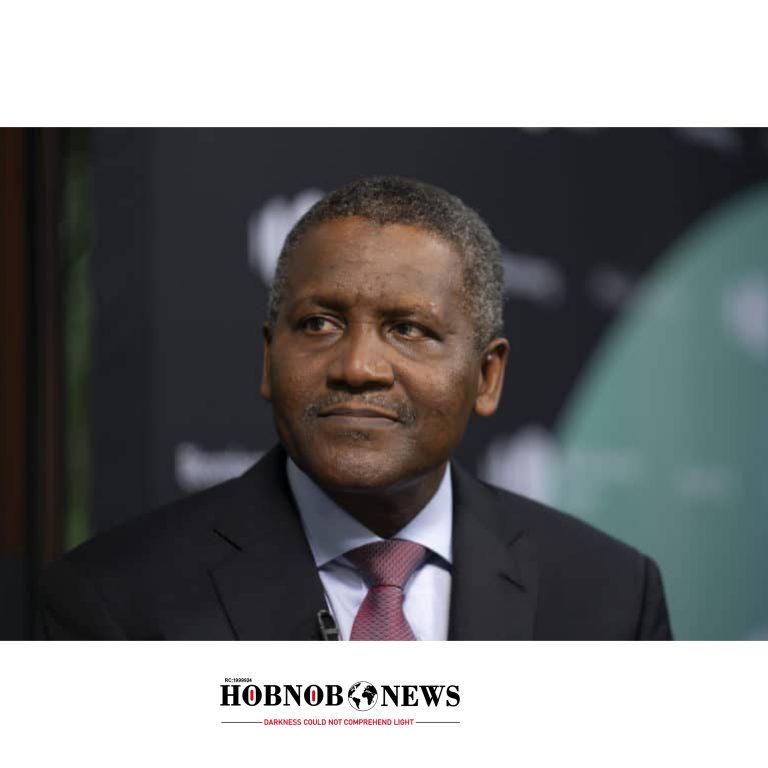
Alhaji Aliko Dangote, President of Dangote Group, has announced plans to lower the price of Liquefied Petroleum Gas (LPG), also known as cooking gas, warning that if current distributors fail to reduce prices, his company may start selling directly to consumers. He made this known during a tour of his refinery in Lekki, Lagos, with local and international visitors.
Dangote said the refinery currently produces 22,000 tonnes of LPG daily and is scaling up output to meet Nigeria’s growing demand for gas as a cooking fuel. Addressing members of Lagos Business School CGEO Africa, he noted: “Nigeria is gradually moving to the usage of LPG. But I believe it is expensive. We’re trying to bring down the price and make it cheaper.”
He added, “If the distributors are not trying to bring it down, we’ll go directly and sell to the consumers, so that people will now transit from firewood or kerosene to LPG for cooking.”
The price of cooking gas currently ranges between N1,000 and N1,300 per kilogramme. Dangote said the goal is to make it more affordable for everyday Nigerians.
However, some industry operators have criticised Dangote’s plan, accusing him of seeking to dominate the LPG sector. On Monday, dealers expressed fears of a possible monopoly.
Godwin Okoduwa, former Chairman of the LPG and Natural Gas Downstream Group of the Lagos Chamber of Commerce and Industry, described Dangote’s move as monopolistic. He said Nigeria’s LPG market grew from 70,000 metric tonnes in 2007 to over 1.3 million metric tonnes in 2022 through collaborative efforts involving the Federal Government, Nigeria LNG, and offtakers.
“I think it’s monopolistic. Growth should come through collaboration. Today, we are just under 5kg or 6kg per capita consumption in LPG. Other countries like South Africa, Morocco, and Tunisia do much more. We can do more as a country,” Okoduwa said.
He warned against allowing one player to undermine others, arguing that people have invested heavily in the sector. “Yes, Dangote has invested, but he should not frustrate existing players. The work has been done. He should respect the market and let it grow. It should be collaborative.”
Okoduwa advised Dangote to focus on expanding the market rather than undercutting competitors: “The Nigerian market can grow from 1.3 million tonnes to 5 million tonnes. He should work towards collaboration because everyone benefits.”
When reminded that Dangote’s focus is on making gas more affordable, Okoduwa replied, “He should go to the Northeast, where LPG consumption is lowest, and develop infrastructure there. We’ll thank him for that.”
Bassey Essien, Executive Secretary and CEO of the Nigerian Association of Liquefied Petroleum Gas Marketers, also questioned the feasibility of Dangote’s plan. “It’s unrealistic. Has the refinery been able to sell petrol directly to us at a cheap rate?” Essien asked, expressing doubt about direct sales and a significant price drop in cooking gas.