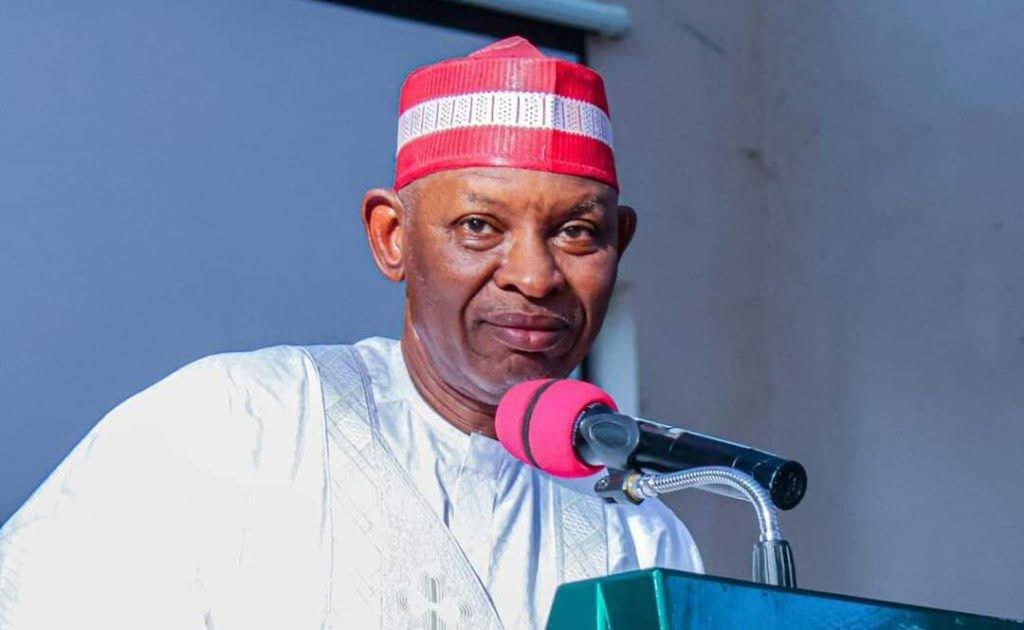
The Kano State Government has formally submitted a proposal for the creation of a new state and 26 additional local government areas (LGAs) within its current territory, citing the need to accommodate its fast-growing population and extensive landmass.
The request was presented during the North West zonal public hearing of the House of Representatives Committee on Constitution Review, held Saturday in Kaduna.
Leading Kano’s delegation, Deputy Governor Aminu Gwarzo described the proposal as “a necessary step toward deepening grassroots development and enhancing governance.” The move would increase Kano’s current LGAs from 44 to 70.
“With Kano’s burgeoning population and vast landmass, carving out another state is long overdue,” Gwarzo told lawmakers. “Increasing the number of local governments from 44 to 70 will help deepen grassroots development and participation.”
Gwarzo further declared the state’s full support for broader restructuring efforts across Nigeria. “Kano identifies with the yearnings of various communities for restructuring and therefore supports the creation of new states, provided such moves comply with Section 8 of the Constitution,” he said.
The proposals, according to Gwarzo, were the result of widespread consultations with community stakeholders, including traditional rulers, civil society organizations, and grassroots leaders. The process was coordinated by a 22-member committee and endorsed by Governor Abba Kabir Yusuf following extensive public engagement, including radio phone-in programs and a town hall at Mambayya House, the historic residence of Mallam Aminu Kano.
In addition to the request for a new state and LGAs, Kano advocated constitutional amendments that would recognize local governments as a fully independent third tier of government. Specifically, the state called for amendments to Sections 2(2), 7, and 162(5) of the 1999 Constitution to guarantee fiscal autonomy and improve service delivery at the grassroots.
“Kano notes the subtle exclusion of local governments in the existing federal structure,” Gwarzo said. “We advocate for reforms that grant them proper constitutional footing, with safeguards for accountability and strategic synergy with state objectives.”
Addressing the issue of national security, Kano expressed strong support for the creation of state police, stressing the need for well-defined operational boundaries and coordination with the Nigeria Police Force.
“Kano believes that while state police will close glaring security gaps, there must be defined areas of operational competence between it and the national police,” the memorandum submitted to the committee stated.
The state also called for enhanced constitutional roles for traditional rulers, recommending that their selection process be insulated from political interference. It further proposed the establishment of a National Council of Traditional Rulers, composed of chairpersons of state councils of chiefs, to advise the Federal Government on national matters.
Kano’s bold constitutional demands are among the most comprehensive yet in the ongoing constitutional review process, highlighting both the urgency of decentralization and the rising demands for local empowerment and reform across Nigeria.
About The Author