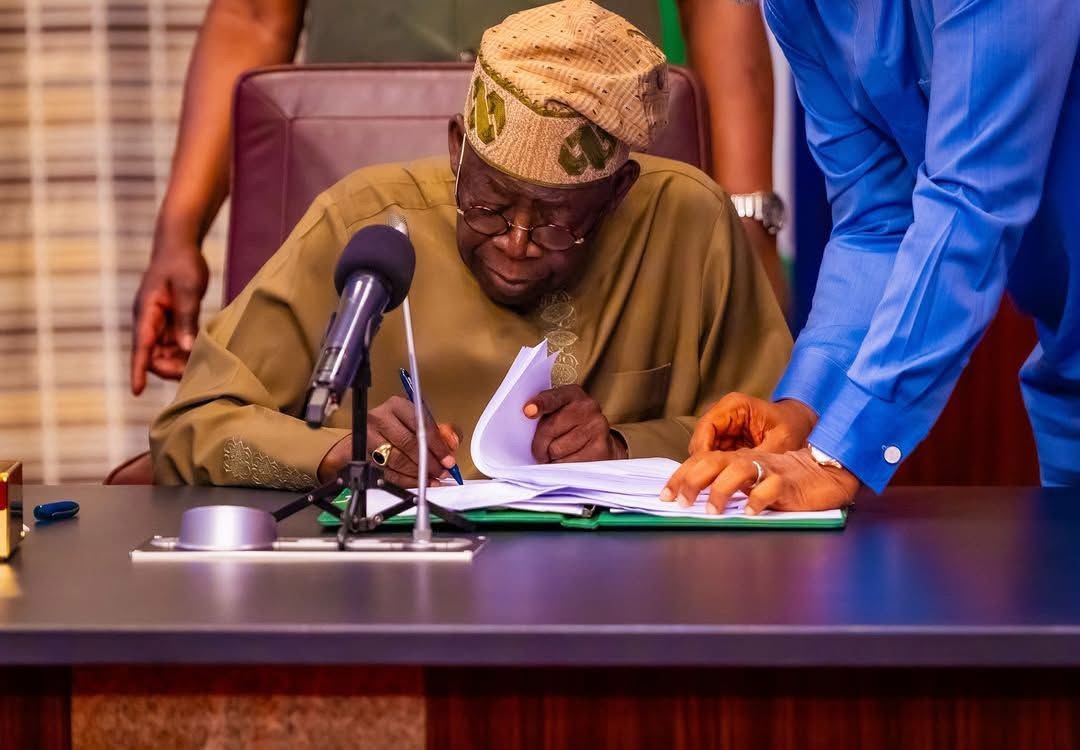
In a rare moment of political consensus, Nigerians from various sectors are applauding President Bola Ahmed Tinubu for championing the sweeping tax reform bill that was signed into law this week. Experts and citizens alike are calling it one of the most progressive and people-focused tax reforms in decades.
The new bill, which will take effect in the 2026 fiscal year, introduces a range of tax reliefs and structural reforms designed to reduce the burden on everyday Nigerians, stimulate business growth, and close long-abused loopholes in tax collection.
Here’s what’s changing—and why it matters:
1. Small Business Relief:
For micro and small businesses with annual turnover of ₦50 million or less, company income tax has been completely scrapped. Previously, only businesses making ₦25 million or less were exempt.
2. Personal Income Tax Exemption for Low-Income Earners:
Anyone earning ₦83,000 or less per month will no longer pay personal income tax. This is a major win for Nigeria’s most vulnerable citizens who previously bore an unfair share of the tax load.
3. Tax Cuts for the Middle Class:
Individuals earning ₦1.7 million or less annually will now pay lower personal income tax, offering relief to Nigeria’s struggling middle class.
4. Severance and Retirement Pay Protected:
The first ₦50 million received as severance or retirement benefits will now be tax-free, offering a critical buffer for laid-off workers and retirees.
5. VAT Removed from Essentials:
Value Added Tax (VAT) has been eliminated on key everyday essentials like food items, baby food, school fees, hospital bills, and electricity. This move directly eases the cost of living for millions.
6. Remote Workers Now Taxable:
Nigerians working remotely for foreign companies—especially those paid in foreign currency—must now register and pay tax. With tools like BVN tracking and financial monitoring in place, compliance will be enforced more effectively.
7. Single Federal Tax Agency:
A new federal agency, the Nigerian Inland Revenue (NIR), will now handle all federal tax collections. This ends the era of multiple, overlapping agencies at ports and borders and is expected to reduce corruption significantly.
8. Unified State and Local Tax Boards:
States and Local Government Areas must now operate under a single tax board, streamlining collections and ending the confusion of multiple levies from different agencies.
9. Tax Disputes Get Their Own Court:
A dedicated Tax Appeal Court has been established to handle all tax-related disputes efficiently and fairly.
10. Implementation Timeline:
These reforms are set to roll out from January 2026, giving governments, businesses, and individuals time to prepare.
From business owners to civil society groups, there has been widespread praise. “This is the kind of policy that shows real leadership,” said Ifeoma Adebayo, a Lagos-based tax consultant. “It doesn’t just raise revenue—it protects the most vulnerable and gives small businesses room to breathe.”
While some critics remain skeptical about enforcement and government accountability, there is no denying the ambition and reach of the reform. For once, Nigeria’s tax system appears to be working for the people—and many say President Tinubu deserves the credit.
About the Author