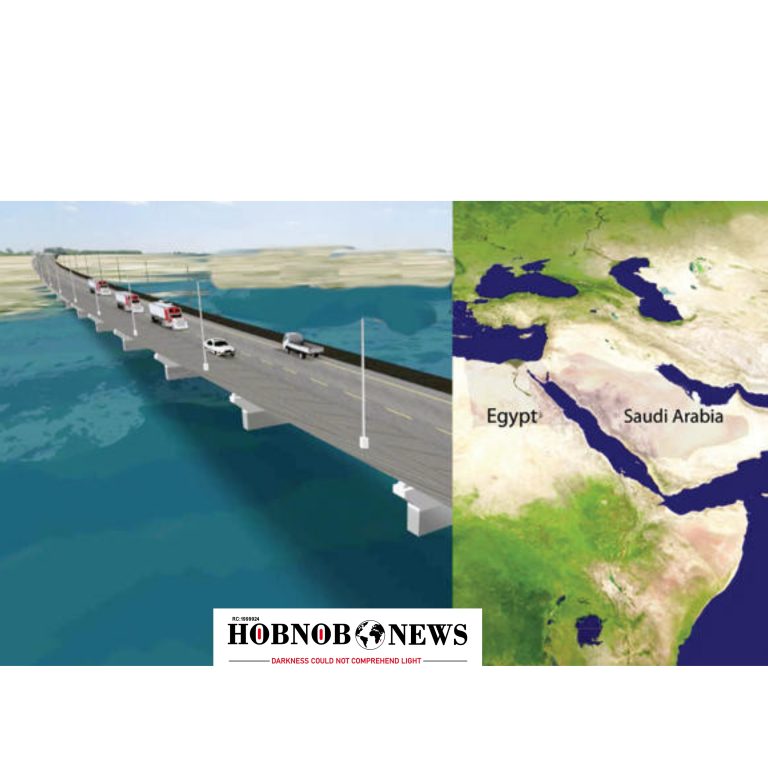
Egypt is set to build a 32-kilometre-long bridge across the Red Sea, connecting Sharm el-Sheikh with Ras Hamid in Saudi Arabia. Named the Moses Bridge, this $4 billion project aims to strengthen economic and cultural ties between the two countries by boosting trade, tourism, and regional connectivity. The bridge aligns with Saudi Arabia’s Vision 2030, which seeks to diversify its economy and promote tourism, while supporting Egypt’s development goals.
Planning for the Moses Bridge has reportedly been completed, and the project is ready for implementation. The bridge would create a direct land link between Africa and Asia, facilitating faster transportation of goods and people. This is expected to increase the flow of pilgrims traveling to Saudi Arabia’s holy cities, as well as attract more tourists to Egypt’s Sinai Peninsula and Saudi Arabia’s Red Sea coast.
Despite the promise, the project faces several challenges. The Red Sea is home to sensitive coral reefs and diverse marine life, raising environmental concerns. Experts stress the importance of conducting thorough impact assessments and adopting protective measures to safeguard these ecosystems. Moreover, the sea’s considerable depth and strong currents make the engineering and construction of such a long bridge technically demanding.
Geopolitical tensions and past delays add further uncertainty, and no official construction date has been set. If completed, the Moses Bridge would represent a landmark achievement in infrastructure, fostering stronger ties and enhancing connectivity between Egypt and Saudi Arabia across continents.