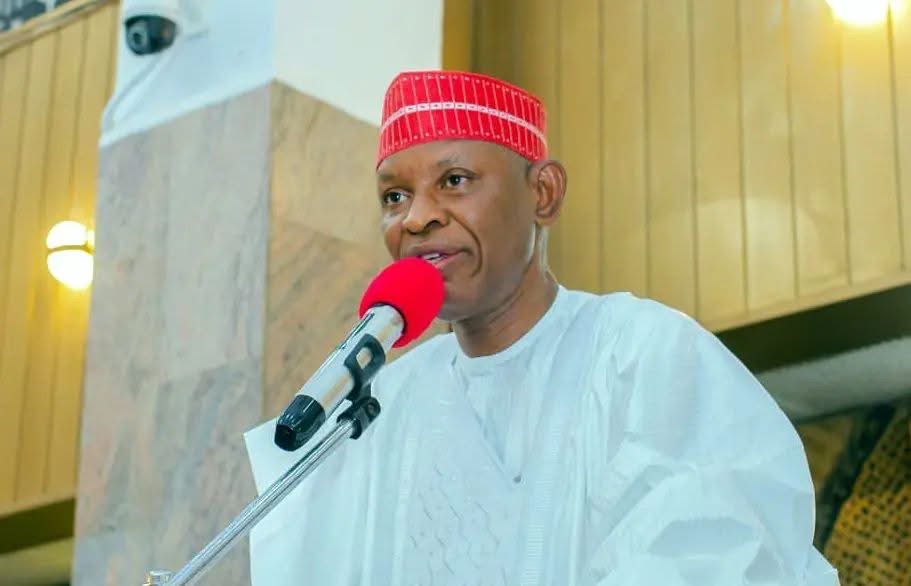
Kano State Governor Abba Kabir Yusuf has signed into law a ₦16 billion irrigation project at Jakara Dam, a move hailed by officials as a cornerstone of the state’s push to revolutionize agriculture and boost food security.
The signing ceremony, held during the 28th Executive Council Meeting, also formalized two critical legislative instruments: the Water Users Association Establishment Law, 2025, and an amendment to the Water Resources Engineering and Construction Agency (WRECA) Law. The amendment enables the appointment of a Deputy Managing Director for WRECA, aimed at strengthening the agency’s leadership capacity for major infrastructure projects.
According to Mustapha Muhammad, Chief Press Secretary to the Governor, the enactment of the Water Users Association Law paves the way for immediate action on the Jakara Dam initiative.
“With the passage of this bill into law, the Kano State Government can now commence the construction of a large-scale irrigation project at Jakara Dam,” Muhammad said. “This project has the capacity to provide 1,500 hectares for irrigation farming.”
The Commissioner for Water Resources, Hon. Haruna Doguwa, emphasized the financial and social impact of the legislation, noting that it unlocks access to ₦16 billion in funding for the dam’s development.
“Thousands of farmers in Minjibir, Gabasawa, Gezawa, and surrounding areas will benefit directly,” Doguwa stated. “This law allows us to not only build the infrastructure but also support farmers with a dedicated ₦5 billion account, aimed at boosting off-season farming.”
Doguwa highlighted that the project will contribute significantly to job creation, wealth generation, and increased agricultural output in Kano State.
Governor Yusuf, who has consistently placed agriculture and infrastructure at the center of his administration’s policy agenda, is expected to oversee the rollout of the project, which stakeholders say could become one of the most transformative in the region’s history.
“This is not just a dam,” Doguwa added, “it’s a game-changer for food production, economic empowerment, and rural development in Kano.”
About The Author