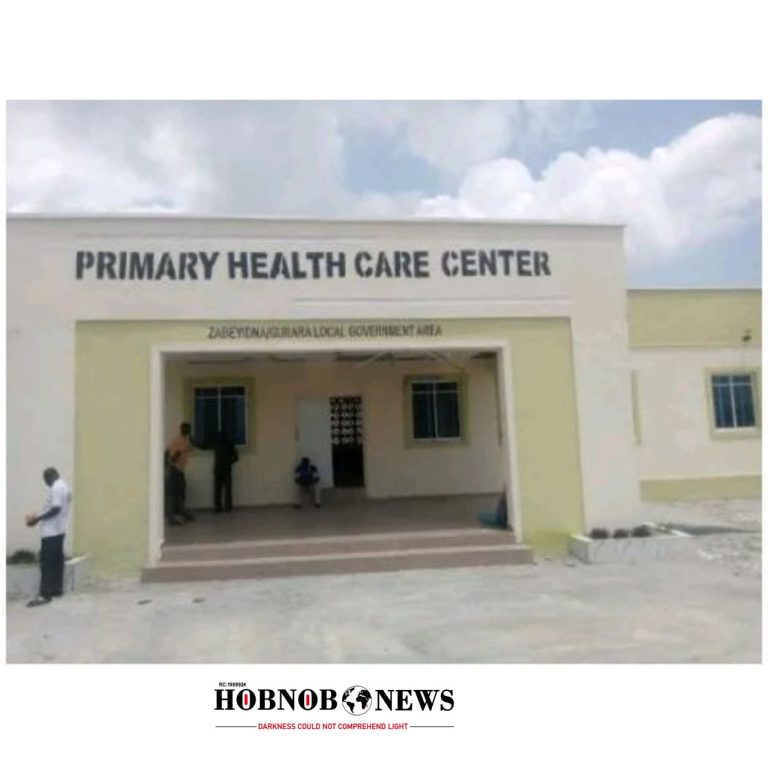
The Federal Government has unveiled plans to revitalize over 901 Primary Health Centres (PHCs) across Nigeria, through the National Primary Health Care Development Agency (NPHCDA).
This initiative aims to strengthen the healthcare system and improve service delivery in rural areas.
Additionally, the government intends to upgrade 2,701 more PHCs to ensure every ward in the country has at least one functional health centre.
Dr. Muyi Aina, the Executive Director of NPHCDA, shared this information at the agency’s first quarterly news conference for 2025, held in Abuja.
He explained that this initiative forms part of the Nigeria Health Sector Renewal Investment Programme and the Health Sector Strategic Blueprint.
The NPHCDA’s strategy focuses on three main pillars: improving the primary healthcare (PHC) system, rebuilding public trust in healthcare services, and enhancing health security.
Aina emphasized that the primary goal is to ensure every Nigerian has access to quality and functional primary healthcare, regardless of location. “Our goal is to rebuild trust in our health system by ensuring that every Nigerian, regardless of their location, has access to quality and functional primary health care,” he stated.
A key component of the revitalization efforts involves addressing service delivery gaps that were identified after assessing over 18,000 PHCs nationwide. These gaps are being addressed through increased federal investments and partnerships with state governments and development partners. The government also plans to expand the number of PHCs funded under the Basic Healthcare Provision Fund (BHCPF) from 8,406 to 17,600.
Aina added that funding for PHCs will be tiered based on service volume. High-volume PHCs will now receive N800,000 per quarter, while low-volume centres will receive N600,000, up from the previous uniform rate of N300,000. Additionally, the agency introduced new digital tools to improve transparency and accountability in PHC operations. These include a real-time public dashboard for monitoring PHC progress (available at https://phc.nphcda.gov.ng) and a digital financial management app, which has been piloted in four states.
One of the highlights of the revitalization plan includes the launch of a digitised financial management system to enhance fund usage and reporting across PHCs. The four gateways of the BHCPF will also be expanded to include the National Health Insurance Authority (NHIA), Nigeria Centre for Disease Control (NCDC), and National Emergency Medical Services and Ambulance System (NEMSAS), in addition to NPHCDA. These will support infrastructure, health security, and emergency responses.
Aina also reiterated the government’s commitment to the revitalization of PHCs with the mobilization of $1 billion for the project. “A commitment to the accountable use of the one billion dollars mobilized by the Federal Government for PHC revitalization,” he confirmed. The funding model will vary based on the capacity and service volume of each PHC, ensuring targeted investment in areas that need it most.
Furthermore, workforce development is a priority, with the NPHCDA focusing on building a skilled workforce to ensure consistent staffing at PHCs. The agency is working with state governments to strengthen staffing and operational consistency at these centres.
In line with the country’s efforts to improve primary health care, the NPHCDA is also committed to providing life-saving vaccines to every child and community in Nigeria. As part of African Vaccination Week 2025, Aina emphasized the importance of immunization in primary healthcare. “Immunization for All is Humanity Possible,” he stated, urging Nigerians to use the public dashboard to monitor PHC progress and support transparency in the health system.
Dr. Eshetu Wassie, Head of the Expanded Programme on Immunization at the World Health Organization (WHO), underscored that immunization is a cornerstone of primary healthcare and a fundamental human right. He noted that vaccines have saved more than 154 million lives in the last 50 years and stressed the need to recommit to immunization efforts during African Vaccination Week 2025. “As we gather for 2025 and African Vaccination Week, I urge all of us, governments, partners, health workers, communities, and the media to recommit to this life-saving mission,” Wassie said.
UNICEF’s representative in Nigeria, Ms. Cristian Munduate, highlighted the challenge of reaching vulnerable populations, noting that one in three infants remains unreached, with “zero-dose” children being particularly vulnerable.
She called for stronger partnerships, increased domestic funding, and community-driven solutions to address barriers like insecurity and vaccine access.
Munduate also urged the media to help build trust in vaccines, ensuring that no child is left behind. “I urge the media to help build trust in vaccines and ensure that no child is left behind, rather than amplifying misinformation,” she stated.