
Hobnob News Report:
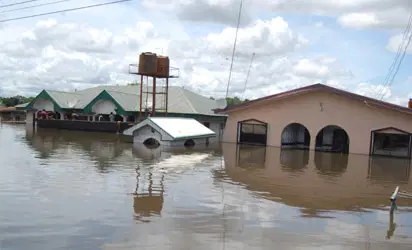
The Federal Government has raised a serious alarm over anticipated flooding across 33 states and the Federal Capital Territory (FCT) in 2025. According to the Nigeria Hydrological Services Agency (NIHSA), over 1,249 communities in 176 Local Government Areas (LGAs) are expected to face severe flooding.
During the official release of the 2025 Annual Flood Outlook in Abuja, the Minister of Water Resources and Sanitation, Prof. Joseph Utsev, noted that floods remain among the most destructive natural disasters, severely impacting lives, infrastructure, agriculture, and livelihoods.
In addition to the high-risk areas, another 2,187 communities in 293 LGAs across 31 states and the FCT are predicted to experience moderate flood risk this year.
States identified in the high-risk category include Abia, Adamawa, Akwa Ibom, Anambra, Bauchi, Bayelsa, Benue, Borno, Cross River, Delta, Ebonyi, Edo, FCT, Gombe, Imo, Jigawa, Kebbi, Kogi, Kwara, Lagos, Nasarawa, Niger, Ogun, Ondo, Osun, Oyo, Rivers, Sokoto, Taraba, Yobe, and Zamfara.
Utsev explained that the 2025 flood forecast was designed to promote awareness, enhance preparedness, and strengthen resilience in vulnerable communities. He emphasized the importance of this year’s theme—community preparedness and adaptation—given the recurring nature of floods in Nigeria.
The forecast is divided into three major components: a general flood outlook, a communication strategy for timely warning dissemination, and a mitigation plan to reduce exposure and vulnerability.
Breakdown of high-risk periods indicates that:
657 communities in 52 LGAs are expected to face high flooding between April and June;
544 communities in 142 LGAs between July and September;
484 communities in 56 LGAs from October to November.
Moderate flooding is forecasted for:
445 communities in 116 LGAs from April to June;
1,458 communities in 271 LGAs from July to September;
1,473 communities in 171 LGAs between October and November.
Urban and flash flooding is also anticipated in major cities such as Abuja, Lagos, Port Harcourt, Ibadan, Kano, and Makurdi, largely due to poor drainage systems and decaying infrastructure. Coastal areas—Bayelsa, Cross River, Delta, Lagos, Ogun, Rivers, and Ondo—may also face threats from rising sea levels and tidal surges.
To tackle these challenges, the government is initiating several projects, including a National Flood Insurance Programme (to begin in Kogi and Jigawa states), the Niger Flood Project for flood control and river navigation, and the launch of an Integrated Climate Resilience Project.
Utsev called on stakeholders and citizens to actively support government efforts in fostering flood-resilient communities across Nigeria.
Meanwhile, the NIHSA Director-General, Umar Mohammed, reiterated the agency’s dedication to using cutting-edge technology and inter-agency collaboration to provide accurate and timely forecasts. He added that this year’s outlook is more community-specific, equipping decision-makers with targeted data to safeguard lives and critical sectors such as health, agriculture, transport, and water.
The event also featured the launch of the NIHSA Flood and Drought Dashboard and the unveiling of the National Flood Insurance Programme, with goodwill messages from key national and international partners
About the Author