
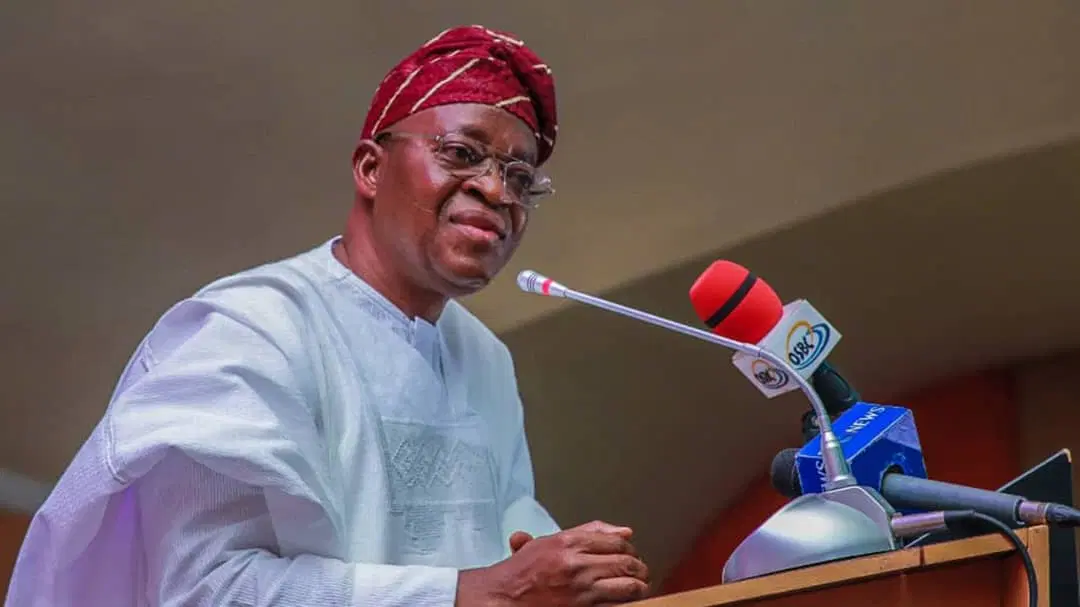
Africa must seize the helm in the global effort to decarbonize the shipping industry, leveraging strategic partnerships and unified policy advocacy, declared the Honourable Minister of Marine and Blue Economy, Adegboyega Isiaka Oyetola. Hobnob News reports on the pivotal call to action delivered at the maiden African Strategic Summit on Shipping Decarbonisation in Abuja.
Addressing the summit, held from March 17 to 18, 2025, Minister Oyetola emphasized the critical juncture facing the global shipping sector as the International Maritime Organisation (IMO) finalizes greenhouse gas (GHG) emission reduction policies. While Africa contributes less than 2% to the global shipping fleet, its heavy reliance on maritime trade makes a transition to low-carbon shipping both an environmental and economic imperative.
“This summit provides a platform for Africa to solidify its position and advocate for fair revenue distribution from global decarbonisation measures. Without a policy framework underpinned by justice and equity, Africa risks setbacks that could affect both its fiscal and environmental future,” the minister stated.
He stressed the need for a “just and equitable transition” that ensures African nations are not disadvantaged in terms of technology access, financing, and capacity-building. Oyetola advocated for reinvesting funds from decarbonisation mechanisms into African maritime infrastructure, alternative fuel research, and workforce training.
Highlighting the role of research and policy development, the minister praised the Lead Afrocentric (LEAP) Project for its evidence-based recommendations and announced the formation of the Professional Technical Network and Advisory (PATNA) to enhance regional research and technical expertise.
“By leveraging existing research initiatives and institutionalising technical expertise through PATNA, Africa can transition from being an observer to an active participant in shaping global maritime policies,” he said.
Oyetola outlined key areas where Africa can leverage its strategic advantages:
- Renewable Energy-Powered Ports: Integrating wind, solar, and hydrogen power into port operations.
- Green Shipping Corridors: Establishing decarbonized trade routes across key maritime hubs.
- Maritime Workforce Development: Equipping African seafarers with zero-emission technology skills.
- African Ship Ownership: Supporting domestic shipowners to adopt green technologies.
The minister called for stronger alliances among African states and global partners to advocate for fair policies at the IMO, urging African maritime leaders to unify their positions ahead of crucial IMO meetings.
“We must work together as a force during these discussions. With over 40 African member states at the IMO, we have the numbers to influence policy if we present a united front,” he emphasized.
Oyetola urged African nations to move beyond passive policy reception and become architects of solutions. “The time for Africa to take charge of its maritime future is now,” he concluded.
The summit, bringing together policymakers, industry leaders, and experts, aims to foster sustainable trade and investment in Africa’s maritime sector. Hobnob News will continue to follow the outcomes of this summit.
About The Author