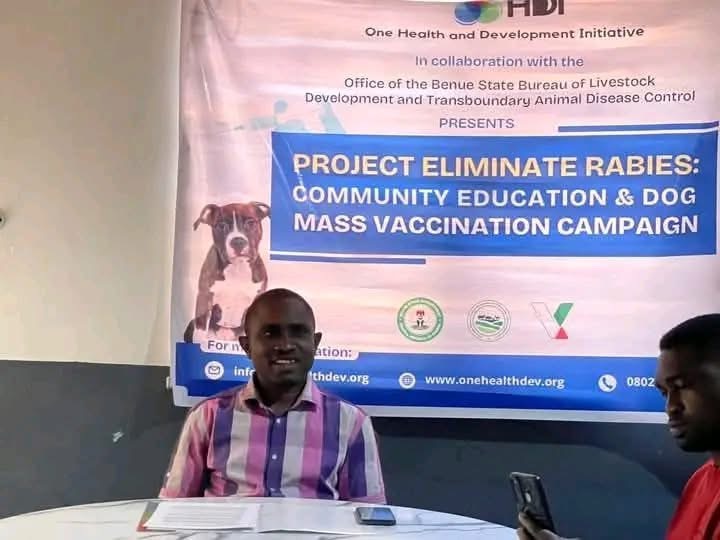
The Benue State government has confirmed a rabies outbreak in Adikpo community, Kwande Local Government Area, and has taken swift action to contain the spread of the disease. According to Director General of the Benue Bureau of Livestock Development and Transboundary Animal Diseases Control, Dr. Aondoakaa Asambe, the outbreak was first reported after a dog bite incident affected multiple individuals in Adikpo.
Investigations revealed that the infected dog had been sold to vendors for consumption, but its head was retrieved and sent to the National Veterinary Research Institute (NVRI) in Vom, Plateau State, for laboratory testing. The results confirmed the presence of the rabies virus.
To contain the outbreak, the Benue State government has implemented short-term and durable measures, including:
– Tracing and Medical Intervention*: Identifying and treating individuals who came into contact with the infected dog.
– Community Sensitization*: Educating residents on the risks of rabies and the importance of vaccination.
– Ring Vaccination*: Vaccinating dogs and cats in the affected area to prevent further spread of the disease.
– Mass Anti-Rabies Vaccination Campaign*: Launching a statewide vaccination campaign to protect against rabies.
Dr. Asambe emphasized the crucial role dogs play in rural areas, not only as companions and security providers but also as contributors to livelihoods through hunting. The Benue Bureau of Livestock Development and Transboundary Animal Diseases Control is committed to drafting and implementing a subnational rabies eradication plan, which will guide coordinated efforts to achieve a rabies-free Benue State by 2030.
Governor Hyacinth Iormem Alia has reaffirmed his commitment to protecting the health and well-being of all residents, reflecting his vision of creating efficient, responsive solutions to public health challenges. Rabies is a deadly zoonotic disease that claims over 55,000 lives annually in Nigeria, with most cases resulting from dog bites, according to the World Health Organization (WHO).