The United States and Nigeria have stepped up security cooperation, with Washington reaffirming its commitment to protecting Christian communities affected by violence and urging Nigeria to sustain progress on measures agreed upon by both countries.
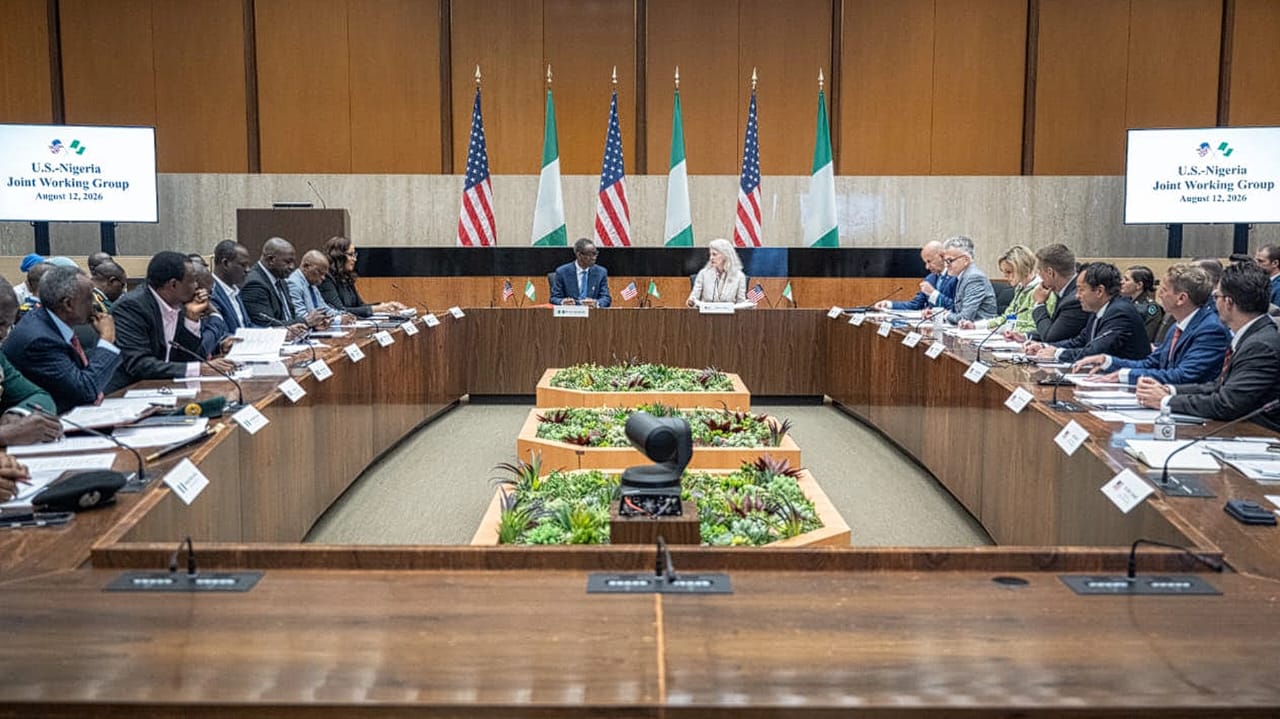
The renewed engagement took place in Washington, D.C., where US Under Secretary of State for Political Affairs Allison M. Hooker received Nigeria’s National Security Adviser, Mallam Nuhu Ribadu, and other members of the Nigerian delegation for the second session of the U.S.–Nigeria Joint Working Group on August 12, 2026.
Hooker announced the meeting in a post on X, noting that it followed the inaugural Joint Working Group session held in Abuja on January 22, 2026.
She said Washington remained committed to protecting Christian communities and expected Nigeria to continue implementing measures designed to shield Christians from violence.
The talks centred on three major areas: improving the protection of Christian communities in the Middle Belt, strengthening judicial and security institutions to ensure those responsible for violence are prosecuted, and expanding military-to-military cooperation between Nigeria and the United States.
The delegations also assessed Nigeria’s efforts to facilitate the return of internally displaced persons to their ancestral communities, prosecute terrorism-related cases and disrupt terrorist financing networks.
However, the discussions also identified areas requiring additional attention, including civilian deaths and concerns over transparency in the management of humanitarian funds.
Military cooperation is expected to remain part of the engagement, with further discussions scheduled at the Pentagon.
Washington recognised several steps taken by Nigeria to address terrorism, including the prosecution of hundreds of Boko Haram and Islamic State-West Africa suspects, increased judicial capacity and the recruitment and training of an additional 50,000 police personnel.
Despite these developments, both countries agreed that further action is necessary, particularly in assisting internally displaced Nigerians and creating conditions for their safe return home.
The Joint Working Group also reviewed ongoing cooperation on terrorism financing, biometric data sharing to strengthen accountability and efforts to build the capacity of Nigerian law enforcement agencies.
Such capacity-building programmes are expected to continue through the US Department of State’s Bureau of International Narcotics and Law Enforcement Affairs and Bureau of Counterterrorism.
Separately, Hooker held discussions with Ribadu on other bilateral priorities, while reaffirming Washington’s willingness to work with Nigeria to protect Christian communities and deepen security cooperation.
The latest meeting represents another step in the evolving US-Nigeria security partnership, with both countries focusing on practical measures to combat terrorism, strengthen accountability, address displacement and protect vulnerable communities.
The engagement comes as Nigeria continues its efforts to tackle terrorism and insecurity, while the United States signals that the protection of Christian communities, institutional strengthening and enhanced security cooperation will remain important components of its relationship with Abuja.
About The Author