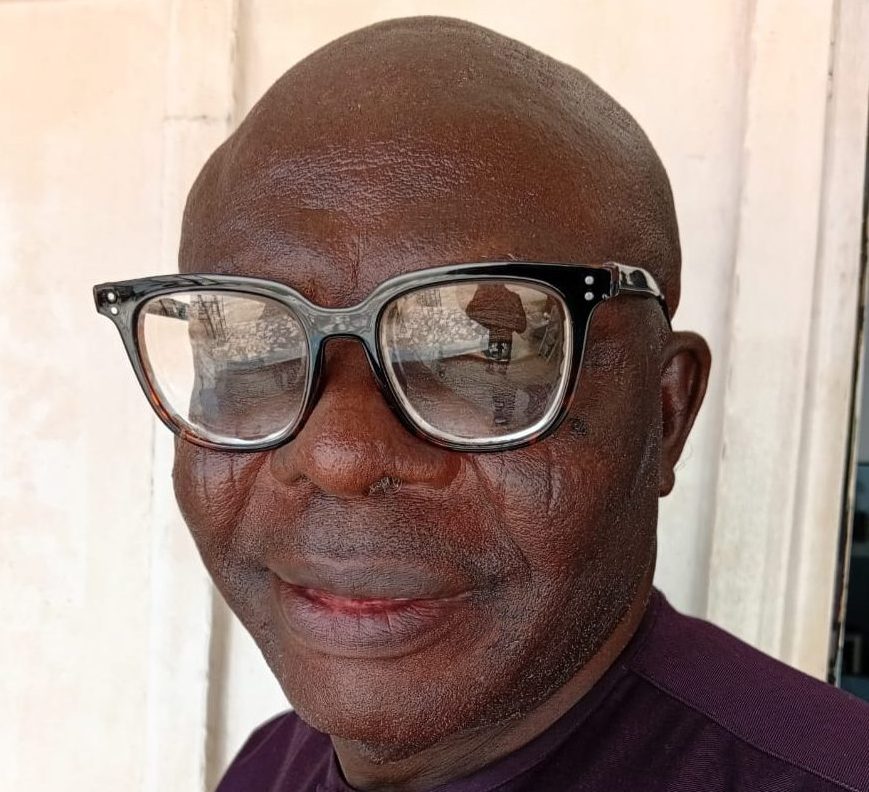
Written by Prince Tubo Johnson Aghogho.
“The dog with a bone in it’s mouth cannot bark”….African Proverb.
The analogy of the dog with a bone in it’s mouth cannot bark, actually reflects the pathetic state of Nigeria wherein those who are comfortably benefiting from the corrupt or broken system will never speak out against it, and that, privilege and personal gain could silence criticism faster than any threat ever could. Hence, if someone suddenly stops speaking up about injustice or inefficiency, check what they were given to hold, as comfort becomes the quietest way to buy their silence.
No wonder, that, it is because there are people who have been benefiting from the flawed system over the years, which is why changes had been a problem for them.
Indeed, the beginning of a new dawn of a political ecosystem in what a true federal state and presidential system as obtained in the States – USA, where Nigeria borrowed her presidential system of government, would have been the nostalgic design, aspiration, and an ideal situation, if we can make it – and this could as well be a reprieve for Nigerians who are out of favour with the current screwed practice.
The foundation of encumbrances of the geopolitics and regional flaws was laid right from the Inception of the amalgamation of the country by the British Colonial government on January 1, 1914. It was the British rule – following the 1914 amalgamation that positioned Nigeria as a centralised unitary government from Lagos.
However, it was the implementation of decree No. 34 by General Aguiyi-Ironsi in May 1966 (the unification decree), which perpetually actualised the country as a unitary federal state and maintained by subsequent governments as centralised command structure thereby providing much power, and making the President of the country as the most powerful.
The Historical Flaws and the Colonial Administration (1914-1954) Legacy:
The amalgamation as administered by Sir Lord Frederick Lugard, united the Northern and Southern protectorates in 1914, running them under a single central administration with ultimate power centralised in the Governor-General, brought about the flaws instead of unifying a compatible society.
Lack of Regional Autonomy:
During this period, decisions were made from Lagos without federal government power-sharing formula that was introduced later in 1954. However, rather than infusing regional autonomy considering the diversity of distinct ethnic groups, languages and religious differences, the Colonial government lumped everyone together. Which is why till date, we are still suspecting and afraid of each other without trust in one another.
Imbalanced Structure and Military Regime of Post-Independence Era in the 1960s:
This period heralded the military regime after independence with lopsided regional design that created permanent rivalries over size, population, and control of the central government. As we are all aware, it was the discrepancy and the lopsided nature of the structural flaws that exacerbated the crisis coupled with suspension of dominance, lack of trust arising from the questionable census and election results, corruption and ostentatious lifestyle by politicians among others, that warranted the take of the government by the military.
Geopolitical Pressures and the Advent of Ethnic Dominance:
Ethnic political dominance and fears became the order of the day, as Politics often revolves around a zero-sum game where major groups – Yoruba, Hausa, Igbo, Ijaw, and at times both Hausas and Fulanis would for political convenience be referred to as Hausa-Fulani, but we know the reality that in actual fact, Fulanis are minority in the North, with other ethnic groups – Tiv, Nupe, Idoma, Birom, etc, fight for State power and economic resources.
As stated earlier, it was the breakdown of law and order in the regions arising from the crises on census figures and election results in the country – especially in old Western region, and other parts and the agitations of Regional autonomy between 1962 and 1965, that resulted in the first military coup in January and the counter-coup of July respectively in 1966.
Paradoxically, it was Major General Johnson Thomas Umunakwe Aguiyi-Ironsi who as the Head of State after the first military coup that promulgated decree No. 34 for the unification of the country. However, the assassination of Aguiyi-Ironsi and Governor of the old Western region, Lt Col. Adekunle Fajuyi, during the counter-coup in July 1966, subsequent military governments continue to concentrate power at the centre, rather than true federalism where fiscal policy regime should have been the case.
Resource Control Conflicts:
It is important to know that prior to independence, in the 1950s and 1960s, the administration of resources was mainly by the regions where the sharing formula was derivation principle of 50% wherein the regions retained half as the regions controlled their economic activities and regional resources.
However, with the collapse of the derivation principle as the country was perpetually under the military governments, and with the centralisation of power in the center, the revenue sharing formula gratefully gave way, as crude oil became the main source of foreign exchange and reserve for the country, which stands at 13% as derivation sharing formula for the oil producing States, rather than the practice of fiscal economic policy, thus laying the foundation for a flawed geopolitical and regional imbalance in political and democratic structure. Which is why till today NIgeria still runs a unitary federalism.
Though the “unification decree” was said to have been to discouraged “tribal politics and loyalties” activities in order to promote a Nationhood consciousness and unity, rather than tribal consciousness and sectional interests in order to give way to urgent task of National reconciliation, without realising that it would reverberate into the Nation’s 66 years as an independent country, even as the current political leaders still practice a well powerful federal state to the detriment of the federating units (States in the federation). Pointers to this were the declaration of 6 months emergency rule in Rivers State on Match 18th 2025 and the unsolicited freezing of the Osun State account on August 5th 2026 on the heels of an election by agency of the federal government, in what could be seen as a flawed and obnoxious federal system. In this regard, the example of the two (2) states – Rivers and Osun, are hinged on the premise of checkmating their resources.
Faulty Governance and Trust Deficit:
Weak institutional frameworks have failed to build a shared National identity, leading citizens to retreat into ethnic and regional enclaves for security, which gave rise to self-determination and separatist sentiments. Pointers to these are the agitations by IPOB in the East, the Oduduwa movement in the West, and resource control in the Niger Delta region and other parts in the North central region. While the case for the East had earlier snowballed in the declaration of Republic of Biafra in the 60s by Chief Odumegwu Ojukwu, however, agitations by contemporary regional players haven’t stopped, as the case for resource control got to fever pitch with that of the environmental degradation and marginalisation case led by Mr Ken Saro-Wiwa to the killing of him and his compatriots, and Niger Delta militancy resulting in the crisis and the subsequent amnesty programme.
This is coming on the backdrop of what has been the case in the United States of America where Nigeria copied it’s presidential democratic system where resource sharing is accentuated on private and local community ownership in the states where they are located.
Meanwhile, despite the return to civilian democratic rule during the 2nd Republic between 1979 and 1983, and the subsequent military regimes, the 1999 constitution as amended, still perpetuate a lopsided federal system in which real power lies at the center with the federal government in Abuja, like the “unification decree styled” federal system, where State governors go cap in hand for their monthly “FAAC allocations” in Abuja.
Having said that, it is imperative to say that the political dynamics of the governance process in the country has been enmeshed in tribal and religious sentiments – an affirmation that our democratic practice has not changed in the over 65 years, as it has always been shrouded with allegations of thuggery and violence.
Otherwise, how can a respected socio-political and cultural leader – the president of the Arewa Youth Consultative Forum, Yerima Shettima, declared that the m presidential candidate of NDC, Mr Peter Obi will not get any vote, because he did not consult them, knowing fully well that he is a Nigerian, and that, his Vice presidential candidate, Alhaji Musa Kwankwanso is also from the North.
However, as if that was not enough, and in what could be seen as “absolute absurdity” wherein a respected Islamic cleric named Sheikh Sani Yahaya Jingir, again declared on August 8, 2026 in Kano in the presence of four (4) APC states’ Governors – Abba Yusuf of Kano, Umar Namadi of Jigawa, Dikko Radda of Katsina and Dauda Lawal of Zamfara, that “If not because of Muslim-Muslim tickets, the Christians in Nigeria will think they are more than us. This is why we must make sure that our dominance will remained sustained to show infidels their limit”.
Which is why the above statements attributed to both Yerima Shettima and Sheikh Sani Jingir, could as well be deducted that these bedfellows who cannot even decide for themselves let alone the entire North and Muslim communities across the country. Hence, they should be properly educated in this regard, rather than misleading the public. Therefore, a situation where wrong perception could be created by such people base on difference in geopolitics and religious affiliations, should be regarded or seen as enemies of the state, and should be condemned and discountenanced.
In another related development, a senator of the APC government, Sen. Francis Fadahunsi who represents Osun East District, was alleged to have used incendiary statement wherein he declared that he will kill members of Accord party in what would seem to be a “do or die” affair in a democracy, (though he had retracted the statement), and other instances where even judges of the judicial arm of government have become pro tem electoral umpire that decide winners in elections, as INEC is seem to have lost out from it’s line of duties in a seeming lack of trust from the public.
However, as it stands, it seems as if we are going back to the era of the 1804-1808 Uthman Dan Fodio Jihad and the 1960s in the old Western region scenarios in the North, when those who were believed to be moderate and others were tagged as “infidels” in the words of Sheikh Jingir, and when the “operation wetie” resulted in massive killing and arson respectively.
Ironically, that is where we are right now. Therefore, what these statements reminds us that after 66 years of independence, people whom we assume that should be more concern about the Unity, growth and development of the country, are instead still trapped in what I called “tribal political cocoon and absurdity”
Unfortunately, in the face of all these, the fact still remains that, for about twenty-seventy (27) years, Nigerians have not seen the actual dividends of democracy (except only few), as every indices of quality of life – good healthcare services, regular electricity power supply, employment opportunities, good infrastructure/social amenities as – water supply, roads, quality education, etc, are of short supply; instead, what they are faced with in the country are security challenges posed by terrorists bandits and kidnappers – killings and kidnapping, high inflation, poor standard of living, high level of poverty, looting/corruption by dishonest politicians who dish out palliatives during elections.
Furthermore, another victim of the Nation’s flawed and problematic federal system is the security sector and it’s challenges, where the federal government have exclusive power for policing apart from the normal control of the armed forces which is shrouded with inefficiency, dogged by issues of poor funding, corruption, a history of human rights abuse, and unqualified allegiance to the federal government – all to the detriment of the citizens. Therefore, the call for reforms in the Police force, and the dismantling of centralised police is apt. Hence, there is the need for re-establishing of a decentralised police service at the federal, state and local government area that conform with international best practice or standards would be a welcome gesture.
In the energy sector, Nigeria continues to suffer the effect of a flawed federal system. Although efforts are being made to legislate in the sector as it has begun in some states, however, there is still a long way to go in this regard, as states and federal laws clash, federal government still maintain it’s control in the oil and gas with little divestment to private sector players, while electricity power sector is shrouded with complex issues and challenges in generation, transmission and distribution.
Which Way to Go?(The Way Forward):
It is against the backdrop of the foregone flawed federal system as enumerated, that exacerbated the call for restructuring of the country (Nigeria), which has been on the increase in recent times.
Therefore, what is needed is the fact that, as a country complex as we are – multi-diverse in tribes, ethnicity, religion, and culture, there is the need to practice a true federal system with fiscal economic policy wherein the federating units (the States), should share power in the mould of the United States. In the manner where we should devour central power by allowing States or geopolitical zones to control and tax their local resources while paying a fair share to the federation (center).
Secondly, there shall be constitutional overhaul as the 1999 constitution as amended was a hand over direction of governance by a military structured more like the “unification federation” by decree No.34. Better still, we can rewrite a new constitution that reflects and ensure grassroots appeals and representation and emphasising devolution of policing powers between the three (3) levels of governments – the federal, states and local governments, and true equity that would reflect justice and fairness amongst component groups.
Thirdly, the fight for corruption should be treated with seriousness and intensity and culprits should be prosecuted to serve as deterrence to others as obtained in other clime. This is more so, as politicians and public office holders have developed penchant for corruption while in office.
Furthermore, there should be inclusive leadership by prioritising merit, accountability and justice to restore citizen’s faith in public institutions. Furthermore, the power of the center should be decentralised, as indeed, the power at the center has turn the President of Nigeria the most powerful in modern democracy as enabled by “unification decree No. 34 of 1966”.
Above all, what is needed is the fact that, we should ensure that strong institutions are put in place rather than powerful strongmen and godfathers who act like Emperors and Monarchs in our politics. They must be demystified, and the time starts is now.
Prince Tubo Johnson Aghogho is a Columnist, and Public Affairs Commentator.
About The Author