~A CALL FOR ACCOUNTABILITY, PERFORMANCE AND VALUE FOR MONEY. A CRITICAL VIEW.
By: Dr. Dennis Osahon Aikoriogie Edoimioya.
The people of Edo State deserve better than political promises, impressive budget figures and ceremonial announcements. They deserve roads they can travel on, hospitals they can depend on, schools where their children can learn, jobs that provide dignity, an economy that creates opportunity and a security architecture that allows citizens to live without fear.
This is why the performance of the administration of Senator Monday Okpebholo must be subjected to rigorous public scrutiny.
The issue before Edo people is not whether billions of naira have been appropriated on paper. The fundamental question is:
What measurable value has the people of Edo State received in return for the enormous public resources committed to these sectors?
The 2025 budget signed by Governor Okpebholo was ₦675.22 billion, and the administration subsequently approved a revised 2025 budget of ₦799.82 billion. The 2026 budget is also built around major promises in security, infrastructure, healthcare and job creation.
With resources of this magnitude, Edo people are entitled to demand results.
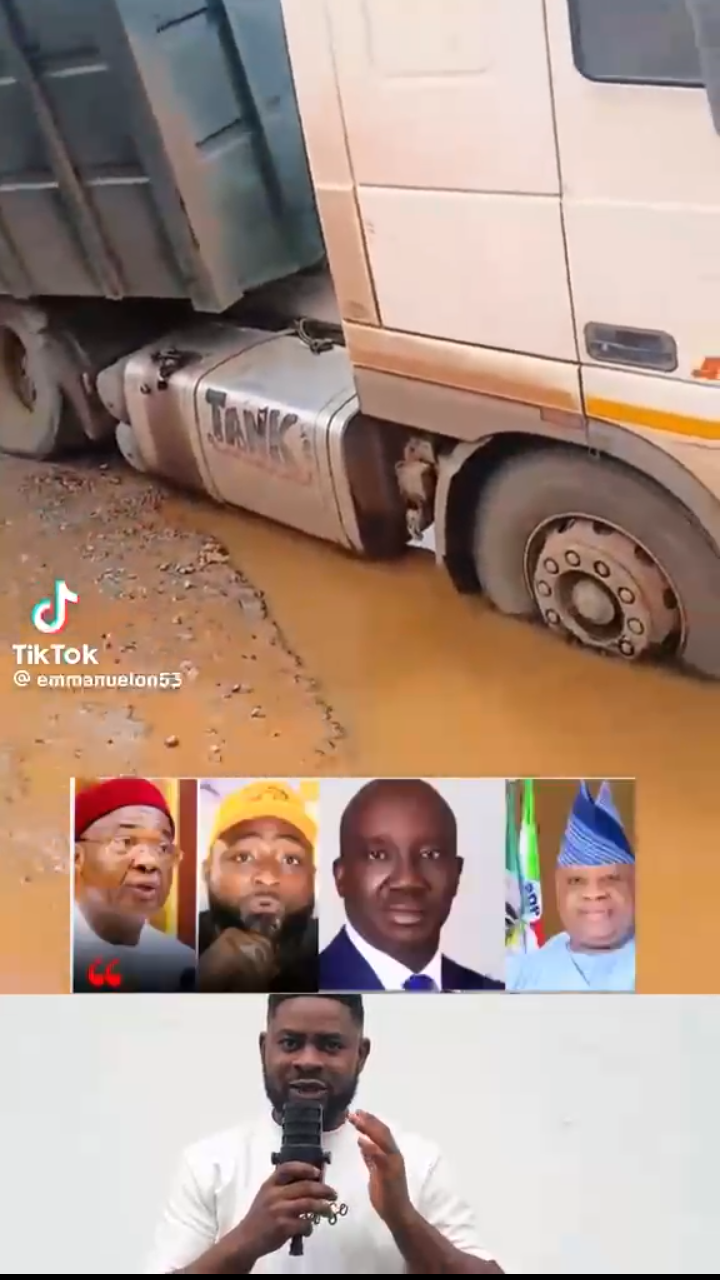
1. ROADS: BILLIONS APPROPRIATED, BUT WHAT IS THE CONDITION OF OUR ROADS?
Road infrastructure is the bloodstream of economic activity.
Farmers need good roads to transport their produce. Traders need accessible roads to move goods. Students need safe routes to schools. Patients need dependable access to hospitals. Businesses need efficient transportation networks.
Yet the question remains: Are the road projects contained in the budgets being delivered at the pace and quality promised?
The 2025 Citizens Budget contained substantial allocations for road construction, rehabilitation and maintenance, including ₦20.55 billion for roadsIs the N63.9 billion only for the hospital Okpebholo is building at Udomi? and bridges in Edo Central, ₦20 billion for flyovers and associated roads, ₦12.5 billion for the Ekpoma-Uromi-Ubiaja road, ₦12.5 billion for the Uromi-Udomi-Afuda-Uzea-Ewora road and ₦12.333 billion for roads and bridges in Edo South.
These are not insignificant sums.
Therefore, Edo people are entitled to ask:
How much has actually been released?
How much has been spent?
Which projects have reached completion?
Which projects are still abandoned or progressing slowly?
What is the completion percentage of each major road project?
And most importantly:
Where is the corresponding improvement in the daily transportation experience of Edo citizens?
A government cannot simply point to budgetary allocations as evidence of performance. Budget is an intention; execution is the evidence.
2. HEALTHCARE: THE PEOPLE DESERVE FUNCTIONAL HOSPITALS, NOT JUST BUDGET HEADINGS
Healthcare is not a luxury. It is a basic responsibility of government.
Edo citizens should not have to travel unreasonable distances to obtain quality medical attention. Our primary healthcare centres should function. Our general hospitals should have adequate personnel, equipment, medicines and essential facilities.
The administration itself has placed improving healthcare delivery among the priorities of its 2026 budget. Its 2025 Citizens Budget also listed ₦22.06 billion for the repair, renovation, expansion and equipping of existing health teaching institutions.
Therefore, the opposition has every legitimate right to demand a comprehensive health-sector scorecard.
How many hospitals have been completed?
How many have been fully equipped?
How many healthcare centres have received modern diagnostic equipment?
How many additional doctors, nurses, pharmacists, laboratory scientists and other professionals have been employed?
How much was budgeted?
How much was released?
How much was actually expended?
And what measurable improvement has occurred in healthcare access for ordinary Edo citizens?
Government must move beyond announcements and provide verifiable evidence.
3. EDUCATION: THE FUTURE OF EDO CANNOT BE BUILT ON POLITICAL RHETORIC
Education is the greatest long-term investment any government can make.
If schools remain inadequate, laboratories remain poorly equipped, teachers lack the necessary support and students do not have an environment conducive to learning, then the government is mortgaging the future.
The administration has publicly identified education infrastructure among the areas requiring intervention. Indeed, the government previously stated that it found significant outstanding work at the Education Hub Complex and promised to complete relevant projects.
But Edo people deserve a broader educational transformation.
Where are the measurable improvements in:
– classroom infrastructure;
– teachers’ welfare and professional development;
– science and technical education;
– digital learning;
– vocational training;
– school libraries and laboratories;
– rural schools; and
– access to quality education for children from poor households?
A government that wants to build a prosperous Edo must understand that roads may connect communities, but education empowers the people who live in those communities.
4. JOB CREATION: WHERE ARE THE OPPORTUNITIES FOR EDO YOUTHS?
One of the clearest tests of economic leadership is the ability to create an environment where people can earn a living.
The 2026 Citizens Budget specifically identifies job creation as one of the government’s policy priorities.
Therefore, the administration should publish a transparent employment scorecard.
How many direct jobs have been created?
How many sustainable private-sector jobs have been generated through government policies?
How many young entrepreneurs have received meaningful support?
How many businesses have been attracted to Edo?
How many new industries have commenced operations?
How many existing businesses have expanded because of government intervention?
It is not enough to announce empowerment programmes or distribute items periodically.
Sustainable employment is different from political empowerment.
Our young people need productive opportunities, not temporary political gestures.
5. ECONOMIC DEVELOPMENT: WHERE IS THE NEW ECONOMIC ENGINE FOR EDO?
Economic development requires more than government spending.
It requires deliberate policies that attract investment, protect businesses, improve infrastructure, support agriculture, expand industrial production and create opportunities for small and medium-sized enterprises.
The administration’s own budget framework speaks of economic growth and job creation.
Therefore, Edo people deserve answers concerning:
What major investments have been attracted into the state?
How many new factories or industrial enterprises have commenced operations?
What has been done to strengthen local businesses?
What practical support is available to small and medium-sized enterprises?
What is the strategy for developing Edo’s agricultural value chain?
What is the plan for converting Edo’s natural and human resources into sustainable wealth?
A government cannot claim economic transformation simply because its budget has increased.
The real economy is measured in businesses created, jobs sustained, household incomes improved and opportunities expanded.
6. SECURITY: GOVERNMENT MUST PROTECT THE PEOPLE AND THEIR PROPERTY
No development can survive without security.
Investors will not come where they feel unsafe. Farmers cannot produce effectively where insecurity threatens their livelihoods. Businesses cannot flourish where people are afraid to operate. Families cannot prosper where citizens live under persistent fear.
Security is therefore both a social responsibility and an economic necessity.
The 2026 Edo Citizens Budget explicitly identifies enhancement of the state’s security system as a policy focus.
This creates an obligation for the administration to demonstrate how security allocations are translating into measurable outcomes.
How many security interventions have been implemented?
Which vulnerable communities have received additional protection?
What support has been provided to security agencies within the limits of state authority?
What technology and intelligence-led measures are being deployed?
What mechanisms exist for citizens to report threats and receive timely responses?
Security expenditure must not become another opaque line in a budget.
Edo citizens deserve security that can be felt, not merely security figures that can be read.
THE CENTRAL QUESTION: WHERE IS THE VALUE FOR MONEY?
The opposition is not opposed to government spending.
We are opposed to public expenditure without sufficient public accountability.
We are not opposed to infrastructure.
We demand infrastructure that is properly designed, properly procured, properly executed and properly maintained.
We are not opposed to healthcare spending.
We demand hospitals and primary healthcare facilities that actually work.
We are not opposed to education spending.
We demand schools that prepare Edo children for the future.
We are not opposed to job-creation programmes.
We demand sustainable employment rather than temporary political patronage.
We are not opposed to security expenditure.
We demand a safer Edo State.
And we are not opposed to economic development.
We demand an economy in which ordinary citizens can participate and prosper.
THE OKPEBHOLO ADMINISTRATION MUST PUBLISH ITS SCORECARD
The people of Edo State have a constitutional and democratic right to ask their government for accountability.
The administration should therefore publish, project by project:
1. The amount appropriated;
2. The amount released;
3. The amount expended;
4. The contractor or implementing agency;
5. The original contract sum;
6. The revised contract sum, where applicable;
7. The percentage of completion;
8. The expected completion date;
9. The geographical location;
10. The evidence of completion and commissioning.
This is how responsible governance works.
The existence of a budget line does not automatically mean the project has been executed.
The announcement of a project does not mean the project has been completed.
And the commissioning of a project does not, by itself, establish value for money.
GOING FORWARD EDO DESERVES PERFORMANCE, NOT EXCUSES
Senator Monday Okpebholo assumed office with enormous expectations from Edo people.
The people expected a government that would improve infrastructure, strengthen healthcare, transform education, create employment, stimulate economic growth and guarantee security.
The administration’s own budget documents identify several of these sectors as priorities.
Therefore, the time has come to move beyond political narratives.
Show us the roads.
Show us the hospitals.
Show us the schools.
Show us the jobs.
Show us the investments.
Show us the security outcomes.
And above all, show us where the people’s money has gone and what the people have received in return.
This is not a partisan demand.
It is a democratic demand.
It is the legitimate responsibility of the opposition to interrogate government expenditure and demand accountability.
Edo State is not the personal property of any governor, political party or political clique.
Edo belongs to its people.
Every naira appropriated in the name of Edo citizens is a public trust.
Every budget promise creates an obligation.
Every project carries a responsibility.
And every government must ultimately answer to the people.
The people of Edo are no longer asking for promises. They are demanding performance.
They are no longer impressed by budget figures. They want results.
They are no longer asking what government intends to do. They are asking what government has actually done.
That is the standard by which the Senator Monday Okpebholo administration must be judged.
Budget is not development.
Appropriation is not execution.
Announcement is not achievement.
And political propaganda is not performance.
Edo deserves better. Edo deserves accountability. Edo deserves measurable development.
About The Author