The House of Representatives Ad-hoc Committee investigating the alleged Presidential Foreign Investment Promotion Council (PFIFC) on Thursday questioned the Federal Road Safety Corps (FRSC) over its decision to rely on documents listing President Bola Tinubu and several top government officials as members of the organisation’s governing board before issuing it official Federal Government vehicle number plates.
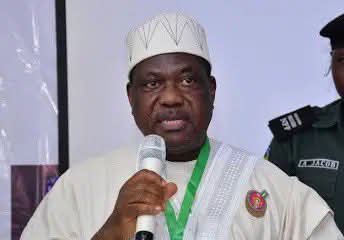
The issue arose during the appearance of the Corps Marshal and Chief Executive of the FRSC, Shehu Mohammed, before the committee chaired by Rep. Yusuf Gagdi.
The committee had summoned the FRSC to explain how the organisation, now alleged to be fictitious, obtained official Federal Government vehicle number plates.
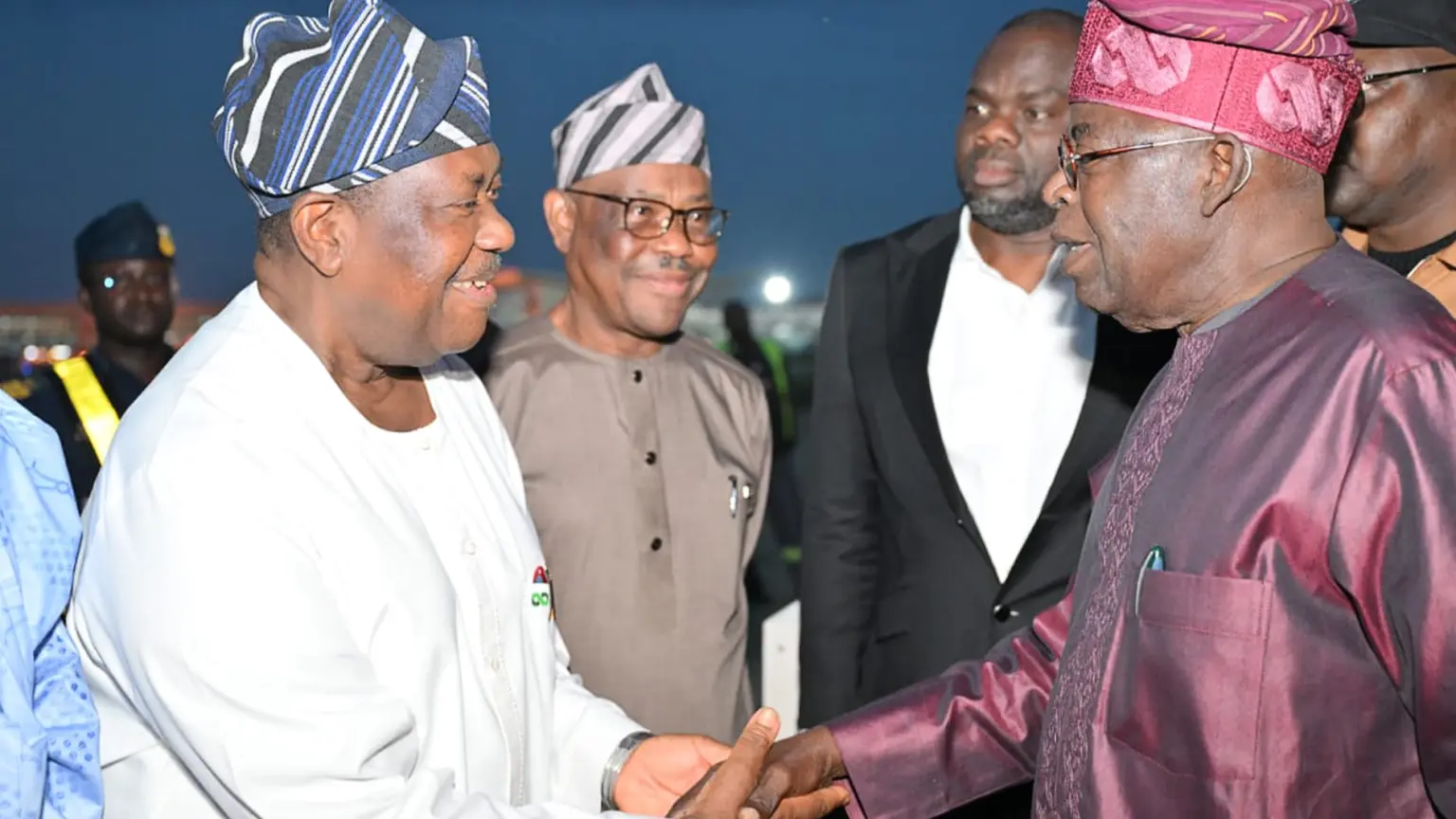
While examining documents submitted to the Corps by the alleged promoter of the council, Prince Adeyemi Adeniyi, Gagdi read portions of the organisation’s purported mandate, which listed President Bola Tinubu, the Secretary to the Government of the Federation (SGF), George Akume, the Minister of the Federal Capital Territory, Nyesom Wike, the Minister of Finance and Blue Economy, Gboyega Oyetola among other senior government officials, as members of the council’s governing board.
The committee chairman asked the Corps Marshal whether the document formed part of the application submitted to the FRSC.
Mohammed answered in the affirmative, confirming that the mandate was among the documents presented by the organisation during its application for official government vehicle number plates.
Gagdi expressed concern that the contents of the document should have immediately raised suspicion within the FRSC’s verification process.
According to him, the inclusion of the President and serving cabinet members on the board of an organisation seeking official recognition ought to have prompted the Corps to carry out more rigorous verification with the Presidency and other relevant authorities.
The lawmaker argued that if the FRSC had thoroughly scrutinised the documents, the alleged fraud could have been uncovered before official government number plates were issued.
Earlier, the FRSC boss defended the Corps’ decision to issue official Federal Government vehicle number plates to the controversial Counci, insisting that it followed all established procedures before approving the request.
Mohammed told lawmakers that immediately the controversy surrounding the council emerged about three weeks ago, he directed the Deputy Corps Marshal in charge of Motor Vehicle Administration to investigate whether the corps had issued government number plates to the organisation.
According to him, the findings confirmed that the FRSC had indeed allocated the plates after completing what it believed were all necessary verification processes.
“When this saga started about three weeks ago, I called my Deputy Corps Marshal in charge of Motor Vehicle Administration and asked him to check whether we had issued Federal Government number plates to this agency.
“The next day, he reported that we did and that all due diligence had been carried out. We immediately documented everything in anticipation that this committee would invite us,” he said.
Mohammed maintained that the FRSC remains committed to professionalism, integrity and strict compliance with extant laws in the allocation of official government number plates.
He explained that under the Corps’ Standard Operating Procedure (SOP), every ministry, department or agency requesting official number plates must submit a formal application, after which the authenticity of the request is verified before payment is made through the Federal Government’s Remita platform.
He added that where the request comes from a newly established agency, the applicant must also provide the enabling law or instrument establishing the organisation before approval is granted.
Giving details of the PFIFC application, the Corps Marshal said the FRSC first received a letter dated April 4, 2025, requesting the allocation of official government vehicle number plates.
The letter, he said, originated from the Office of the Director-General of the Presidential Economic Advisory Council, later renamed Presidential Foreign Investment Promotion Council, and was signed by Prince Adeyemi Adeniyi.
According to him, when the Corps did not immediately act on the request, a reminder dated April 11, 2025, signed by the same individual, was submitted.
He said both letters were accompanied by documents purportedly establishing the council, outlining its mandate and listing the vehicles for which number plates were requested.
Mohammed disclosed that as part of the verification process, Prince Adeniyi personally visited the FRSC headquarters and presented himself as the Director-General of the organisation.
The Corps also visited the website indicated in the correspondence, which carried a Federal Government domain and displayed information suggesting it was a legitimate government institution.
“The website contained the names of prominent public office holders as members of its governing board or council, giving every indication that it was an authentic Federal Government agency,” he said.
He added that officials of the Corps also visited the address provided by the organisation at the Federal Secretariat Complex, Central Business District, Abuja, where they found the office operating at the stated location.
According to him, the physical presence of the office further reinforced the impression that the organisation was legitimately established.
Having completed the verification process, Mohammed said the FRSC approved and allocated several official Federal Government vehicle number plates after confirming that the chassis numbers presented matched the respective vehicles.
“It therefore came as a shock to the Corps when it later emerged that the Presidential Foreign Investment Promotion Council was not an approved Federal Government agency and that the representations made by Prince Adeniyi were false,” he said.
About The Author