Media Expert
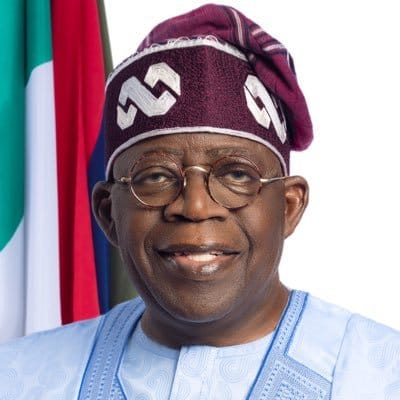
President Bola Tinubu has launched five flagship intervention programmes aimed at reducing poverty, expanding access to quality healthcare and education, and improving the livelihoods of vulnerable Nigerians.
At the launch in Abuja, President Tinubu said the initiatives represent a major step in translating the Renewed Hope Agenda into tangible benefits for ordinary Nigerians, particularly those in rural communities. He stressed that the gains of the administration’s economic reforms must be reflected in improved living standards rather than only in economic statistics.
Describing the interventions as “promises kept,” the President said they are designed to protect vulnerable citizens, empower communities and strengthen Nigeria’s human capital.
“These are not just programmes; they are promises kept. Our reforms are beginning to yield results, but real prosperity means that no Nigerian is left behind on our journey to building a one-trillion-dollar economy by 2030,” he said.
President Tinubu noted that while Nigeria’s economic recovery is gathering momentum, with improvements in foreign reserves, declining inflation and stronger economic growth, the ultimate goal is to ensure these gains translate into better livelihoods, expanded opportunities and improved social services at the grassroots.
Represented by the Minister of Finance and Coordinating Minister of the Economy, Mr. Taiwo Oyedele, the President explained that the $1.25 billion NG-CARES Additional Financing programme, supported by the World Bank, will provide livelihood support for smallholder farmers, small businesses and vulnerable communities.
He said the $300 million SOLID programme will assist internally displaced persons and host communities through investments in infrastructure, livelihoods, social services and long-term resilience, moving beyond emergency humanitarian assistance.
President Tinubu added that the $1.5 billion HOPE programme will strengthen governance at the grassroots, improve primary healthcare services, enhance foundational learning in public schools, support teachers and build more transparent institutions.
He called on state governments, local councils, development partners and implementing agencies to work together to ensure the successful implementation of the initiatives.
“We are building a Nigeria where extreme poverty is banished, every child has access to quality education and healthcare, and every community is able to withstand adversity and recover stronger,” the President said.
Earlier, the Minister of Budget and Economic Planning, Senator Atiku Bagudu, described the launch as another milestone in the Federal Government’s efforts to transform the Renewed Hope Agenda into concrete interventions that directly improve the lives of poor and vulnerable Nigerians.
Bagudu said the programmes are jointly coordinated by the Ministries of Budget and Economic Planning, Education and Health, with financial support from the World Bank. He explained that the interventions are designed to address poverty, rising living costs, unemployment, food insecurity and weak human capital development through coordinated action by the Federal Government, states, local governments and development partners.
According to him, the first phase of the NG-CARES programme, introduced during the COVID-19 pandemic, benefited more than 17.6 million Nigerians between 2021 and 2025 through support for vulnerable households, farmers and small businesses.
He disclosed that the additional financing will strengthen food security, social protection, community resilience and livelihoods, while the new phase is expected to reach about 38 million households nationwide.
Bagudu added that the SOLID programme adopts a long-term development approach by restoring livelihoods, improving social services, promoting social cohesion and supporting communities affected by insecurity and climate-related shocks. He also noted that the HOPE programme will improve governance systems, healthcare delivery and learning outcomes through collaboration among the three tiers of government.
Representing the President of the Senate, Chairman of the Senate Committee on Finance, Senator Mohammed Sani Musa, assured Nigerians of the National Assembly’s commitment to providing the necessary legislative backing and oversight to ensure the programmes achieve their objectives.
He described the interventions as practical demonstrations of the government’s commitment to inclusive development, saying they reaffirm that every Nigerian deserves opportunity, dignity and support regardless of their circumstances.
The World Bank Country Director for Nigeria, Mr. Mathew Verghis, reaffirmed the Bank’s commitment to supporting Nigeria’s development agenda through sustained investments in education, healthcare, governance and community resilience.
He commended the Federal Government, state governments and implementing ministries for their collaboration, noting that strong political leadership and effective intergovernmental partnership are essential for the success of the programmes.
Verghis expressed confidence that the interventions would deliver lasting improvements in the lives of millions of Nigerians.
The five programmes are the Nigeria Community Action for Resilience and Economic Stimulus (NG-CARES)
Additional Financing,
and the three components of the Human Capital Opportunities for Prosperity and Equity (HOPE) initiative—HOPE-GOV, HOPE-PHC, HOPE-ED are in all the states of the Federation and the FCT
While the SOLID – Solutions for Internally Displaced Persons and Host Communities (SOLID) programme, is in Benue,Adamawa, Katsina,Borno,Zamfara, and Yobe
About The Author