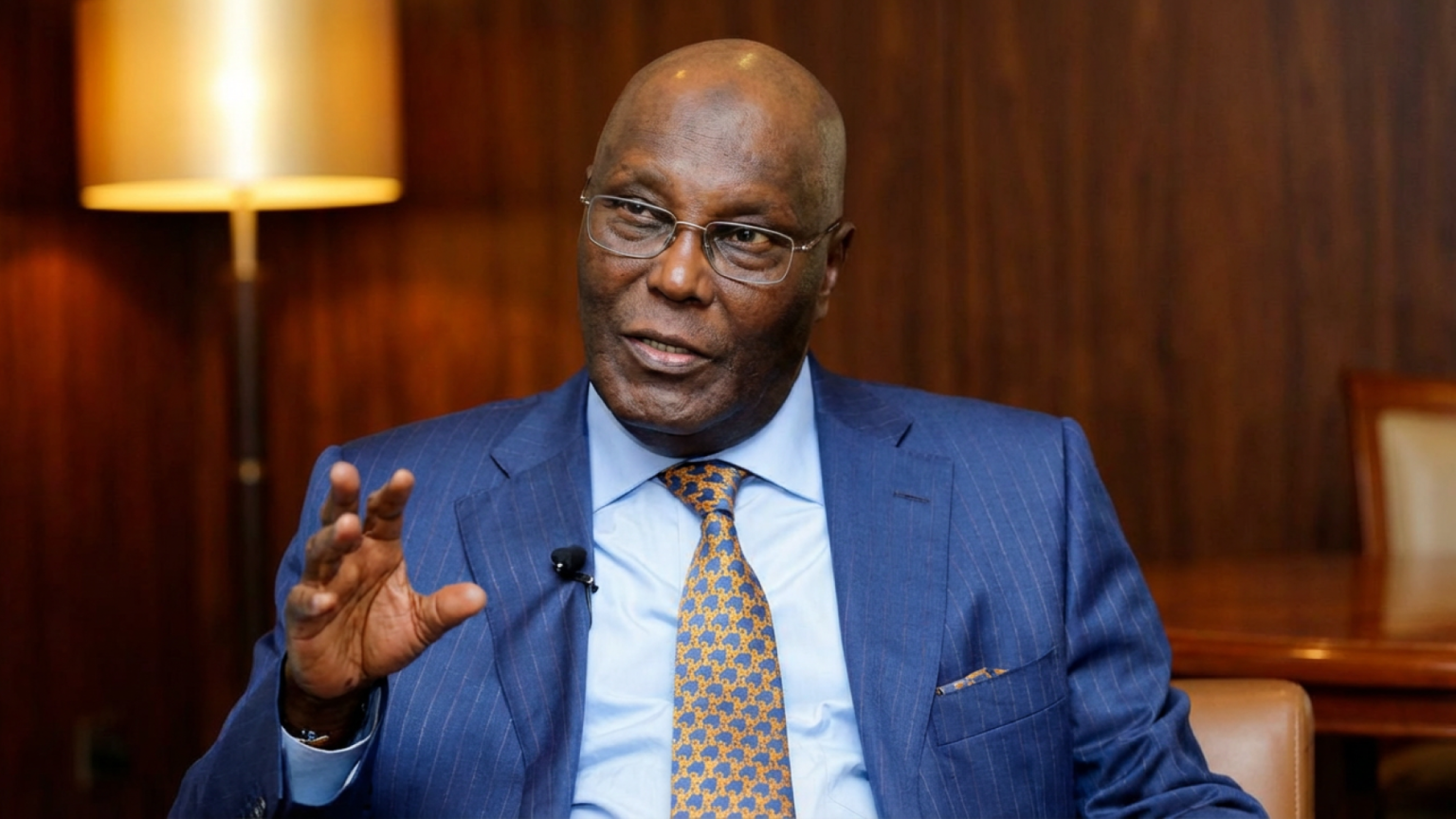
Former Vice President and African Democratic Congress (ADC) presidential candidate, Atiku Abubakar, has criticised the Federal Government over the reported plan to introduce a uniform ₦50,000 fee for candidates sitting the West African Senior School Certificate Examination (WAEC) and the National Examinations Council (NECO) examinations from 2027.
Atiku also faulted the recent increase in fees charged by Federal Unity Colleges, describing both decisions as policies that could worsen Nigeria’s education challenges and place millions of children at risk of being denied access to schooling.
In a statement released on Sunday by his Senior Special Assistant on Public Communication, Phrank Shaibu, the former vice president argued that education should remain affordable regardless of economic conditions, stressing that governments should remove barriers to learning rather than create new ones.
He said the proposed examination fee comes at a time when many Nigerians are battling inflation, rising food prices, transportation costs, electricity tariff increases, unemployment and declining purchasing power.
According to Atiku, asking parents to pay higher education-related costs under such circumstances would leave many families choosing between feeding their households, accessing healthcare and educating their children.
He maintained that education remains one of the strongest tools for reducing poverty and promoting social mobility, warning that making schooling more expensive could undermine Nigeria’s long-term development.
The ADC presidential candidate said every additional financial burden placed on parents increases the likelihood of children dropping out of school or abandoning their academic ambitions.
Atiku also expressed concern that the policy could worsen Nigeria’s out-of-school children crisis, noting that estimates place the number of children and young people outside the classroom at between 10.5 million and 15 million.
He argued that rather than introducing measures capable of increasing those figures, government should focus on returning more children to school and expanding access to education nationwide.
The former vice president further stated that the proposed WAEC and NECO fee would hit children from poor and middle-income families the hardest, warning that many academically qualified students could be denied the opportunity to pursue higher education simply because they cannot afford the qualifying examinations.
He linked the issue to broader challenges facing the country’s tertiary education system, noting that although more than two million candidates seek university admission annually, public institutions admit only between 500,000 and 700,000 students due to limited infrastructure and capacity.
According to him, over one million qualified applicants miss out on admission every year, not because they failed academically but because universities lack sufficient spaces.
Atiku said government should prioritise expanding lecture halls, laboratories, hostels, libraries and other educational facilities instead of creating additional financial obstacles for prospective students.
He described the situation as a “double burden” on Nigerian youths, arguing that many already struggle with limited admission opportunities and may now also be unable to afford the examinations required to qualify.
The former vice president also questioned the government’s education financing strategy, saying the promotion of the Nigerian Education Loan Fund (NELFUND) does not address the challenges facing students who cannot complete secondary education or pay for qualifying examinations.
According to him, genuine education reforms should begin by making primary and secondary education more affordable while expanding university infrastructure to meet increasing demand.
Atiku insisted that education should never become another avenue through which citizens bear the consequences of economic reforms, adding that countries seeking sustainable growth typically invest more in education during difficult economic periods rather than transferring additional costs to families.
He warned that rising food prices, transport fares, electricity bills, healthcare expenses and increasing education costs have combined to place enormous pressure on ordinary Nigerians.
He added that reforms introduced without considering their social impact risk becoming punitive instead of developmental.
The ADC presidential candidate called on President Bola Tinubu to reverse both the increase in Unity School fees and the proposed ₦50,000 WAEC and NECO examination fee.
He also urged the Federal Government to convene a broad stakeholders’ dialogue to develop sustainable funding models for public education.
In addition, Atiku advocated greater investment in public schools, improved educational infrastructure, recruitment of more qualified teachers, expansion of university admission capacity and policies that guarantee equal access to education regardless of a child’s economic background.
He reaffirmed the ADC’s commitment to affordable and accessible education, saying an ADC-led administration would prioritise expanding educational opportunities and ensure that poverty does not prevent deserving students from acquiring quality education.
About The Author