

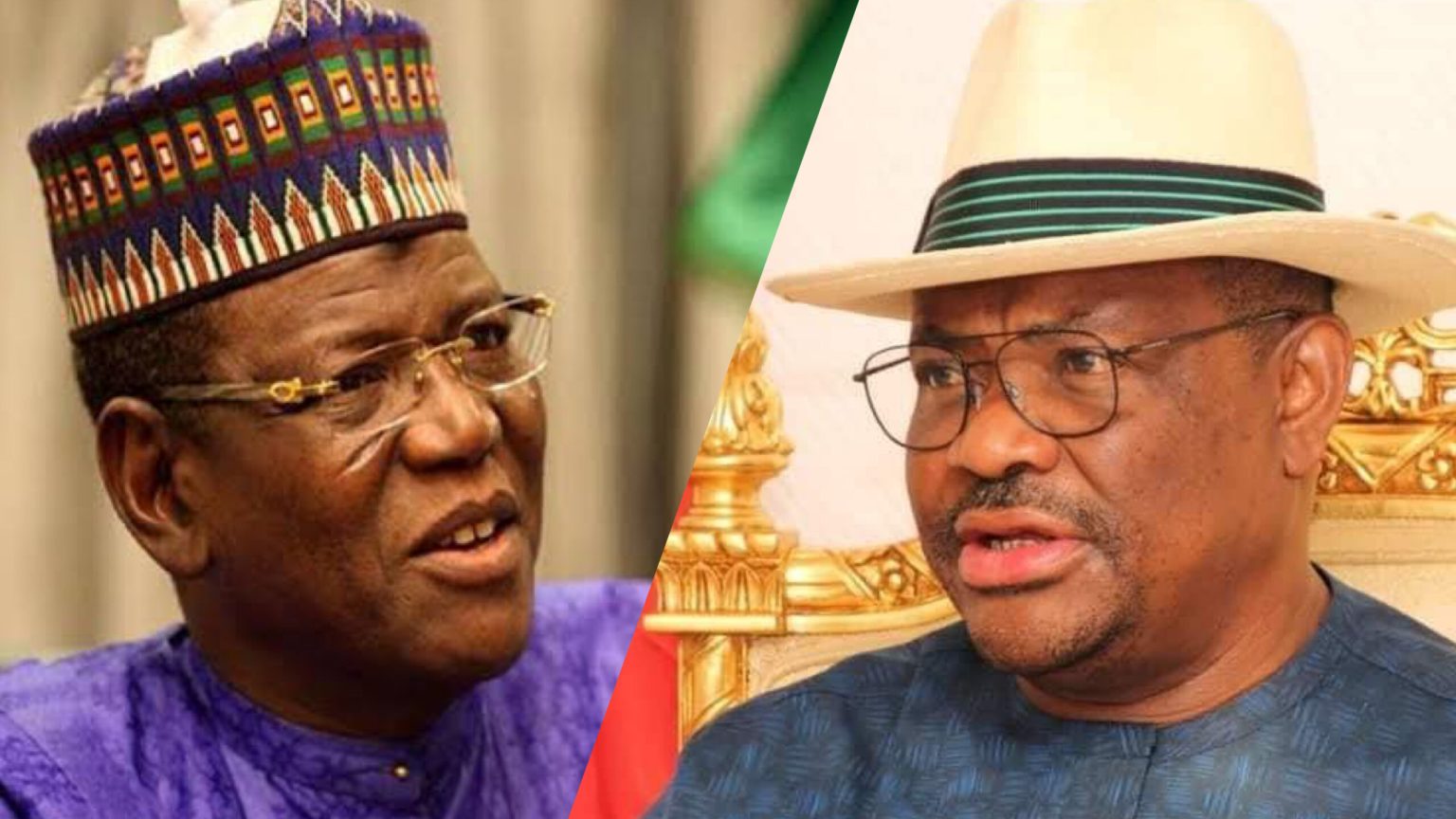
The Jigawa state chapter of the Peoples Democratic Party (PDP) has officially declared its support for former Jigawa State Governor, Sule Lamido, and FCT Minister, Nyesom Wike, saying their approach reflects the path of justice.
The party explained that Lamido’s decision to align with Wike’s faction is consistent with their own stance amid the ongoing leadership tussle.
The PDP has been struggling with internal divisions, with rival factions competing for control of the party’s leadership.
Lamido Explains His U-Turn
Lamido recently clarified why he is supporting Wike’s faction in the leadership crisis. In an interview with BBC Hausa, he said resolving the dispute requires recognition of the caretaker committee led by Abdulrahman Mohammed, which is reportedly backed by Wike.
He argued that accepting the committee is a practical step toward restoring unity, especially as it has already been recognised by the Independent National Electoral Commission (INEC).
“If the party truly wants reconciliation and a way out of the crisis, stakeholders must embrace the caretaker committee,” Lamido said. “Since it has been recognised by INEC, it should be followed as part of resolving the PDP crisis.”
Lamido’s shift has surprised many observers, as he had previously criticized Wike, accusing him of fueling the internal turmoil that weakened the party and prompted defections by several governors.
Jigawa PDP Weighs In
Speaking to DAILY POST, PDP spokesman in Jigawa State, Umar Kyari, defended Lamido’s decision, saying Wike’s position is grounded in legal considerations.
“The issue is about what the law allows. When the tenure of the previous leadership expired, a caretaker committee had to be formed; otherwise, the party would have been left without a structure,” Kyari said.
He added that Wike, whom he described as legally astute, anticipated the situation that eventually led to the court recognising the caretaker arrangement.
“What Wike foresaw has now been confirmed by the court, which ruled that the committee is legitimate,” he said.
Political analysts note that the coming months will be crucial in determining whether Africa’s once-dominant opposition party can rebuild cohesion and credibility ahead of the next electoral cycle.

