

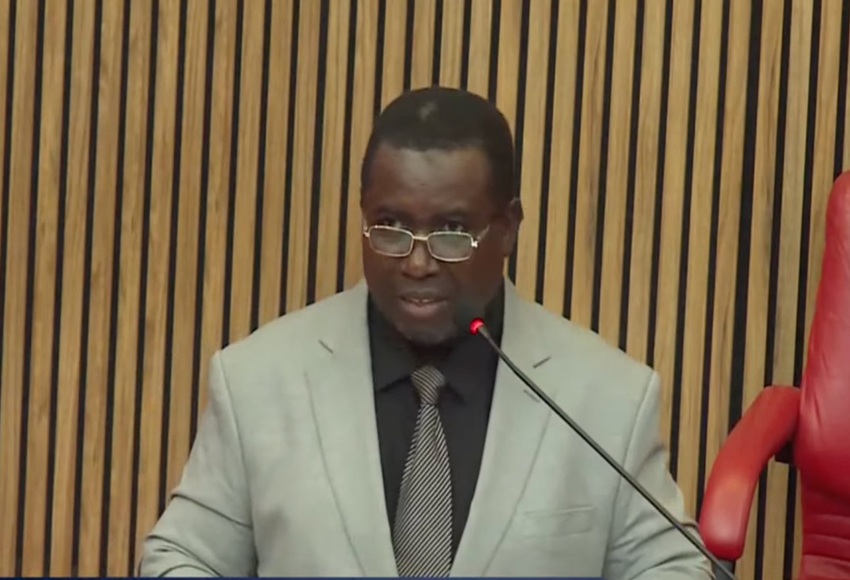
Nigeria’s electoral umpire, the Independent National Electoral Commission (INEC), has announced plans to stage a nationwide mock presidential election to test the strength and reliability of its electronic results transmission system ahead of the 2027 general elections.
INEC Chairman, Prof. Joash Amupitan, disclosed this in Abuja during the Citizens’ Townhall Meeting on the Electoral Act 2026, organised by the Civil Society Network on Election Integrity. He explained that the Bimodal Voter Accreditation System (BVAS) was not tested on a national scale before the 2023 presidential poll, a gap he said contributed to the glitches experienced during that election.
According to him, the mock poll will replicate real election-day conditions across selected polling units nationwide to assess the speed, stability and transparency of the commission’s electronic transmission architecture. The exercise, he noted, will help identify technical weaknesses and address them well before 2027.
Amupitan said lessons from the 2023 elections highlighted the importance of subjecting technological innovations to rigorous stress tests, stressing that public confidence in elections depends heavily on the credibility and efficiency of the systems deployed.
He assured stakeholders that the glitch recorded in 2023 had been fixed and would not reoccur in 2027. However, he cautioned against unrealistic expectations of “real-time” transmission, citing logistical and network challenges, even within the Federal Capital Territory.
Recounting the recent FCT Area Council elections, he described how results from Kabir Ward in Kuje Area Council were delayed due to poor terrain and lack of network coverage, despite its proximity to central Abuja. He likened electronic transmission to mobile banking transfers, explaining that while a transaction may leave the sender’s account instantly, confirmation on the receiving end may be delayed.
Amupitan described the strengthened framework for electronic transmission in the Electoral Act 2026 as one of its most significant provisions, revealing that INEC pushed for mandatory transmission during consultations with lawmakers.
Tajudeen Abbas: Exclusive E-Transmission Could Disenfranchise 40%
Meanwhile, Speaker of the House of Representatives, Tajudeen Abbas, defended the National Assembly’s decision to adopt a hybrid system of electronic and manual transmission of election results in the amended Electoral Act.
Speaking during a courtesy visit by Spain’s Ambassador to Nigeria, Felix Costales, Abbas argued that relying solely on real-time electronic transmission could disenfranchise nearly 40 per cent of voters due to limited internet penetration and unstable power supply across the country.
He cited data from the Nigerian Communications Commission indicating that about 40 per cent of Nigerians remain underserved by internet coverage. According to him, adopting an exclusively electronic system could suppress participation in areas without reliable connectivity, further worsening voter apathy, which he put at about 12–15 per cent turnout in recent elections.
Abbas maintained that the hybrid model allows electronic transmission where feasible and manual submission where necessary, noting that a single method cannot yet be effectively applied nationwide. He also highlighted infrastructural challenges, particularly erratic electricity supply, questioning how nationwide real-time transmission could be sustained without stable power.
Describing democracy as a gradual process, the Speaker expressed optimism that Nigeria’s electoral system would continue to improve with time and international collaboration.
African Democratic Congress Launches Free Digital Registration
In a related development, the African Democratic Congress (ADC) has begun free online membership registration nationwide.
The party had earlier rejected INEC’s timetable and criticised Section 77(4) of the Electoral Act 2026, which requires political parties to submit their digital membership registers by April 2, 2026. The ADC described the 34-day window as a deliberate barrier aimed at excluding opposition parties, noting that failure to comply would prevent a party from fielding candidates.
However, in a statement by its National Publicity Secretary, Bolaji Abdullahi, the ADC announced the rollout of a new digital platform to meet the requirements of the Electoral Act. He said only members fully captured and verified in the party’s official digital register would be eligible to vote or contest in its primaries.
Abdullahi added that members who registered on previous platforms must revalidate their details on the new portal to ensure compliance with INEC guidelines.
The party said the free online option is designed to remove barriers to entry, simplify enrolment and enable Nigerians at home and in the diaspora to participate seamlessly in its internal processes.

