

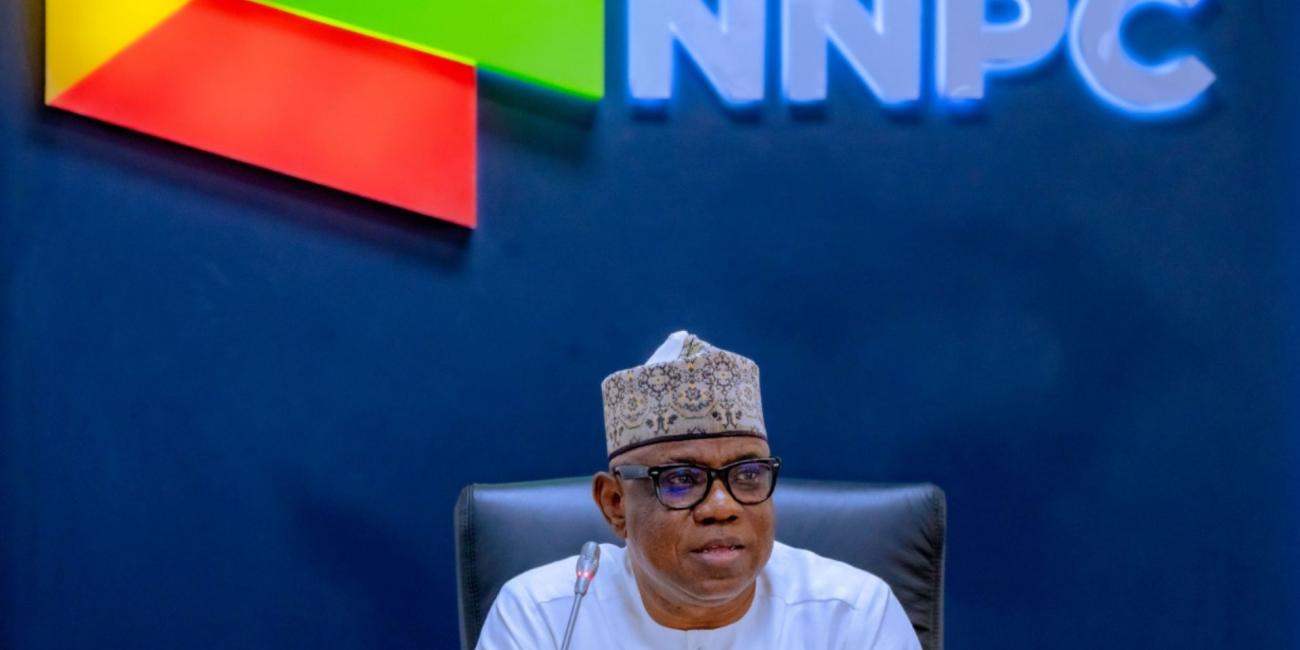
The Group Chief Executive Officer of the Nigerian National Petroleum Company Limited (NNPCL), Bayo Ojulari, has disclosed that Nigeria’s state-owned refineries were operating at severe financial losses, prompting his management team to suspend operations to stop further economic damage.
Ojulari made the disclosure on Wednesday in Abuja during a fireside chat titled “Securing Nigeria’s Energy Future” at the Nigeria International Energy Summit 2026.
He acknowledged that public frustration over the refineries was justified, considering the massive investments made over the years and the long-standing expectation that the facilities would meet domestic fuel needs. According to him, these expectations placed enormous pressure on the company’s leadership.
Ojulari explained that although refining was not his area of expertise—having spent most of his career in the upstream sector—his role as CEO required him to quickly understand the business and make tough decisions.
A comprehensive review of the refineries, he said, revealed that operations were draining national resources. Despite regular crude supply, the plants operated at only about 50–55 per cent capacity, while operational and contractor costs remained high, resulting in significant value losses.
He added that unlike typical investment losses, there was no clear pathway to recovery that could justify continued operations. As a result, his administration chose to halt refinery activities to reassess their viability and prevent further financial leakage.
Ojulari also cited poor product quality as a contributing factor, noting that the Port Harcourt Refinery, for instance, processed crude that yielded mainly mid-grade products with limited economic value.
He acknowledged that the decision attracted political pressure, as NNPCL has traditionally been expected to keep refineries running to ensure fuel supply. However, he stressed that his decades-long training in commercial discipline made it difficult to ignore the losses.
Nigeria currently has four state-owned refineries—two in Port Harcourt, and one each in Warri and Kaduna—which have struggled for decades with inefficiency despite repeated and costly turnaround maintenance efforts. As a result, the country has remained heavily dependent on imported petroleum products.

