
The Chairman of the Presidential Committee on Fiscal Policy and Tax Reforms, Taiwo Oyedele, has reaffirmed that the January 1, 2026 implementation date for the Nigerian Tax Act and the Nigerian Tax Administration Act remains fixed.
Oyedele made this known on Friday in Lagos while briefing journalists after a meeting with President Bola Tinubu. He said the timeline would be strictly adhered to, stressing that the reforms are aimed at easing the tax burden on Nigerians and stimulating economic growth.
According to him, the reforms will significantly benefit workers and businesses, noting that about 98 per cent of workers will either pay no Pay As You Earn (PAYE) tax or pay less, while 97 per cent of small businesses will be exempted from Corporate Income Tax, Value Added Tax (VAT), and Withholding Tax. Large companies, he added, will also experience reduced tax obligations.
“The objective is to promote economic growth, inclusivity, and shared prosperity,” Oyedele said. The meeting was attended by the Chairman of the Federal Inland Revenue Service (FIRS), Zacchaeus Adedeji, and the Chairman of the National Tax Policy Implementation Committee, Joseph Tegbe.
Oyedele also welcomed the National Assembly’s stance amid allegations of alterations to the tax laws, assuring that the Federal Government is willing to work with lawmakers to address concerns raised by Nigerians, including opposition figures.
The new tax laws have generated controversy following claims by a House of Representatives member, Abdussamad Dasuki, who alleged discrepancies between the versions of the bills passed by the National Assembly and those later gazetted. Dasuki argued that lawmakers’ rights were breached, insisting that the officially harmonised and certified versions sent to the President were not available for verification.
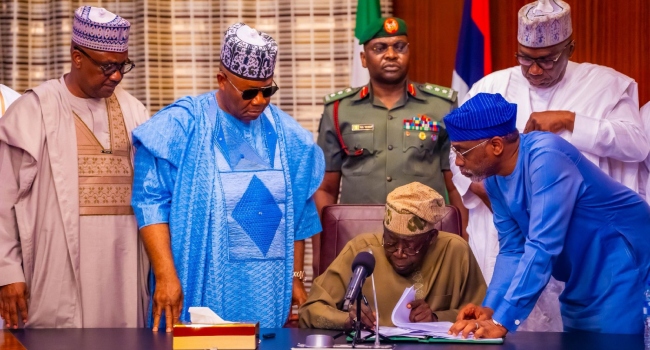
President Tinubu recently signed four tax reform bills into law, described by the government as the most comprehensive overhaul of Nigeria’s tax system in decades. The laws—the Nigeria Tax Act, Nigeria Tax Administration Act, Nigeria Revenue Service (Establishment) Act, and Joint Revenue Board (Establishment) Act—are all set to come into force on January 1, 2026, under a unified authority known as the Nigeria Revenue Service.

