

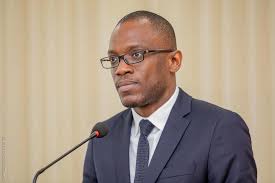
Nigeria’s swift and strategic intervention played a “critical role” in preventing a potentially devastating bloodbath during the recent coup attempt in the Benin Republic, according to Benin’s Foreign Minister, Olushegun Bakari.
Speaking to the press in Abuja on Thursday while attending the ECOWAS Council of Ministers summit, Bakari confirmed that the support from Nigeria and other regional allies was crucial in neutralizing the threat with minimal loss of life.
Preventing Civilian Casualties
The coup attempt began around 3 a.m. on Sunday when armed rebels launched an attack on the presidential residence. Benin’s Republican Guard quickly mounted a defense and successfully repelled the initial attackers.
However, Minister Bakari explained that intervention was requested under the ECOWAS protocol because the insurgents had retreated and fortified themselves within a military barracks surrounded by civilian neighborhoods.
“Why did we ask for support, especially from Nigeria? It was mainly because the area where they had established themselves in a military barracks was surrounded by civilians. We didn’t want to risk significant casualties. If we had let our military enter there, the casualties would have been very high,” he explained.
He emphasized that the intervention allowed Benin to have a “surgical impact,” which helped destroy the armored vehicles the rebels had in the barracks and prevented them from taking over key locations like the airport, all without resorting to an all-out assault that risked significant civilian deaths.
ECOWAS Unity and Support
Bakari thanked Nigeria, Côte d’Ivoire, Ghana, and Sierra Leone for their swift response, stressing that the request was made not because Benin’s army was incapable, but to prevent further escalation and civilian harm.
The Minister lauded President Bola Tinubu of Nigeria and other ECOWAS leaders for stepping in, underscoring the collective effort to preserve democracy in the region.
“We are here as part of our ordinary ministerial meeting within ECOWAS… to clearly show that the ECOWAS region is still an area where democracy prevails. We show that in our region and environment, we cannot accept those who attack democracy,” Bakari stated.
He further noted that the swift defense by Benin’s Republican Guard, which blocked the attackers and regained control within hours despite a brief attempt by the rebels to seize national television, proved the strength and resolve of Benin’s military.
Bakari concluded that the episode underscored two key lessons: the strength of Benin’s republican army and the crucial partnership with Nigeria and ECOWAS nations in fighting for democracy.

