

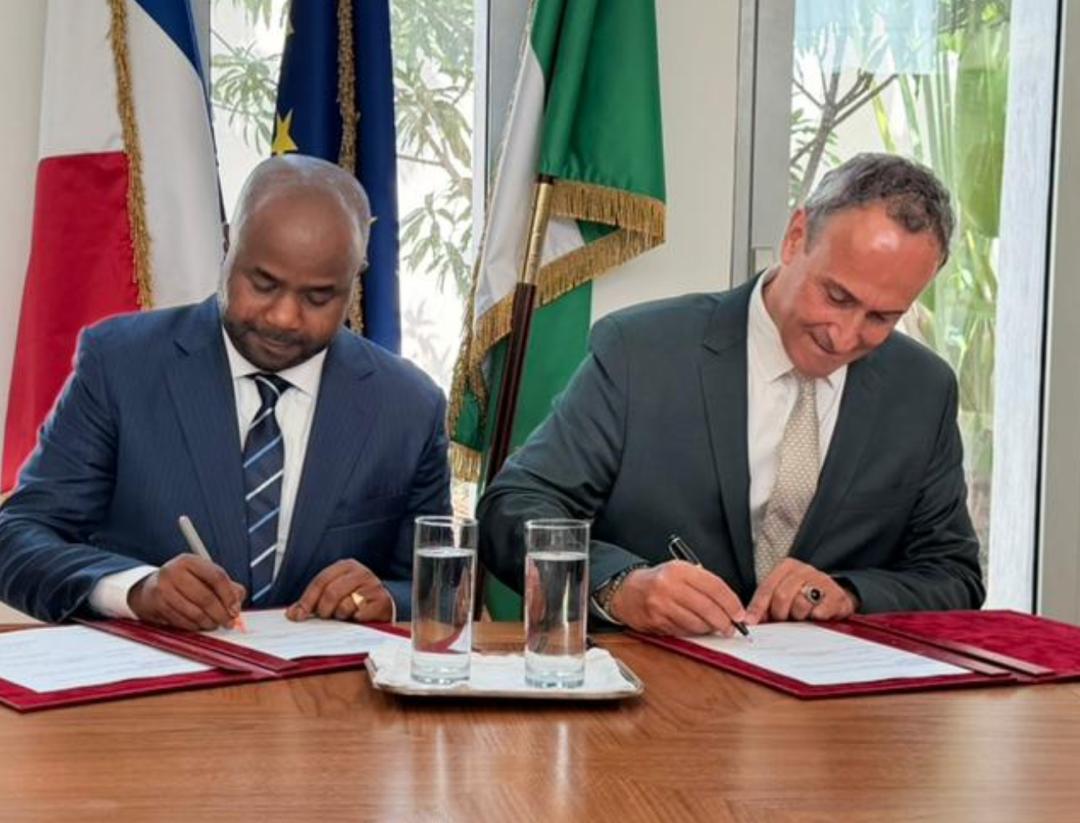
The Federal Inland Revenue Service (FIRS) has signed a landmark cooperation agreement with France aimed at dramatically modernizing Nigeria’s tax administration through digital transformation, capacity development, and enhanced cross-border enforcement.
The Memorandum of Understanding (MoU), signed barely weeks before the FIRS’s formal transition into the Nigerian Revenue Service (NRS) in January 2026, establishes a formal working partnership between the Nigerian agency and France’s tax authority, Direction Générale des Finances Publiques (DGFiP).
Digital Transformation and Shared Ambition
FIRS Chairman Zacch Adedeji and the French Ambassador to Nigeria, Marc Fonbaustier, formalized the pact at the French Embassy in Abuja on Wednesday.
Adedeji stated that the partnership symbolizes a shared ambition to build “stronger, more resilient and forward-looking” tax systems at a time when global public finance is being reshaped by technology, artificial intelligence, and cross-border digital commerce.
The Chairman listed digital transformation as a central pillar, noting that Nigeria aims to leverage France’s experience in:
* Automated compliance systems.
* Data-driven audits.
* Advanced taxpayer service platforms.
In return, Adedeji believes France stands to benefit from Nigeria’s rapid digital expansion, its youthful and tech-savvy population, and the innovative solutions emerging from Africa’s largest market.
“This two-way exchange is essential as both countries adapt to emerging challenges such as artificial intelligence deployment, cybersecurity and cross-border taxation,” Adedeji said.
International Taxation and Workforce Development
The MoU includes strong bilateral cooperation on critical international taxation issues, specifically:
* Exchange of Information
* Transfer Pricing
* Tackling Base Erosion and Profit Shifting (BEPS), a growing concern as economic activities become increasingly borderless.
Adedeji also highlighted workforce development as a key strategic area. While Nigeria hopes to adopt France’s structured human capital systems, professional standards, and continuous learning culture, he noted that Nigeria’s experience managing a young, dynamic, and diverse workforce would offer DGFiP fresh insights into building modern public finance institutions.
“Together, we can develop models that strengthen institutional culture, build global competencies, and prepare our respective institutions for the future of public finance administration,” he added.
Driving Revenue and Transparency
The partnership is critical as Nigeria attempts to address its historically low tax-to-GDP ratio, which averages 6 to 10 per cent—significantly below the African average of 15 per cent.
The Federal Government is relying on improved digital systems, unified tax administration under the forthcoming NRS, and stronger international cooperation to sustainably raise revenue without imposing new taxes.
Adedeji concluded that the pact will serve as one of the cornerstones of Nigeria’s transition into a more transparent, technology-driven revenue service, stating: “As Nigeria moves into the era of the Nigerian Revenue Service, we see this partnership as a foundation for building a modern, trusted, innovative and globally connected revenue administration.”

