

The Federal Government has reversed its 2022 National Language Policy, which required that children be taught in their mother tongue or the language of the immediate community from early childhood through Primary Six.
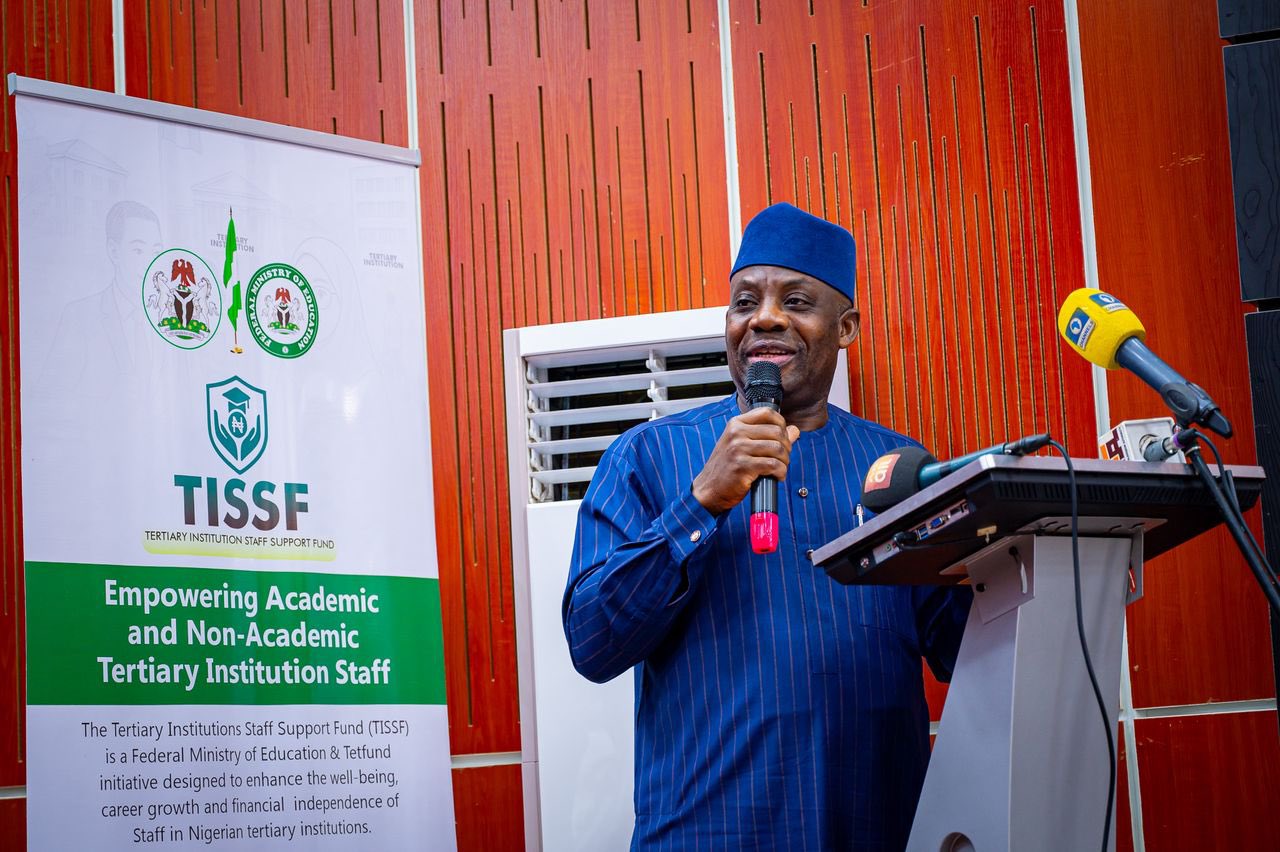
Speaking on Wednesday in Abuja at the opening of the Language in Education International Conference 2025, organized by the British Council, Minister of Education Dr. Tunji Alausa announced that English will now be the official language of instruction from primary through tertiary education levels.
Citing evidence-based research by his ministry, Alausa explained that the previous policy had adversely affected learning outcomes, with many pupils progressing through classes without acquiring essential skills.
“The National Policy on Language has been cancelled. English is now the language of instruction in our schools, from primary to tertiary levels. One of the most important and powerful tools in education is language, and this change will strengthen instruction across all subjects,” Alausa said.
The minister noted the practical challenges posed by Nigeria’s linguistic diversity, highlighting that many children were being taught in languages not spoken at home. “In Borno State, the mother tongue is Hausa, but many children speak Kanuri. In Lagos, areas like Ajegunle have predominantly southeastern populations, yet most teachers are from the southwest. This diversity requires a unified approach to language instruction,” he said.
Alausa further explained that national examinations—WAEC, JAMB, and NECO—are conducted in English, yet many students had been taught exclusively in local languages, resulting in poor performance. “We reviewed the data. The unanimous outcome shows overuse of mother tongue from Primary One to Primary Six, and even from JSS One to JSS Three, leading to students sitting exams unprepared,” he added.
Earlier, British Council Nigeria Country Director Donna McGowan highlighted that the conference would bring together policymakers, educators, researchers, and partners from Africa, South Asia, and the UK to explore ways to improve English language proficiency and enhance learning outcomes across education systems.
The 2022 National Language Policy aimed to promote indigenous languages and preserve Nigeria’s cultural heritage, recognising over 600 languages, 29 of which are already extinct. However, implementation challenges—including developing teaching materials, training teachers, and addressing linguistic diversity—limited its effectiveness.

