

The Securities and Exchange Commission (SEC) has revealed that Nigerians have collectively lost over ₦316 billion to Ponzi schemes and illegal fund managers in recent years, warning that greed and ignorance continue to fuel the fraudulent trend.
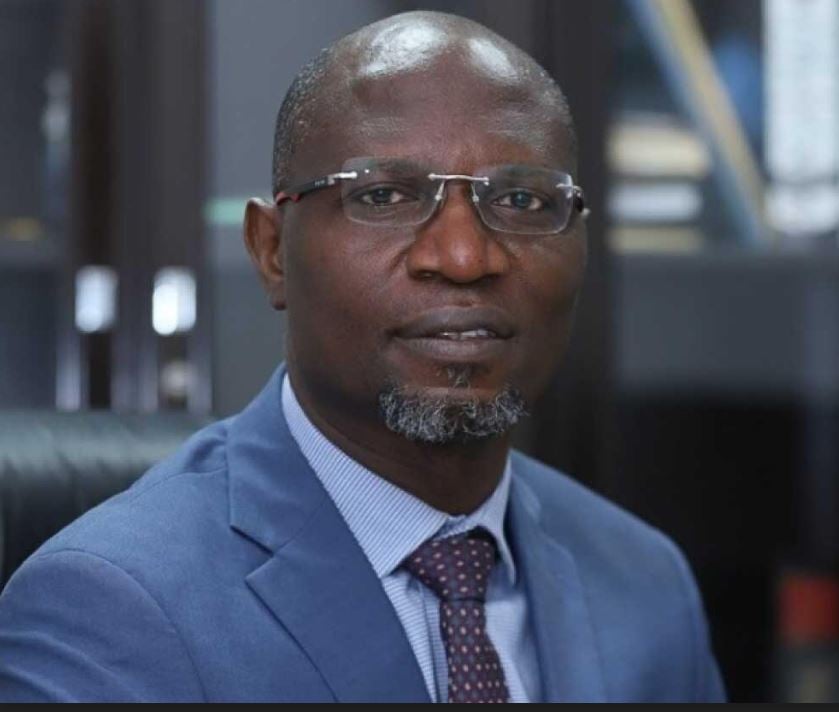
The disclosure was made by the Head of FinTech and Innovation Department at the SEC, AbdulRasheed Dan-Abu, during a paper presentation on combating investment fraud at the SEC Journalist Academy in Abuja.
Dan-Abu described Ponzi schemes as fraudulent investment operations that pay returns to old investors from funds collected from new participants, rather than from genuine business activities.
“These schemes do not engage in any real business. They simply use money from new investors to pay earlier ones, and when new inflows stop, everything collapses and the operators disappear,” he explained.
He lamented that the desire for quick wealth remains a major factor driving Nigerians into such traps.
“Everyone wants to get rich instantly. That’s what blinds people. Even educated individuals fall for these schemes because greed clouds judgment,” he said.
Dan-Abu cited infamous cases such as MMM Nigeria, which lured thousands of Nigerians with promises of 30% monthly returns. Despite its collapse, he said some victims were deceived into paying again in hopes of recovering lost funds.
He also recalled the New Nation Women in Oil scam that disguised itself as a government empowerment programme, defrauding about 155,000 rural women who sold their assets to invest.
A presentation by the Commission revealed shocking figures of losses:
Cow Lane & Durrell Nigeria Ltd – ₦100 million each
Now-Now Alert – ₦235 million
G-Circle Investment & Box Value Trading – ₦400 million each
Yuan Dong – ₦900 million
Dantata Success & Prof Coy – ₦1.2bn to ₦2bn
Famzi Intbiz – ₦2.5bn
Bara Finance – ₦3.5bn
Galaxy Construction & Transportation – ₦7bn
MMM Nigeria – ₦18bn
Nospecto Oil and Gas and other “wonder banks” – ₦106.9bn
A single ongoing case – over ₦174bn
Altogether, Hobnob News gathered from SEC data that total investor losses are estimated between ₦315.24bn and ₦316.04bn.
Dan-Abu noted that many of these fraudsters now exploit social media platforms like WhatsApp to aggressively market fake opportunities, promising high returns with little or no risk.
“No legitimate business yields such returns so quickly. If an offer sounds too good to be true, it probably is,” he warned.
He urged Nigerians to always verify with the SEC before investing in any new scheme.
“If it’s not registered with the SEC, it’s already illegal. Protect your hard-earned money,” he cautioned.
Dan-Abu also called on journalists to play an active role in raising awareness, noting that consistent reporting could help save thousands from falling victim.
In his remarks, the Director-General of the SEC, Dr. Emomotimi Agama, emphasized the need for strong regulation of digital assets to protect investors and build trust in the financial system.
Represented by the SEC’s Head of External Relations, Efe Ebelo, Agama stated that digital assets have become a “structural pillar of modern finance,” requiring the same level of transparency and accountability as traditional markets.
“Regulation is not about restriction; it’s about building trust and ensuring innovation serves progress, not predation,” Agama said.
He noted that while Nigeria ranks among the world’s top adopters of digital assets, the rapid growth has also created fertile ground for scams and fake investment platforms.
Agama highlighted that the SEC is collaborating with the Central Bank of Nigeria (CBN) and the Economic and Financial Crimes Commission (EFCC) to freeze illicit wallets, recover stolen funds, and track suspicious transactions using blockchain analytics.
“The future of finance is digital — but it must remain ethical, transparent, and trustworthy. In this new frontier, trust is the ultimate currency,” he concluded.
— Hobnob News

