
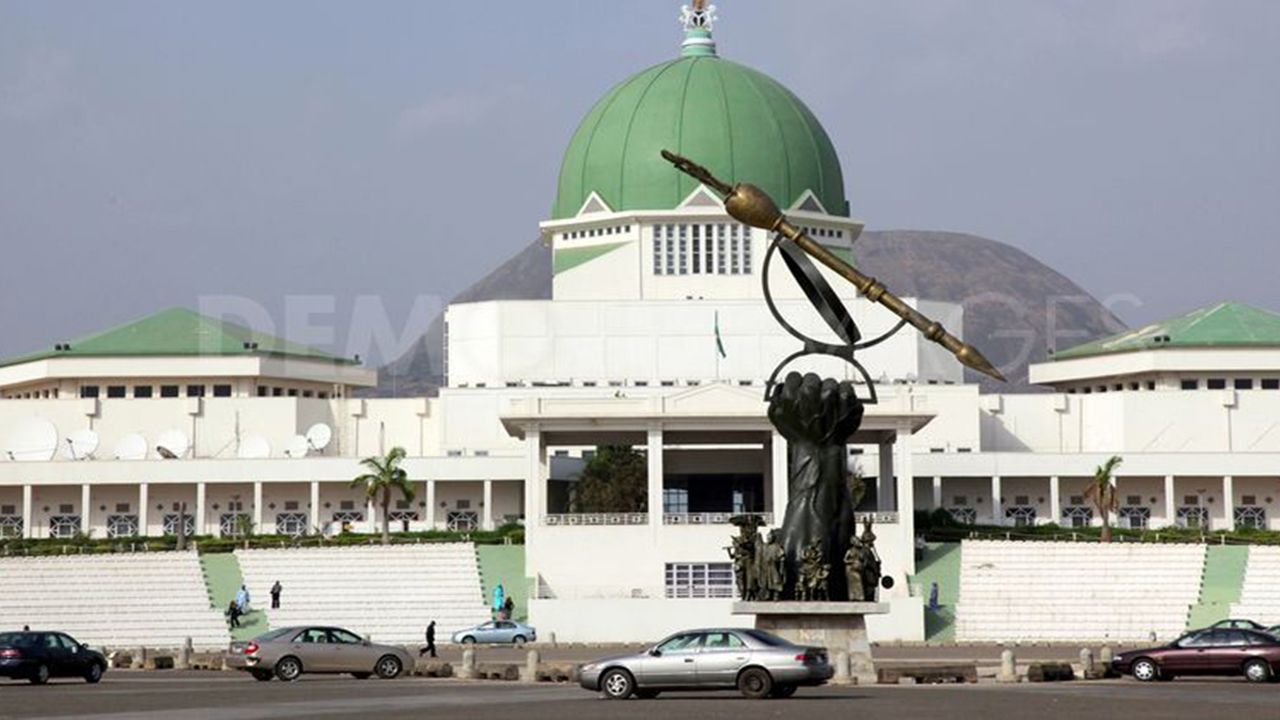
President Bola Ahmed Tinubu has requested the approval of the National Assembly for a fresh $2.3 billion external loan, alongside plans to issue a $500 million sovereign Sukuk — a move that would mark Nigeria’s debut in the international Islamic finance market.
The request was contained in a letter read on the floor of the House of Representatives on Tuesday by Speaker Tajudeen Abbas. The borrowing proposal complies with Sections 21(1) and 27(1) of the Debt Management Office (DMO) Establishment Act, 2003.
According to the letter, the loan will provide external financing for the 2025 Appropriation Act, refinance maturing Eurobonds, and expand Nigeria’s debt instruments to include Islamic finance products.
Fresh Borrowing Plan and Fiscal Outlook
President Tinubu noted that Nigeria’s 2025 fiscal framework anticipates $9.27 billion in new borrowings to bridge the budget deficit, with $1.84 billion expected from external sources at an assumed exchange rate of ₦1,500 per dollar.
He explained that the borrowing would be sourced through a mix of Eurobonds, syndicated loans, bridge financing, or direct loans from multilateral institutions to ensure cost efficiency and risk management.
“Refinancing through Eurobonds or syndicated loans will guarantee debt sustainability and boost investor confidence,” the President stated.
A major component of the plan involves refinancing Nigeria’s $1.118 billion Eurobond, issued in 2018 at a coupon rate of 7.625%, which is due in November 2025. Tinubu described this as a standard market practice aimed at maintaining fiscal credibility and debt sustainability.
Nigeria’s First International Sukuk
The President also announced plans to issue a $500 million sovereign Sukuk internationally — a strategic move designed to deepen Nigeria’s footprint in the global Islamic finance market.
Since 2017, domestic Sukuk issuances have raised over ₦1.39 trillion, funding key infrastructure projects such as major road networks across the country.
Tinubu noted that the international Sukuk would help close Nigeria’s infrastructure funding gap while diversifying its investor base.
The Federal Government is also exploring a credit enhancement guarantee from the Islamic Corporation for the Insurance of Investment and Export Credit (ICIEC), a member of the Islamic Development Bank Group, to strengthen investor confidence.
“If the ICIEC guarantee is utilised, 25% of the proceeds will be used to repay expensive debts, while the remainder will finance pre-identified infrastructure projects,” the President explained.
He added that the Federal Ministry of Finance and the Debt Management Office (DMO) will engage reputable transaction advisers to secure the most favourable pricing and terms amid global market volatility.
Balancing Growth and Debt Sustainability
The borrowing request comes as Nigeria faces the dual challenge of financing a significant budget deficit and managing a complex debt profile.
Despite economic pressures such as rising inflation, currency volatility, and high global interest rates, analysts say the move reflects a strategic shift toward diversified financing options.
Nigeria’s successful domestic Sukuk programme has already showcased the potential of Islamic finance in funding tangible development projects. Expanding to the global market is expected to enhance Nigeria’s credit profile and reduce dependence on traditional borrowing instruments.
Furthermore, the proposed ICIEC-backed Sukuk is anticipated to lower borrowing costs by improving Nigeria’s credit rating and attracting a broader pool of global investors.

