

Written By Tobore Jerome
When His Excellency, Senator Monday Okpebholo was sworn into office in November, 2024, as the Executive Governor of Edo State, he inherited more than just the trappings of power.
He took over a state whose roads and infrastructure especially outside the major urban centres had fallen into a deep state of disrepair. Now, through a fresh wave of projects, escalating inspections and bold promises, Okpebholo’s administration is igniting excitement across Edo, as citizens and even political opponents watch closely with admiration at the manner at which road infrastructure is being transformed.
From the moment Governor Okpebholo assumed office, numerous communities in Edo lamented what many described as chronic neglect in the infrastructure sector. Roads linking towns and villages had become virtually impassable in many rain-prone areas. Key roads leading to government offices, schools, urban centres and state capitals, such as the Benin-Sapele Road, Benin-Auchi Road, Benin Agbor Road, Ramat Park, etc were riddled with potholes, erosion, chronic flooding, gridlocks and deterioration.
Governor Okpebholo has not shied away from saying what many feel: that the deplorable roads in the state, most especially the federal roads, were inherited. He has publicly attributed the collapse and neglect of infrastructure to policies, or lack of political will, under the previous administration.
With infrastructure being among the SHINE agenda of the Okpebholo’s administration, the governor has since hit the ground running with several massive and laudable road construction across Edo State. Some of which are the record breaking flyover at Ramat Park which has been 60% completed, the ongoing construction of Sapele Road and the approval for a flyover to be constructed at Adesuwa junction, the flag off of the Benin-Agbor among others all in Edo South.
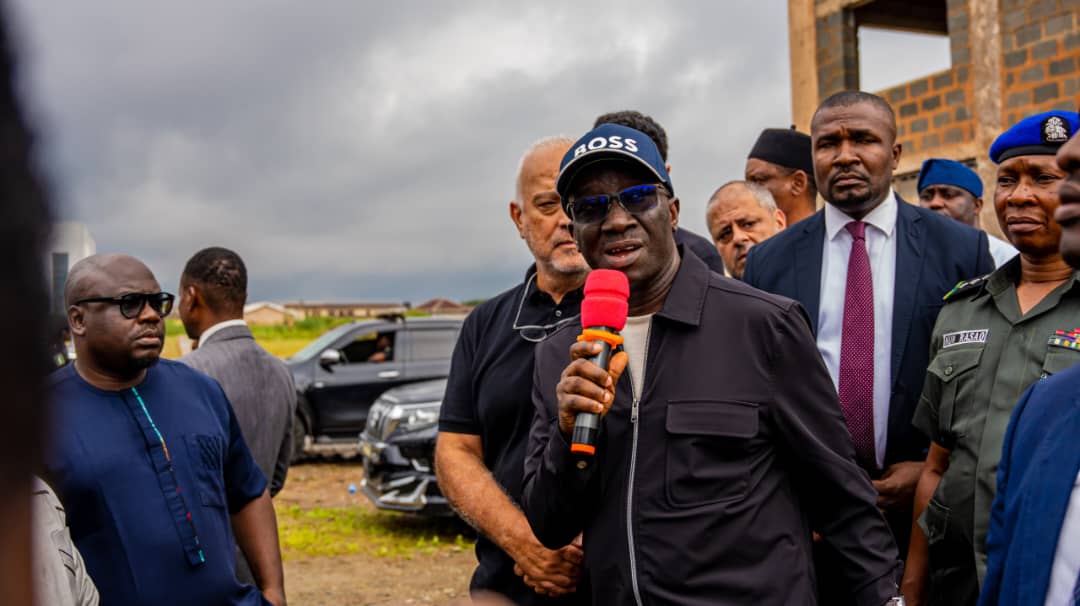
The people’s loving governor has continued Inspection of deteriorated roads in both urban and rural areas, across the three senatorial districts of Edo Central, Edo South and Edo North. He engaged with contractors to start palliative works where needed, and followed by more comprehensive reconstruction.
The Chief Press Secretary to the Governor, Fred Itua, in an article titled “Turning Potholes to Progress: The Okpebholo Infrastructural Model”, said that under Okpebholo’s administration, a new chapter is being written, one where leadership refuses to hide behind jurisdictional excuses and instead accepts that the welfare of citizens must come before the politics of federal and state boundaries.
Itua pointed out that for years, Edo people watched with frustration as critical highways deteriorated into craters and death traps. The previous administration under Godwin Obaseki adopted a stance that proved deeply unpopular: the position that federal roads should remain the federal government’s responsibility.
The article partly reads “By refusing to intervene even with temporary measures, the past government left commuters stranded, traders counting losses, farmers unable to move produce, and families exposed to grave danger. The failures on these highways became not just a logistical nightmare but a metaphor for indifference, deepening the divide between citizens’ expectations and governmental response.
”Governor Okpebholo has chosen a markedly different path. From his first months in office, he treated the condition of federal roads not as an abstract problem awaiting Abuja’s slow machinery, but as an urgent developmental and security challenge. His administration flagged off emergency palliative repairs on major failed sections in Edo North, simultaneously moving to intervene in other critical corridors that had effectively collapsed.”
He further stated that “Equally significant is the way the governor has framed road rehabilitation as a matter of public safety. Edo, like much of Nigeria, has struggled with insecurity along isolated and broken road corridors. Criminals exploit these failed highways to stage kidnappings and robberies, taking advantage of traffic jams and poor visibility.
”By intervening in these areas, the government is not just fixing asphalt but reclaiming territory from criminal elements. A smooth, passable road is easier to patrol, harder for criminals to exploit, and safer for travelers. This linkage between infrastructure and security reframes the debate. It reminds the public that development and protection are intertwined, and that a government which repairs roads is also, in effect, fighting crime.” Itua said
Okpebholo’s administration drive for quality work has made him stressed that road projects must be built to last using reinforced concrete technology, proper drainage, and extended oversight. He has equally expressed that investing in durability will reduce recurrent costs and avoid cyclical repair cycles. This laudable initiative by the governor is being welcomed by many, given past grievances about lower quality road works that were done by the immediate past administration that degrade rapidly.
Gov Okpebholo infrastructure drive has received endorsement from various quarters. There have been positive comments from stakeholders across board, including individuals in other political parties, who acknowledge that infrastructure is a common good beyond partisan divides.
Governor Monday Okpebholo’s road infrastructure drive has tapped into a deep desire among Edo residents for functional, durable roads, something many feel was neglected for too long. The early signs are promising: projects are being inspected, contracts signed, citizens are seeing action.

