

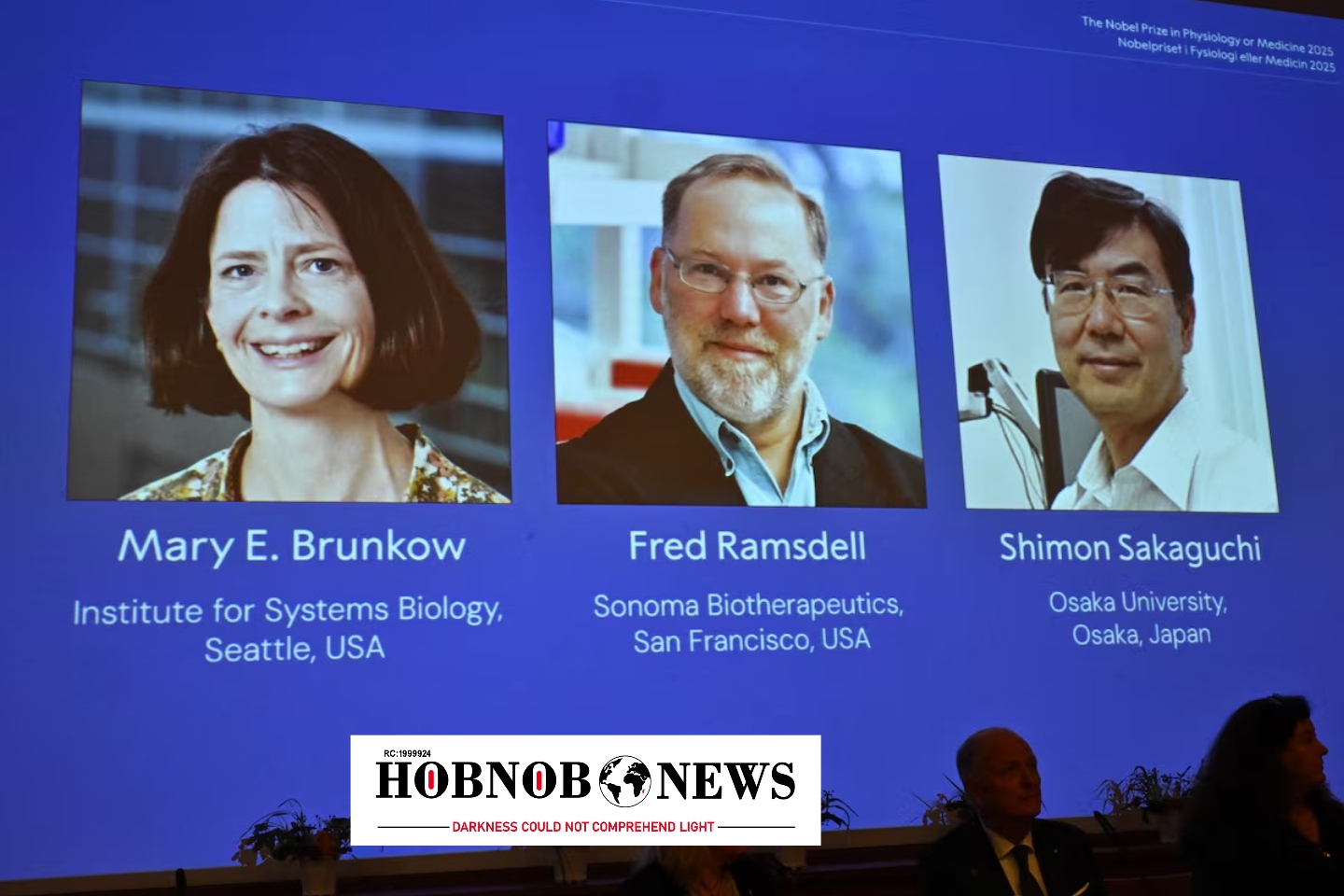
American scientists Mary Brunkow and Fred Ramsdell, along with Japan’s Shimon Sakaguchi, won the 2025 Nobel Prize in Physiology or Medicine on Monday for their pioneering research into how the immune system distinguishes healthy cells from harmful ones, opening new avenues for treating autoimmune diseases and cancer.
Their work focuses on peripheral immune tolerance, the mechanism by which the body “keeps the immune system under control to fight microbes while avoiding autoimmune disease,” explained Marie Wahren-Herlenius, a rheumatology professor at Sweden’s Karolinska Institute, which awards the prize.
The laureates highlighted the role of regulatory T cells, a specialized type of white blood cell that functions like the immune system’s security guards, preventing immune cells from attacking the body’s own tissues.
Brunkow, who learned of her win when a photographer on her Seattle porch woke her dog, said she, Ramsdell, and their colleagues had identified a gene called FOXP3, which serves as a marker for these cells.
“They’re rare but powerful, and essential for dampening immune responses,” she said. “They act as a braking system that prevents the immune system from turning against itself.”

