

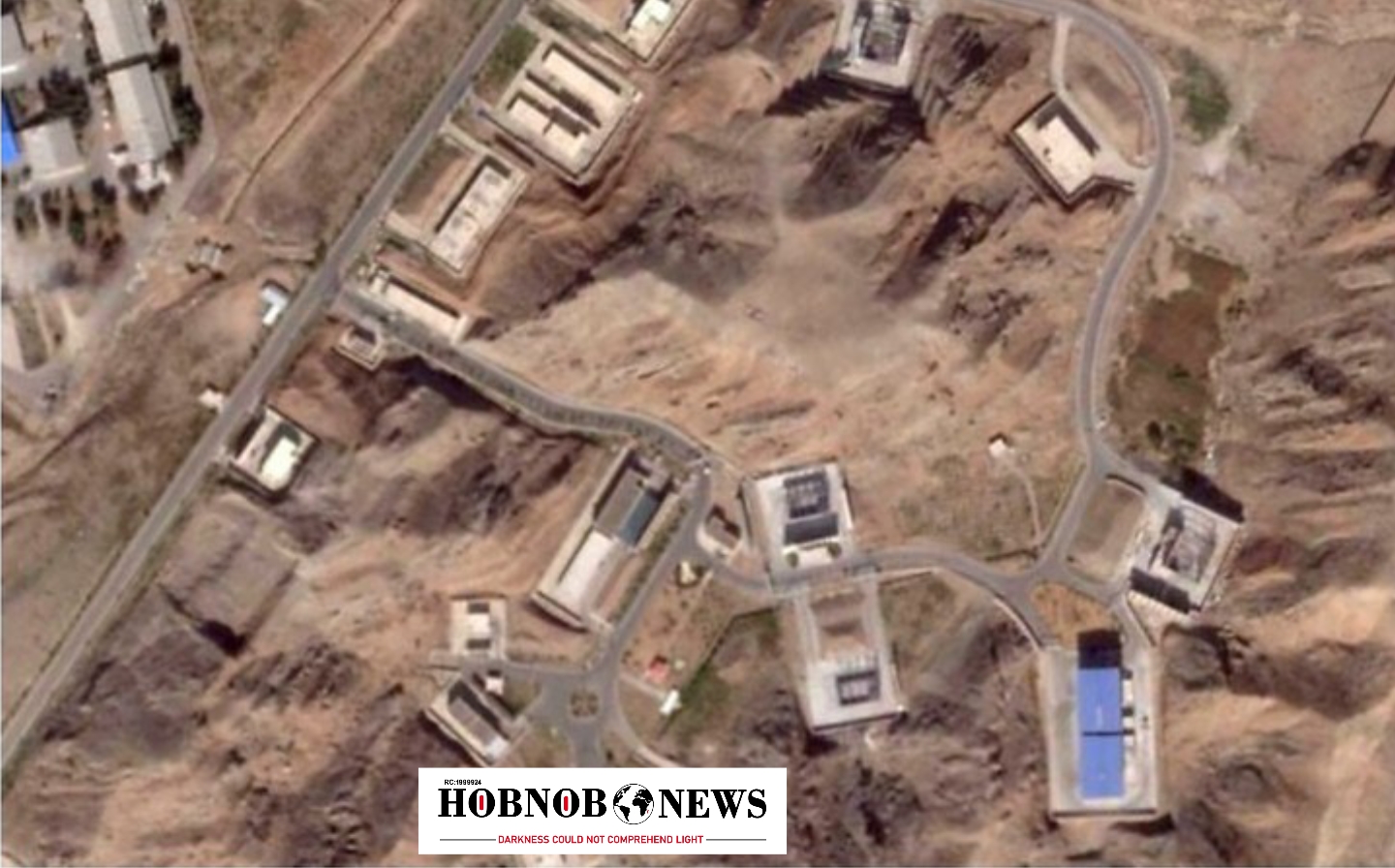
Satellite images analyzed by The Associated Press indicate that Iran has begun reconstructing missile-production facilities targeted by Israel during their 12-day war in June. Experts say the effort is missing a critical component: large planetary mixers used to produce solid fuel for ballistic missiles.
Restoring the program is central to Tehran’s strategy, as missiles remain one of its few deterrents after the war severely damaged its air defenses. Analysts note that Iran is likely seeking to obtain the mixers, possibly from China, before new United Nations sanctions on missile development take effect later this month.
Planetary mixers, whose blades orbit like planets for more efficient blending, are vital for ensuring missile fuel consistency. Their absence explains why Israeli strikes in June focused on destroying mixing halls at facilities in Parchin and Shahroud, where rebuilding activity is now visible.
“The infrastructure is still there and ready to get rolling again if Iran acquires the mixers,” said Sam Lair, of the James Martin Center for Nonproliferation Studies.
Solid-fuel missiles, unlike liquid-fueled ones, can be launched quickly and are harder to destroy on the ground. Before the war, Iran was reportedly capable of producing more than 200 such missiles each month. During the June conflict, Iran fired 574 ballistic missiles at Israel, in addition to 330 in earlier exchanges, depleting more than a third of its estimated 2,500-missile stockpile.
Israel has argued that Iran’s ambitions—Prime Minister Benjamin Netanyahu once warned Tehran aimed to build 20,000 missiles—posed an existential threat. Its June strikes targeted what experts call Iran’s production “bottleneck”: the mixers.
Iran’s Defense Minister, Gen. Aziz Nasirzadeh, said last month that Tehran is now focused on developing missiles with greater precision and advanced warheads. Analysts warn that if Iran resumes production at prewar levels, the sheer volume of missiles could overwhelm Israel’s ability to intercept or destroy them.
Iran has long turned to China for missile components and chemicals, and U.S. officials believe Beijing remains a potential supplier. A planetary mixer linked to Iran’s Revolutionary Guard was previously spotted at a missile site in Syria. While Beijing publicly pledges to support Middle East stability, it has not ruled out military cooperation with Tehran.
“The 12-day war slowed Iran’s missile program, but it did not end it,” said Can Kasapoğlu of the Hudson Institute. “If China helps Iran retool, this could be a pause, not a defeat.”
Despite diplomatic pressure, experts say Iran views its missile program as non-negotiable. “They are clearly invested,” Lair added. “I don’t think they’ll ever negotiate it away.”

